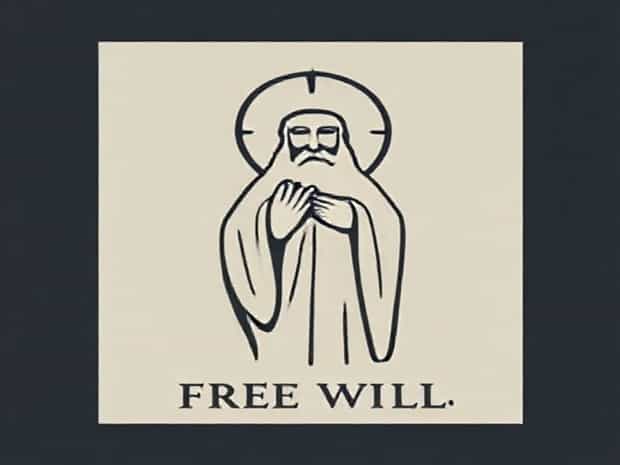
Augustine On Foreknowledge And Free Will
The relationship between foreknowledge and free will has been a central concern in Christian theology, and Augustine of Hippo is one of the most influential thinkers who addressed this complex issue. Augustine’s writings explore how God’s omniscience, or foreknowledge of all events, can coexist with human free will, allowing individuals to make genuine moral choices while still being within the scope of divine knowledge. This tension between divine knowledge and human freedom has sparked centuries of debate among philosophers and theologians, yet Augustine’s insights remain foundational for understanding how foreknowledge does not necessarily undermine free will. His approach combines deep philosophical reasoning with theological reflection, offering a nuanced framework for reconciling human responsibility with divine omniscience.
Augustine’s Concept of Foreknowledge
God’s Omniscience
Augustine asserts that God possesses perfect knowledge of all things, past, present, and future. This foreknowledge, according to Augustine, is not limited or constrained by time; God exists outside temporal sequences and sees all events simultaneously. In this view, divine foreknowledge is not speculative or uncertain it is absolute. Understanding God’s omniscience is essential for grasping Augustine’s reasoning, as it raises the question of whether human actions are predetermined or if individuals can truly exercise free will.
The Nature of Future Knowledge
One of Augustine’s key claims is that foreknowledge of an event does not cause that event to happen. Knowing what a person will do is not the same as compelling them to act in a certain way. For example, God knowing that a person will choose a particular path tomorrow does not force that person to make that choice; the individual still acts freely. Augustine emphasizes that foreknowledge simply entails awareness of what will happen, not causal influence over the choices themselves. This distinction allows for the coexistence of divine omniscience and human freedom.
Human Free Will According to Augustine
The Moral Responsibility of Humans
Augustine strongly affirms human free will as the foundation of moral responsibility. Humans are capable of choosing between good and evil, and their decisions have ethical significance. Without free will, moral praise or blame would be meaningless. Augustine’s insistence on human freedom ensures that individuals remain accountable for their actions, even within a universe fully known by God. Free will is essential not only for ethical behavior but also for genuine love and devotion to God, which require voluntary choice rather than compulsion.
Freedom and the Will
For Augustine, the will is the central component of human freedom. The will allows humans to deliberate, choose, and act in accordance with reason and moral understanding. Augustine recognizes that the will can be influenced by desires, habits, or external circumstances, but it retains the capacity for autonomous decision-making. Human beings are therefore capable of resisting temptation, pursuing virtue, and choosing alignment with divine law. The existence of free will is what gives human life moral significance, even in the context of divine foreknowledge.
Reconciling Foreknowledge and Free Will
Divine Knowledge and Human Choice
Augustine addresses the apparent paradox of foreknowledge and free will by distinguishing between God’s knowledge and human causality. While God knows in advance what choices humans will make, this knowledge does not negate the freedom of those choices. The fact that an event is known does not mean it is necessitated. Augustine’s reasoning emphasizes that the foreknowledge of a choice is a reflection of God’s timeless perspective rather than a constraint on human action. Humans remain free in their decision-making, even as God knows the outcome.
Timelessness and Eternity
Central to Augustine’s reconciliation is the concept of divine timelessness. God exists outside of temporal constraints, seeing all events in a single, eternal present. From this vantage point, the sequence of past, present, and future is irrelevant to God. This eternal perspective allows God to know future events without interfering with human freedom. Augustine explains that temporal succession applies to humans but not to God, making foreknowledge compatible with free will because divine knowledge is not bound by cause-and-effect in time.
Philosophical Implications
Predestination and Free Will
Augustine’s reflections on foreknowledge lead naturally to questions about predestination. Augustine argues that while God’s foreknowledge informs His divine plan, it does not compel human choices. People remain morally responsible and free to accept or reject divine guidance. This perspective underlines the compatibility of divine predestination with the ethical responsibility of human agents, allowing for a coherent understanding of both God’s sovereignty and human freedom.
Ethical Considerations
The interaction between foreknowledge and free will has significant ethical implications. If humans are free to choose, then moral evaluation remains meaningful. Augustine emphasizes that ethical behavior must be voluntary to be genuine. Foreknowledge does not absolve humans of responsibility nor render their choices meaningless. By preserving moral agency, Augustine’s framework maintains the importance of virtue, justice, and ethical deliberation, even within a theologically deterministic framework.
Challenges and Debates
Critics and Objections
Augustine’s reconciliation of foreknowledge and free will has faced criticism over the centuries. Some philosophers argue that knowing the future inherently implies inevitability, challenging the notion of genuine freedom. Others question whether human choices are truly autonomous if they are foreseen by an omniscient being. Augustine addresses these objections by emphasizing the qualitative difference between knowing and causing, though debates continue in contemporary philosophy and theology.
Influence on Later Thought
Augustine’s work on foreknowledge and free will has profoundly influenced medieval and modern thinkers, including Thomas Aquinas, John Calvin, and contemporary philosophers of religion. His insights provide a framework for discussing the tension between divine omniscience and human autonomy, influencing discussions on predestination, ethics, and the nature of moral responsibility. Augustine’s nuanced approach continues to shape theological and philosophical discourse today.
Augustine’s reflections on foreknowledge and free will provide a sophisticated account of the coexistence of divine omniscience and human moral freedom. By emphasizing the distinction between God’s knowledge and human causality, and by framing God’s perspective as timeless and eternal, Augustine demonstrates that foreknowledge does not undermine free will. Humans retain the capacity to choose, deliberate, and act responsibly, while God’s omniscience encompasses all temporal events without constraint. This framework not only preserves ethical accountability but also allows for a deeper understanding of human freedom in relation to divine providence. Augustine’s thought remains a cornerstone for theological and philosophical explorations of the relationship between foreknowledge, free will, and moral responsibility, offering enduring insights into the complex interplay between divine and human agency.