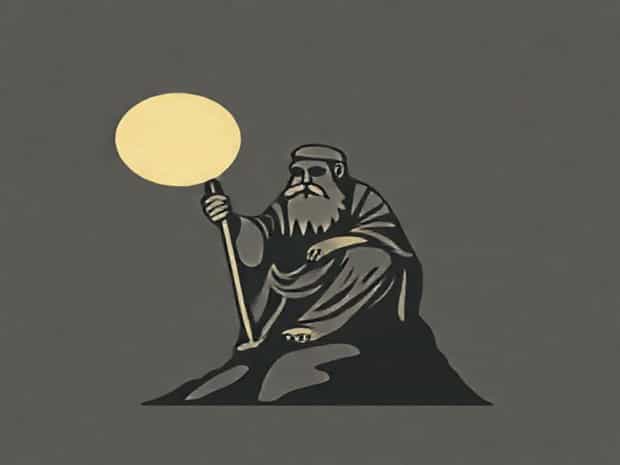
Art And Thought Of Heraclitus
Heraclitus of Ephesus is one of the most enigmatic and influential philosophers of ancient Greece, whose ideas have resonated through centuries of thought. Known for his profound reflections on change, unity, and the nature of reality, Heraclitus presented a worldview that was both poetic and philosophical. His emphasis on the constant flux of the universe challenged the conventional understanding of permanence and stability, making his work a foundation for later philosophical inquiries. Beyond his philosophical contributions, Heraclitus’ thought intersected with art in a way that underscored the expressive and symbolic potential of language. Exploring the art and thought of Heraclitus offers insight into a mind that sought to reveal the hidden order of the cosmos while acknowledging the chaotic and dynamic nature of existence.
The Central Philosophy of Heraclitus
Heraclitus is often remembered for the famous assertion that everything flows, reflecting his belief that change is the fundamental essence of the universe. According to him, all things are in a state of constant flux, and permanence is an illusion. This view contrasts sharply with the pre-Socratic focus on identifying a single unchanging principle, or arche, that underlies reality. Heraclitus proposed that the universe is governed by a balance of opposites, such as day and night, life and death, or war and peace. These opposites are in perpetual tension, creating harmony through conflict. His idea of the unity of opposites illustrates a sophisticated understanding of the interconnectedness and interdependence of all things.
The Doctrine of Logos
Central to Heraclitus’ thought is the concept of the Logos, which he described as the underlying order or rational principle that governs the cosmos. The Logos represents a universal law that is both immanent and intelligible, yet often overlooked by ordinary perception. While humans may fail to understand it fully, the Logos ensures that the universe operates according to a coherent structure. In philosophical terms, the Logos can be seen as a precursor to later ideas of reason, law, or even natural order. Its presence in Heraclitus’ work emphasizes that while change is constant, there is a guiding principle that maintains balance and coherence in the world.
Heraclitus’ Thought on Fire and Transformation
Fire plays a central role in Heraclitus’ philosophy as a metaphor for the constant transformation inherent in nature. He believed that all things are in a state of continual change, akin to fire’s ability to consume, transform, and renew. Fire symbolizes both destruction and creation, highlighting the cyclical and dynamic processes that sustain existence. Through this lens, life itself becomes a continuous process of becoming, rather than a fixed state of being. This perspective challenges conventional thinking about permanence and invites contemplation on the impermanence of all phenomena.
The Unity of Opposites
Heraclitus’ notion of the unity of opposites is a crucial aspect of his philosophy, illustrating that conflict and tension are necessary for harmony. For example, he argued that health depends on the balance of opposites like cold and hot, or dry and wet. Similarly, human experience is enriched through the interplay of joy and sorrow, pleasure and pain. The recognition of these dualities encourages an acceptance of change and the inherent contradictions of life. This idea has influenced countless thinkers and continues to resonate in contemporary discussions about complexity, balance, and systems theory.
The Artistic Dimension of Heraclitus
Heraclitus’ philosophical style itself can be regarded as a form of art. His writings are characterized by aphorisms, paradoxes, and metaphorical language that convey profound truths in concise, poetic forms. This literary approach not only reflects the depth of his thought but also engages the reader in an interpretive process. The fragmented nature of his surviving works invites reflection, interpretation, and contemplation, much like a work of art. Each aphorism functions as a mirror of reality, revealing hidden connections and prompting deeper understanding. The aesthetic quality of his writing demonstrates that philosophy and art are not mutually exclusive but can enrich each other.
Heraclitus’ Influence on Later Art and Philosophy
The art and thought of Heraclitus have influenced a wide range of intellectual and artistic movements. His ideas on flux and transformation inspired later philosophers such as Plato, Aristotle, and the Stoics, who engaged with his concepts of change and order. In modern times, artists and writers have drawn on Heraclitus’ themes of impermanence and the unity of opposites to explore existential and psychological questions. His aphoristic style can be seen as a precursor to poetic and literary techniques that emphasize brevity, ambiguity, and layered meaning. Through both content and form, Heraclitus’ work bridges the realms of philosophy and creative expression.
Challenges in Interpreting Heraclitus
One of the most intriguing aspects of Heraclitus is the challenge his writing poses to interpretation. His fragments are cryptic, often paradoxical, and open to multiple readings. This complexity has led to diverse interpretations over time, with some scholars emphasizing his mystical and religious dimensions, while others focus on his rational and naturalistic insights. The interpretive difficulty itself reflects the depth of his thought, compelling readers to engage actively with his ideas. Understanding Heraclitus requires patience, reflection, and a willingness to embrace ambiguity, which mirrors his own philosophy of the world as dynamic and ever-changing.
Practical Implications of Heraclitus’ Philosophy
Heraclitus’ ideas have practical implications for contemporary life, especially in understanding change and resilience. His emphasis on the inevitability of change encourages adaptability and openness to new experiences. Recognizing the unity of opposites can help individuals appreciate complexity, accept contradictions, and find balance in personal and social life. Additionally, the concept of the Logos as a guiding principle can inspire a search for coherence and meaning in the midst of uncertainty. These lessons extend beyond philosophy, influencing psychology, leadership, and creative problem-solving.
The art and thought of Heraclitus represent a profound exploration of change, unity, and the underlying order of the universe. Through his philosophical insights, he challenges conventional notions of permanence and encourages a deeper understanding of life’s dynamic processes. His use of metaphor, aphorism, and paradox elevates his philosophy to an artistic form, engaging the mind and imagination simultaneously. Heraclitus’ influence extends through centuries, inspiring philosophers, artists, and thinkers to grapple with the complexities of existence. By studying his work, one gains not only an appreciation for ancient philosophy but also insights into enduring questions about change, harmony, and the nature of reality itself.
Total words approximately 1,020