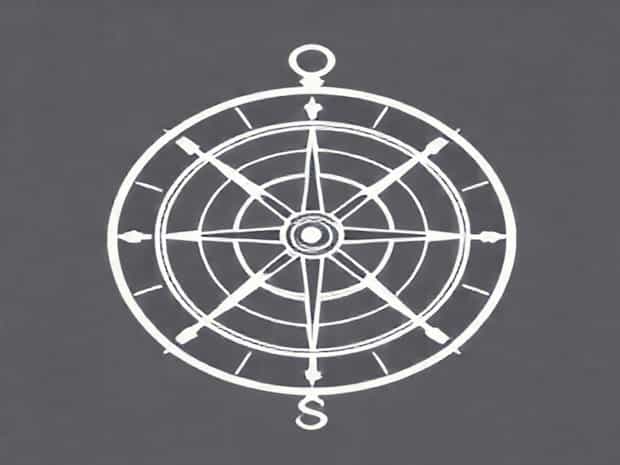
Armillary Sphere Vs Astrolabe
The study of astronomy has fascinated humanity for centuries, leading to the creation of various instruments designed to observe and measure the heavens. Among these tools, the armillary sphere and the astrolabe stand out as two of the most iconic and historically significant devices. Both instruments were developed to help ancient astronomers understand celestial movements, track stars, and navigate the night sky, yet they differ in structure, function, and historical application. Understanding the differences and similarities between an armillary sphere and an astrolabe provides insight into the evolution of astronomical instruments and their impact on navigation, education, and science throughout history.
What is an Armillary Sphere?
An armillary sphere is a three-dimensional model of the celestial sphere, composed of a series of concentric rings representing the equator, ecliptic, and other important celestial circles. These rings are typically made of metal and mounted on a central axis that represents the Earth’s rotation. The instrument is used to demonstrate the apparent motion of stars and planets around the Earth or the Sun, depending on the model. Armillary spheres are not just functional tools; they often serve as decorative objects symbolizing knowledge, science, and the cosmos.
Structure of an Armillary Sphere
The structure of an armillary sphere is complex yet elegant. Each ring corresponds to a celestial coordinate, such as the celestial equator or the tropics. The central sphere, which can represent Earth in geocentric models or the Sun in heliocentric models, serves as a reference point for measuring the positions of celestial objects. Many armillary spheres also include a meridian ring, a horizon ring, and additional rings for the zodiac signs, allowing users to track planetary positions and celestial events accurately.
- Equatorial RingRepresents the celestial equator and helps measure declination.
- Ecliptic RingShows the apparent path of the Sun through the zodiac.
- Meridian RingOrients the instrument according to local latitude.
- Zodiac RingsIndicate the position of the Sun and planets relative to the zodiac.
What is an Astrolabe?
An astrolabe is a two-dimensional astronomical instrument designed to solve problems related to time, the position of celestial bodies, and navigation. It consists of a flat disk, called the mater, engraved with coordinates, and a rotating component called the rete, which represents the ecliptic and the brightest stars. By aligning the rete with the date and time, users can measure the altitude of celestial objects, determine the local time, or solve navigational problems. The astrolabe was widely used in medieval Europe, the Islamic world, and Asia for both scientific and practical purposes.
Structure of an Astrolabe
The astrolabe’s design is intricate yet portable. It typically includes a mater, a rete, a rule, and an alidade. The mater serves as the base and contains engraved lines marking celestial coordinates. The rete rotates over the mater, showing the positions of major stars. The rule and alidade are movable pointers used for measurements and calculations, making the astrolabe a versatile tool for astronomers, navigators, and astrologers alike.
- MaterThe base of the instrument with engraved celestial coordinates.
- ReteRotating framework representing stars and the ecliptic.
- RuleA pointer used to measure angles or align objects.
- AlidadeA sighting device for observing celestial bodies.
Armillary Sphere vs Astrolabe Key Differences
Although both the armillary sphere and astrolabe are designed for astronomical observation, their differences lie in structure, functionality, and usage. Understanding these differences is crucial for appreciating their historical significance and practical applications.
Dimensional Differences
The most apparent difference is dimensionality. An armillary sphere is a three-dimensional model that provides a visual representation of the celestial sphere, helping users understand the spatial relationships of celestial bodies. In contrast, an astrolabe is a two-dimensional instrument, designed for practical calculations rather than visual demonstration. Its flat design makes it portable, suitable for travelers, navigators, and scholars who needed a compact, multifunctional device.
Functional Differences
Armillary spheres are primarily educational and demonstrative tools. They are excellent for teaching the motions of stars, planets, and the Sun relative to the Earth or a heliocentric system. Astrolabes, on the other hand, are functional instruments for solving real-world problems. They allow users to measure celestial altitudes, determine local time, navigate at sea, and perform astrological calculations. While armillary spheres help visualize celestial mechanics, astrolabes provide practical measurements for immediate use.
Historical Usage
Historically, armillary spheres were often used in observatories and educational institutions as teaching aids and symbols of scientific knowledge. They were less practical for fieldwork due to their size and complexity. Astrolabes, however, were essential for medieval navigators and astronomers. They were widely carried by travelers, sailors, and scholars, providing vital information for navigation, timekeeping, and celestial observation. The portability and multifunctionality of astrolabes made them indispensable in the age before telescopes and modern instruments.
Similarities Between Armillary Spheres and Astrolabes
Despite their differences, armillary spheres and astrolabes share several similarities. Both instruments are designed to model the heavens and help users understand the movements of celestial bodies. They are constructed with precise geometric and mathematical principles, reflecting a deep understanding of astronomy and physics. Additionally, both instruments were historically used for educational, navigational, and astrological purposes, bridging the gap between theoretical astronomy and practical application.
- Astronomical PurposeBoth instruments help observe and understand celestial bodies.
- Mathematical PrecisionAccurate geometric design is crucial for both devices.
- Historical SignificanceThey represent major advancements in pre-modern astronomy and navigation.
- Symbolic ValueOften regarded as symbols of knowledge, science, and exploration.
Applications in Modern Times
While modern technology has largely replaced armillary spheres and astrolabes for practical astronomical observations, these instruments remain relevant today. Armillary spheres are often used as educational tools in classrooms, museums, and observatories, helping students visualize celestial mechanics. Astrolabes are studied by historians and scholars of medieval science, as well as by hobbyists interested in ancient navigation techniques. Both instruments also appear as decorative items and symbols of scientific curiosity in public spaces, reinforcing their cultural and educational value.
Educational Tools
Armillary spheres can demonstrate the rotation of the Earth, the tilt of the axis, and the apparent movement of the Sun and stars, making abstract concepts tangible. Astrolabes allow students to perform calculations similar to those made by historical astronomers, providing hands-on experience with the mathematics of the past.
Collectibles and Historical Study
Collectors and historians value armillary spheres and astrolabes for their craftsmanship and historical significance. Antique astrolabes, often intricately engraved and meticulously constructed, provide insight into the scientific knowledge, art, and culture of their time. Armillary spheres, often displayed in museums, reflect centuries of astronomical study and the human desire to understand the universe.
The armillary sphere and the astrolabe are two remarkable instruments that illustrate humanity’s long-standing fascination with the heavens. While the armillary sphere excels as a three-dimensional educational tool for visualizing celestial mechanics, the astrolabe serves as a practical, portable instrument for measuring the positions of stars, solving navigational problems, and determining time. Both devices, despite their differences, highlight the ingenuity and scientific understanding of past civilizations and continue to captivate modern audiences for their educational, historical, and aesthetic value. Comparing an armillary sphere vs an astrolabe not only reveals their unique functionalities but also underscores their complementary roles in the development of astronomy, navigation, and scientific thought throughout history.