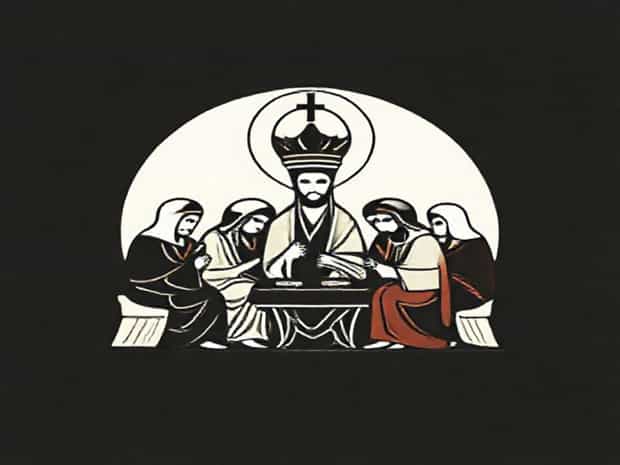
Are Ecumenical Councils Infallible
Ecumenical councils have played a central role in the history of Christianity, serving as formal assemblies where bishops and church leaders gather to discuss, debate, and define essential matters of faith, doctrine, and practice. One of the most debated questions concerning these councils is whether their decisions are infallible, meaning incapable of error when pronouncing on matters of faith and morals. This question has theological, historical, and ecclesiastical implications, influencing how believers understand authority, tradition, and the development of Christian doctrine. Examining the nature, purpose, and historical outcomes of ecumenical councils provides clarity on the extent and limits of their infallibility.
Understanding Ecumenical Councils
An ecumenical council is a formal gathering of bishops and senior church officials from across the Christian world, convened to deliberate on significant theological and doctrinal issues. Historically, these councils were called to address controversies, clarify doctrine, and ensure unity within the Church. Notable councils include the Council of Nicaea (325 AD), the Council of Chalcedon (451 AD), and the Second Vatican Council (1962-1965). Each council aimed to provide authoritative guidance on matters of faith and to resolve disputes that threatened the cohesion of the Christian community.
Purpose of Ecumenical Councils
- Clarification of doctrine Councils define beliefs and clarify theological concepts to maintain orthodoxy.
- Resolution of disputes Councils address controversies and heresies that arise within the Church.
- Establishment of canonical law Councils sometimes produce rules and guidelines for governance within the Church.
- Promotion of unity Councils aim to maintain harmony among different Christian communities by reaching consensus on key issues.
The Concept of Infallibility
Infallibility refers to the ability to proclaim teachings on faith or morals without error. In Catholic theology, this concept is primarily associated with the Pope when speaking ex cathedra, or with ecumenical councils when their decrees are formally approved and recognized as binding. The doctrine of infallibility is grounded in the belief that the Holy Spirit guides the Church to protect it from doctrinal error, ensuring that essential truths are preserved across generations. However, the extent and application of this infallibility have been a subject of theological debate for centuries.
Conditions for Infallibility
Not all pronouncements made by a council are considered infallible. Certain conditions are typically required for a council’s decisions to carry infallible authority
- The council must be recognized as ecumenical, representing the universal Church.
- The bishops must exercise their teaching authority collectively in communion with the Pope (in the Catholic tradition).
- The decree or doctrine must pertain specifically to faith or morals.
- The council’s teachings must be formally promulgated as binding by the Church.
Historical Perspectives on Infallibility
Throughout history, ecumenical councils have varied in their perceived authority and influence. Early councils, such as Nicaea, were widely accepted for their role in clarifying the nature of Christ and the Trinity. These councils are often cited as examples of infallible teachings because their doctrinal decisions were universally accepted and became foundational to Christian theology. Later councils, however, sometimes faced opposition or were accepted only partially by different factions, raising questions about the universal applicability of their decisions.
Examples of Infalible Councils
- First Council of Nicaea (325 AD)Defined the divinity of Christ and produced the Nicene Creed.
- Council of Chalcedon (451 AD)Clarified the two natures of Christ, divine and human.
- First Vatican Council (1869-1870)Defined the conditions of papal infallibility and confirmed the authority of ecumenical teachings in union with the Pope.
Challenges and Debates
While many councils are accepted as authoritative, not every council or decision has been universally recognized as infallible. Disputes over interpretation, regional acceptance, or doctrinal development have led theologians to differentiate between authoritative guidance and formally infallible teaching. Some councils produced decrees that were later clarified, modified, or contextualized, indicating that infallibility does not automatically apply to every statement made during a council session.
Ecumenical Councils in Different Traditions
The understanding of infallibility varies among Christian denominations. In Roman Catholicism, councils approved by the Pope and addressing matters of faith and morals can be considered infallible. In Eastern Orthodoxy, councils are highly authoritative but the concept of infallibility is understood as a collective guidance of the Holy Spirit rather than a juridical declaration. Protestant traditions may recognize the historical importance of councils but often reject the notion of absolute infallibility, emphasizing scripture as the ultimate authority.
Catholic View
Catholic teaching holds that ecumenical councils, when meeting specific conditions, are infallible. This is grounded in the belief that the Holy Spirit ensures the Church’s doctrinal integrity. Catholics view councils such as Nicaea and Chalcedon as authoritative benchmarks for theological truth, providing clarity and guidance for the faithful.
Eastern Orthodox View
Orthodox Christians emphasize the consensus of the bishops and the reception of the faithful as key to a council’s authority. While infallibility is acknowledged in a broader sense, it is understood as the Church collectively guided by the Spirit rather than a formalized doctrine of error-free proclamations.
Protestant Perspective
Most Protestant traditions respect the historical role of ecumenical councils but reject formal infallibility. They prioritize scripture as the ultimate authority and often view council decisions as advisory or interpretive rather than binding.
The question of whether ecumenical councils are infallible is nuanced and depends on historical, theological, and denominational contexts. While some councils are universally recognized for defining essential doctrines and maintaining unity, others require careful consideration to determine the scope of their authority. In Catholicism, councils can be infallible when formally promulgated in communion with the Pope, whereas Orthodox and Protestant traditions interpret authority differently. Understanding these dynamics highlights the complex relationship between divine guidance, ecclesiastical authority, and human interpretation, demonstrating that the infallibility of ecumenical councils is both a profound theological principle and a historically grounded practice.