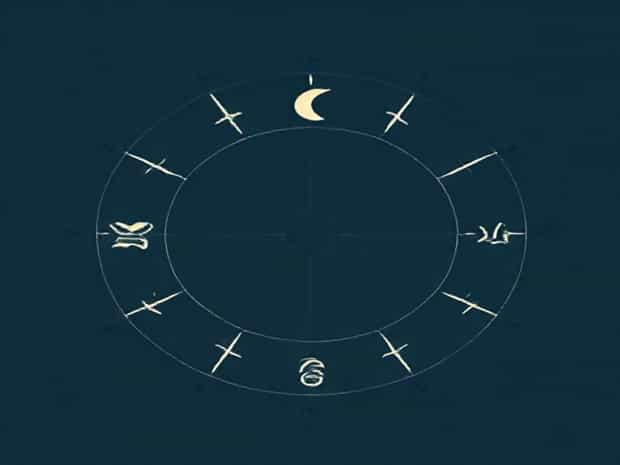
Annual Motion Zodiac And Ecliptic
The annual motion of the Sun across the sky is one of the most important foundations in astronomy and astrology. As the Earth revolves around the Sun, our viewpoint from Earth creates the appearance that the Sun is moving against the backdrop of distant stars. This apparent journey is known as the annual motion, and it gives rise to the concept of the ecliptic. Along this celestial path lie the zodiac constellations, which have shaped human culture, calendars, and astrological beliefs for centuries. By studying the annual motion of the Sun, the zodiac, and the ecliptic, we gain insight into the relationship between Earth and the wider cosmos.
The Ecliptic Explained
The ecliptic is the apparent path that the Sun traces in the sky over the course of a year. It is not a physical line but a projection of Earth’s orbital plane onto the celestial sphere. The tilt of the Earth’s axis causes the ecliptic to be inclined at about 23.5 degrees relative to the celestial equator. This tilt is responsible for the changing seasons, as different parts of Earth receive varying amounts of sunlight throughout the year.
The ecliptic is also the stage on which the Moon and planets appear to move. Because the planets orbit the Sun in nearly the same plane as Earth, they also travel close to the ecliptic. This is why ancient sky-watchers noticed that the most significant celestial bodies all moved through a narrow band of constellations known as the zodiac.
The Zodiac and Its Connection to the Ecliptic
The zodiac refers to the twelve constellations that lie along the ecliptic. These include Aries, Taurus, Gemini, Cancer, Leo, Virgo, Libra, Scorpio, Sagittarius, Capricorn, Aquarius, and Pisces. Each constellation represents a segment of the sky that the Sun appears to move through during the year. In astrology, these zodiac signs are linked with personality traits, relationships, and cycles of life. In astronomy, they serve as reference points along the Sun’s apparent path.
When the Sun passes through each zodiac constellation, it marks a period of about one month. For example, when the Sun is aligned with the constellation Leo, we associate this with the astrological sign of Leo, typically falling between late July and late August. This system of dividing the sky helped early civilizations organize time, track agricultural cycles, and celebrate seasonal festivals.
The Mechanics of Annual Motion
The annual motion is a direct result of Earth’s orbit around the Sun. From our vantage point, it looks as though the Sun shifts eastward along the ecliptic by about one degree each day. After 365 days, the Sun has completed its apparent journey and returned to the same point, marking one full year. This movement defines the tropical year, which is the basis of our calendar system.
The key milestones in this annual motion are the equinoxes and solstices
- Vernal EquinoxAround March 21, when the Sun crosses the celestial equator heading north. Day and night are nearly equal.
- Summer SolsticeAround June 21, when the Sun reaches its northernmost point, bringing the longest day in the Northern Hemisphere.
- Autumnal EquinoxAround September 23, when the Sun crosses back south of the celestial equator. Again, day and night are equal.
- Winter SolsticeAround December 21, when the Sun reaches its southernmost point, marking the shortest day in the Northern Hemisphere.
These points not only define the seasons but also have deep cultural and spiritual significance across the world.
How the Zodiac Reflects the Sun’s Path
Each zodiac sign corresponds to the Sun’s position along the ecliptic during the year. In ancient times, people observed that when the Sun rose in certain constellations, the seasons would shift accordingly. This gave rise to the symbolic meanings of each zodiac sign, often reflecting agricultural cycles, animal behavior, and human psychology.
For example, Aries marks the beginning of spring, symbolizing renewal and energy, while Virgo aligns with harvest time, symbolizing practicality and productivity. Capricorn marks the winter season, representing discipline and endurance. These associations are deeply tied to the Sun’s annual motion along the ecliptic.
The Role of Precession
An important factor to consider in understanding the annual motion, zodiac, and ecliptic is the phenomenon of precession. Earth’s axis slowly wobbles over a cycle of about 26,000 years, causing the position of the equinoxes to shift gradually along the ecliptic. This means that the zodiac constellations as defined by astronomy no longer align perfectly with the astrological signs used thousands of years ago.
For example, when astrology was first formalized, the Sun entered Aries at the spring equinox. Today, due to precession, the Sun actually enters Pisces around that time. While astrology continues to use the traditional zodiac, astronomy recognizes the actual shift of constellations. This distinction highlights the difference between cultural interpretation and scientific observation of the annual motion.
The Importance of the Ecliptic in Astronomy
Beyond astrology, the ecliptic plays a central role in modern astronomy. It is used as the reference plane for mapping celestial objects and understanding planetary orbits. The ecliptic plane is essential in predicting eclipses, as they occur only when the Sun, Moon, and Earth align closely along this path. Solar and lunar eclipses have fascinated humanity for centuries, further reinforcing the importance of the ecliptic in both science and culture.
Cultural Significance of Zodiac and Ecliptic
The zodiac and ecliptic have been central to human civilization for millennia. Ancient Babylonians, Egyptians, Greeks, and many other cultures studied the Sun’s path to create calendars, guide navigation, and establish rituals. Festivals, agricultural practices, and even architecture were often aligned with the Sun’s position along the ecliptic.
In astrology, the zodiac remains a framework for understanding human personality and destiny. While not a science, astrology continues to resonate with millions worldwide, offering symbolic meaning based on the Sun’s position in the zodiac at birth. The continued popularity of horoscopes and zodiac interpretations demonstrates the lasting influence of the annual motion and the ecliptic.
Relationship Between Planets, Zodiac, and Ecliptic
Because the planets orbit the Sun in roughly the same plane as Earth, they also travel along the ecliptic. This means that when viewed from Earth, the planets appear within or near the zodiac constellations. This relationship is why astrology places such importance on planetary positions within the zodiac signs, as their alignments were seen as influencing life on Earth.
In astronomy, this planetary motion along the ecliptic helps predict celestial events such as conjunctions, oppositions, and retrogrades. By mapping the planets’ paths along the ecliptic, astronomers can track their cycles and understand the dynamics of the solar system.
The annual motion of the Sun, the zodiac, and the ecliptic form a profound connection between Earth and the cosmos. The Sun’s apparent journey along the ecliptic creates the rhythm of seasons, shapes our calendar, and defines the zodiac signs that still influence culture today. While astronomy and astrology interpret these phenomena differently, both reflect humanity’s enduring fascination with the heavens. The zodiac provides symbolic meaning, while the ecliptic offers scientific precision. Together, they remind us of the intricate dance between our planet, the Sun, and the wider universe.