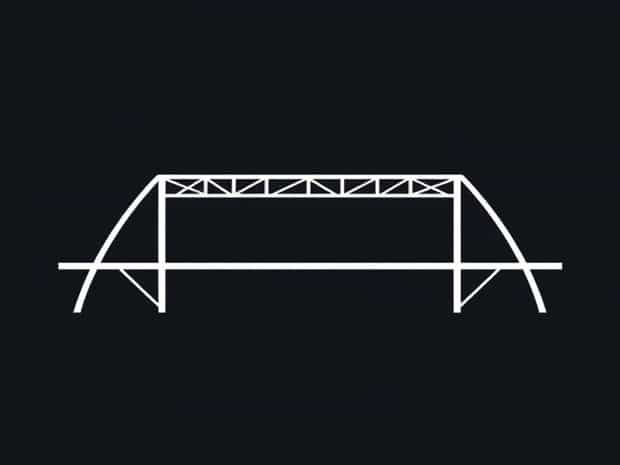
A Pratt Truss Bridge
Among the many types of truss bridges used throughout history, the Pratt truss bridge stands out as one of the most recognizable and practical designs. Developed in the 19th century, it has been used extensively in railroads, highways, and pedestrian crossings due to its strength, efficiency, and relatively simple construction. The Pratt truss bridge combines engineering ingenuity with economic practicality, making it a landmark in civil engineering. Understanding its history, design, and continued use today helps explain why this bridge type remains important in both historical preservation and modern infrastructure.
History of the Pratt Truss Bridge
The Pratt truss design was patented in 1844 by Caleb Pratt and his son Thomas Willis Pratt, two American engineers who sought a more efficient way to construct bridges during a time of expanding transportation networks. Their design quickly became popular for railroad bridges because it could withstand heavy loads while using less material than some older truss forms. The Pratt truss became a staple in American bridge building throughout the late 19th and early 20th centuries, with many examples still standing today as historic landmarks.
Early Adoption
Railroads were booming in the mid-1800s, and companies needed strong yet economical bridges to span rivers and valleys. The Pratt truss offered a reliable solution. It was easier to build compared to some other truss systems, and its predictable load distribution made it ideal for supporting locomotives and railcars.
Design Characteristics of a Pratt Truss Bridge
The defining feature of a Pratt truss bridge is its arrangement of diagonal and vertical members. The diagonals typically slope toward the center of the span and are designed to handle tension, while the vertical members bear compression. This arrangement optimizes the forces within the structure, reducing material stress and increasing stability.
- Diagonal MembersHandle tensile forces, slanting inward toward the middle of the span.
- Vertical MembersPrimarily resist compressive forces.
- Top and Bottom ChordsThe upper chord is usually in compression, while the lower chord handles tension.
Advantages of the Design
The genius of the Pratt truss lies in its efficiency. By assigning tensile forces to the diagonals and compressive forces to the verticals, the structure makes excellent use of materials. In the 19th century, when wrought iron and early steel were expensive, this efficiency translated into cost savings without compromising strength.
Materials Used in Pratt Truss Bridges
Over time, the materials used in Pratt truss bridges evolved alongside advancements in engineering and metallurgy.
- Wood and IronEarly Pratt truss bridges were often built using timber combined with wrought iron or cast iron components.
- SteelAs steel production became more affordable in the late 19th century, steel Pratt trusses became standard, offering improved durability and higher load capacity.
- Modern MaterialsToday, steel remains the dominant choice, though some pedestrian Pratt truss bridges may incorporate aluminum or composite materials.
Applications of the Pratt Truss Bridge
The Pratt truss bridge has been widely used for different types of crossings, ranging from short spans to longer structures. Its versatility makes it suitable for many applications.
Railroad Bridges
The original popularity of the Pratt truss came from railroads. The design provided the strength needed for heavy locomotives while minimizing material usage. Many 19th-century railroad bridges still feature Pratt truss construction.
Highway Bridges
As automobiles became more common, the Pratt truss was adapted for road traffic. Its strength and efficiency allowed it to support increasing vehicle weights and traffic volumes.
Pedestrian Bridges
Smaller Pratt truss bridges are commonly used in parks, campuses, and trails. These lightweight structures provide an attractive and functional design while still honoring a classic engineering style.
Variations of the Pratt Truss
Several variations of the Pratt truss exist, each developed to address specific engineering needs or span lengths.
- Through Pratt TrussVehicles or trains pass through the truss framework, with overhead bracing providing additional stability.
- Pony Pratt TrussFeatures parallel top chords that do not connect overhead, suitable for shorter spans.
- Deck Pratt TrussThe roadway or track runs on top of the truss structure, with all truss members positioned below.
- Modified Pratt VariantsSuch as the Baltimore truss, which adds extra bracing to handle longer spans and heavier loads.
Comparison with Other Truss Types
The Pratt truss is often compared to other popular truss designs, such as the Warren truss and Howe truss.
- Pratt vs HoweIn a Howe truss, the diagonal members are under compression, and the verticals are under tension the opposite of the Pratt. Howe trusses were common in timber bridges, while Pratt trusses excelled with iron and steel.
- Pratt vs WarrenThe Warren truss uses equilateral triangles without verticals, spreading loads more evenly but often requiring more material. The Pratt’s diagonal-and-vertical system is more efficient for certain load conditions.
Famous Examples of Pratt Truss Bridges
Many Pratt truss bridges across the United States and other countries have become historic landmarks. Some examples include
- Bridgeport Covered Bridge (California)A hybrid design featuring Pratt-style elements, notable for being one of the longest covered spans in the U.S.
- Eldean Bridge (Ohio)A rare surviving example of an early Pratt through truss bridge.
- Multiple Railroad BridgesAcross the Midwest and Northeast, where railroads relied heavily on Pratt truss construction.
Preservation of Historic Pratt Truss Bridges
As infrastructure ages, many historic Pratt truss bridges face demolition or replacement. However, preservation efforts are underway to maintain these structures as part of American engineering heritage. Restoration often involves reinforcing original steel members, repainting, and adapting the bridge for modern use, such as pedestrian or light traffic instead of heavy vehicles.
Modern Use of Pratt Truss Bridges
While newer bridge types such as cable-stayed and suspension bridges dominate large-scale projects, the Pratt truss still finds use in smaller spans and pedestrian crossings. Its simple geometry and proven effectiveness make it a cost-efficient option for communities seeking durable and aesthetically pleasing bridges.
Advantages and Disadvantages
Like any engineering solution, the Pratt truss bridge has both benefits and limitations.
- AdvantagesEfficient use of materials, relatively easy to construct, versatile in application, and historically proven for durability.
- DisadvantagesLess suitable for extremely long spans, requires regular maintenance to prevent corrosion in steel members, and may be less cost-effective compared to modern designs for very large bridges.
Role in Civil Engineering Education
The Pratt truss bridge remains a staple example in civil engineering and architecture education. Students study it to understand structural analysis, force distribution, and historical engineering evolution. It serves as an excellent teaching tool for how design choices influence material efficiency and overall stability.
A Pratt truss bridge is more than just a functional structure it represents a milestone in engineering history. From its invention in the mid-1800s to its continued use in modern projects, the Pratt truss has demonstrated durability, efficiency, and adaptability. Its clear design principles make it easy to understand while its lasting presence highlights its reliability. Whether preserved as historic landmarks or constructed anew for pedestrian pathways, Pratt truss bridges continue to serve as reminders of how innovation and practicality can shape infrastructure for generations. As engineers look to the future, the lessons of the Pratt truss remain relevant, reinforcing the timeless connection between strong design and long-term usability.
Word count ~1025