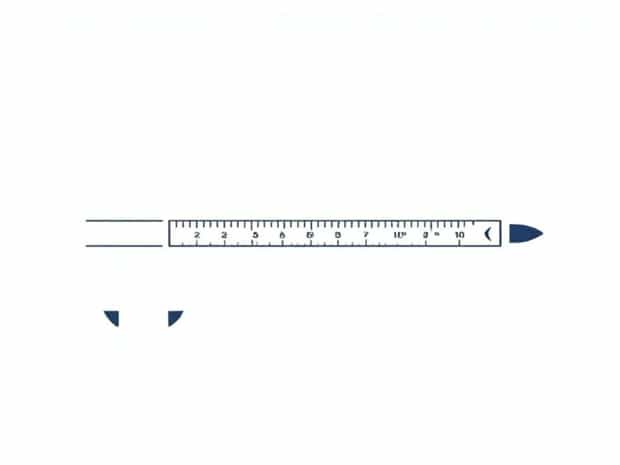
A Diagram Of A Vernier Caliper
The vernier caliper is a precision measuring instrument widely used in engineering, manufacturing, and scientific laboratories to obtain accurate measurements of length, depth, and internal or external diameters. Understanding a diagram of a vernier caliper is crucial for students, professionals, and hobbyists who rely on precise measurements in their work. A well-labeled diagram not only helps in identifying the parts of the caliper but also clarifies its functioning, measurement technique, and practical applications. By studying the structure and components of a vernier caliper, users can gain confidence in using it correctly and interpreting results accurately, which is essential for ensuring quality and precision in various fields.
Introduction to Vernier Calipers
A vernier caliper is a versatile measuring tool that provides more precise readings than a standard ruler or tape measure. It typically consists of a main scale, a sliding vernier scale, jaws for internal and external measurements, and a depth probe for measuring depths. The combination of these components allows users to measure objects with remarkable accuracy, often down to 0.02 mm or 0.001 inches depending on the caliper’s design. Understanding a diagram of a vernier caliper is the first step in mastering its use, as it illustrates how each part functions in the overall measurement process.
Main Components of a Vernier Caliper
A detailed diagram of a vernier caliper usually highlights the following essential components
- Main ScaleThe fixed scale on the body of the caliper, marked in millimeters or inches, which provides the primary measurement reference.
- Vernier ScaleA smaller sliding scale that allows for readings between the main scale divisions, increasing precision.
- Outside JawsThese jaws are used for measuring the external dimensions of an object, such as the diameter of a rod or width of a block.
- Inside JawsSmaller jaws located at the top, used for measuring the internal dimensions of objects, such as the diameter of a hole.
- Depth ProbeA thin rod that extends from the end of the caliper for measuring the depth of holes, slots, or recesses.
- Lock ScrewThis screw locks the sliding vernier scale in place to maintain a measurement reading without shifting.
- Thumb Screw or Sliding MechanismAllows smooth movement of the vernier scale along the main scale for precise adjustments.
Reading a Vernier Caliper Diagram
When examining a diagram of a vernier caliper, it is important to understand the interaction between the main scale and the vernier scale. The main scale provides the baseline measurement, while the vernier scale divides the smallest main scale unit into smaller fractions. By aligning the vernier scale markings with the main scale, users can achieve readings more precise than the main scale alone would allow. The diagram usually shows how to identify which line on the vernier scale coincides with a line on the main scale to determine the exact measurement.
Types of Measurements
A vernier caliper diagram often indicates the three types of measurements that can be taken using the tool
- External MeasurementUsing the outside jaws to measure the width, thickness, or outer diameter of an object.
- Internal MeasurementUsing the inside jaws to measure the inner diameter or space within an object.
- Depth MeasurementUsing the depth probe to determine the depth of holes, grooves, or cavities.
Understanding Scale Readings
In a vernier caliper diagram, the scales are often labeled to show how to read precise measurements. The main scale shows the primary units, while the vernier scale provides fractional increments. For example, if the main scale is marked in millimeters, the vernier scale may allow readings to the nearest 0.02 mm. To read a measurement, one must first note the main scale value just before the zero of the vernier scale, and then add the vernier scale value that aligns perfectly with any line on the main scale. The diagram visually demonstrates this alignment process, making it easier to understand for beginners and professionals alike.
Practical Applications Highlighted in a Diagram
Diagrams of vernier calipers also often include examples of practical applications
- Measuring the diameter of machine parts to ensure they fit correctly.
- Determining the depth of drilled holes for precision engineering tasks.
- Checking the internal width of pipes, cylinders, or mechanical assemblies.
- Performing quality control in manufacturing by comparing measurements to specified tolerances.
By connecting the diagram to these real-world uses, users can better understand the relevance of each component and how accurate measurements impact engineering and scientific work.
Maintenance and Handling Tips
A vernier caliper diagram may also provide guidance on proper handling and maintenance. Keeping the caliper clean and free from dust, oil, or debris ensures accurate readings. Regularly calibrating the instrument and checking for wear or damage to the jaws, scales, or sliding mechanism is critical. The diagram often labels parts like the lock screw and sliding mechanism, reminding users to handle them gently and avoid forcing the instrument, which could compromise precision.
Enhancing Accuracy
Understanding a vernier caliper diagram allows users to implement techniques that enhance measurement accuracy. For instance
- Ensure the caliper is properly zeroed before taking measurements.
- Apply consistent, gentle pressure on the jaws to avoid bending or misalignment.
- Read measurements at eye level to reduce parallax errors.
- Use the lock screw to secure the scale while recording readings.
These steps, often highlighted in a detailed diagram, emphasize the importance of careful handling and precision in measurement practices.
A diagram of a vernier caliper serves as an essential educational and practical tool for anyone seeking to master precision measurement. By illustrating the main components, scales, jaws, depth probe, and other functional parts, the diagram helps users understand the structure, operation, and proper usage of the instrument. Through this understanding, individuals can take accurate external, internal, and depth measurements, maintain the tool effectively, and apply it to a wide range of engineering, scientific, and industrial applications.
Studying a vernier caliper diagram enhances both theoretical knowledge and practical skills. It allows users to interpret scale readings correctly, handle the instrument with care, and achieve high levels of accuracy in measurements. With regular practice and reference to a clear, labeled diagram, students, engineers, and hobbyists can confidently use a vernier caliper to obtain precise data, improve quality control, and perform tasks that demand meticulous measurement. Ultimately, mastering the diagram is a gateway to mastering the instrument itself, highlighting the critical role of precision tools in technical and scientific endeavors.