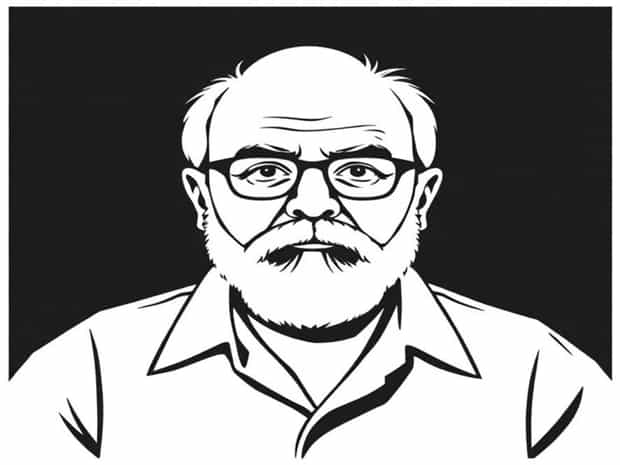
Is Fredric Jameson A Postmodernist
Fredric Jameson is a name that frequently arises in discussions of literary theory, cultural criticism, and postmodern studies. Known for his complex analyses and influential writings, Jameson has often been associated with postmodernism, but the question remains is Fredric Jameson a postmodernist? His work spans a broad intellectual terrain, encompassing Marxist theory, literary criticism, film analysis, and cultural commentary, making it essential to carefully examine his positions, arguments, and the ways in which he engages with postmodern concepts.
Fredric Jameson’s Intellectual Background
Fredric Jameson, born in 1934, is an American literary critic and Marxist political theorist who has made significant contributions to understanding literature, culture, and ideology. He studied at Harvard University and later became a prominent scholar at Duke University, where he continues to influence generations of students and academics. His theoretical approach combines elements of Marxism with post-structuralist and cultural studies frameworks, providing tools to analyze contemporary cultural phenomena.
Major Works
Some of Jameson’s most influential works include
- Marxism and Form(1971) – explores the relationship between literary form and social structure.
- Postmodernism, or, The Cultural Logic of Late Capitalism(1991) – widely cited in discussions of postmodern culture and the economic conditions that shape it.
- The Political Unconscious(1981) – emphasizes the Marxist idea that all cultural texts are politically coded.
- Archaeologies of the Future(2005) – examines utopian thought and speculative fiction through the lens of cultural theory.
Understanding Postmodernism
To assess whether Jameson is a postmodernist, it is necessary to clarify what postmodernism entails. Postmodernism is generally characterized by skepticism toward grand narratives, the mixing of high and low culture, pastiche, irony, and an emphasis on surface over depth. In cultural studies, postmodernism often addresses the conditions of late capitalism and the fragmentation of identity, knowledge, and aesthetic forms. Scholars debate whether postmodernism is a philosophical movement, an aesthetic style, or a historical period.
Jameson’s View of Postmodernism
Jameson does not align himself uncritically with postmodernism. In fact, he is best described as a critical analyst of postmodern culture rather than a proponent. InPostmodernism, or, The Cultural Logic of Late Capitalism, Jameson identifies postmodernism as the cultural expression of late capitalism, emphasizing how economic structures influence art, architecture, and media. He argues that postmodern culture is marked by depthlessness, pastiche, and a waning of affect, which reflects the commodification of cultural production rather than a deliberate philosophical stance embraced by individuals.
Key Characteristics Jameson Attributes to Postmodern Culture
Jameson highlights several features of postmodern culture that illustrate his critical perspective
- PasticheThe imitation of previous styles without the original context or satire.
- Schizophrenic temporalityA sense of historical disorientation, where past, present, and future are blurred.
- DepthlessnessA focus on surface appearance and style over underlying meaning or narrative coherence.
- Loss of historicityThe erosion of historical consciousness in cultural production.
Importantly, Jameson presents these characteristics not as virtues but as symptoms of broader socioeconomic transformations under late capitalism.
Jameson as a Marxist Critic
While Jameson is closely associated with analyses of postmodernism, he remains a committed Marxist critic. His work consistently situates cultural phenomena within social and economic structures, examining how ideology, class relations, and market forces shape artistic and cultural production. This perspective distinguishes him from theorists who celebrate postmodernist fragmentation or irony without reference to political economy. For Jameson, postmodernism is a condition to be understood critically rather than a school of thought to adopt.
The Political Unconscious
InThe Political Unconscious, Jameson introduces the idea that cultural texts must be interpreted through the lens of political and social context. Every narrative, he argues, contains an ideological subtext that reflects the dominant mode of production. This method applies to postmodern works as well, reinforcing the notion that his engagement with postmodernism is analytical and diagnostic rather than celebratory.
Critiques and Interpretations of Jameson’s Position
Scholars and critics have debated whether Jameson can be labeled a postmodernist. On one hand, he writes extensively on postmodern culture and provides terminology that has become central to the field. On the other hand, his Marxist framework and critical stance toward postmodernism indicate that he is more accurately described as a theorist about postmodernism rather than a postmodernist himself. His work emphasizes structural analysis, historical context, and economic critique, which contrasts with the relativism or playful irony often associated with postmodernist thought.
Influence on Postmodern Studies
Despite his critical stance, Jameson’s analyses have profoundly influenced postmodern studies. Terms like cultural logic of late capitalism and his observations on pastiche and depthlessness are widely cited in literary and cultural criticism. His work provides a rigorous framework for understanding postmodernism as a historical and cultural phenomenon, bridging the gap between literary studies, philosophy, and social theory.
Fredric Jameson is not a postmodernist in the sense of embracing or advocating postmodern philosophy or aesthetic values. Rather, he is a critical theorist who examines postmodernism as a cultural and economic condition. Through his Marxist lens, Jameson highlights the socioeconomic forces shaping postmodern art, literature, and media, identifying features like pastiche, depthlessness, and temporal dislocation. His work remains indispensable for anyone seeking to understand the complexities of postmodern culture and its relationship to capitalism, making him a pivotal figure in contemporary cultural theory.
Ultimately, labeling Jameson as a postmodernist oversimplifies his nuanced critique. He is best understood as a critical observer of postmodernism, providing tools for analysis rather than participating in the movement itself. His insights continue to guide scholars, students, and readers in examining how culture, economics, and ideology intersect in the late 20th and early 21st centuries.