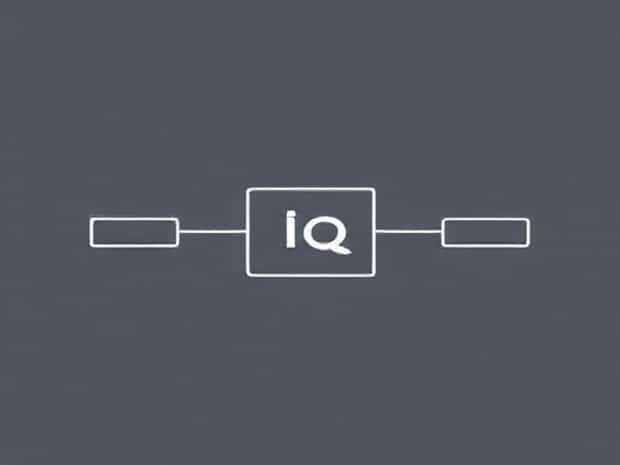
Iq Modulator Block Diagram
An IQ modulator is a crucial component in modern communication systems, widely used in wireless, optical, and digital communication applications. Its primary function is to modulate a carrier signal using two separate input signals, known as the in-phase (I) and quadrature (Q) components, allowing complex modulation schemes such as QAM (Quadrature Amplitude Modulation) or QPSK (Quadrature Phase Shift Keying). Understanding the IQ modulator block diagram is essential for engineers and students, as it illustrates the relationships between the input signals, mixers, and output signals, providing a clear representation of how data is transmitted efficiently and reliably over communication channels.
Overview of IQ Modulation
IQ modulation involves splitting a baseband signal into two components that are 90 degrees out of phase with each other. The in-phase (I) component represents the part of the signal aligned with the carrier, while the quadrature (Q) component represents the part of the signal that is 90 degrees out of phase. By combining these two components, an IQ modulator can encode information in both the amplitude and phase of the carrier signal, significantly increasing the efficiency and capacity of communication systems compared to simple amplitude or frequency modulation techniques.
Applications of IQ Modulators
- Wireless communication, including LTE, 5G, and Wi-Fi systems.
- Satellite and radar communication systems.
- Optical fiber communication for high-speed data transfer.
- Digital signal processing and software-defined radio (SDR).
Understanding the IQ Modulator Block Diagram
The IQ modulator block diagram provides a simplified visual representation of how the in-phase and quadrature components interact with the carrier signal. The diagram typically consists of several key components two mixers, a local oscillator (LO), and a summing block. Each element plays a specific role in converting the baseband I and Q signals into a modulated RF signal suitable for transmission.
Components of the Block Diagram
- In-Phase (I) InputThis input carries the signal aligned with the carrier. It is usually connected to one mixer in the modulator.
- Quadrature (Q) InputThe Q input carries the signal that is 90 degrees out of phase with the carrier. It feeds into the second mixer.
- Local Oscillator (LO)The LO generates the carrier frequency. One path of the LO is fed directly to the I mixer, while another path is shifted by 90 degrees before feeding the Q mixer, ensuring proper quadrature phase alignment.
- MixersThe mixers multiply the I and Q signals by their respective carrier components. This process translates the baseband signals to the desired carrier frequency.
- Summing BlockThe outputs of the I and Q mixers are combined in a summing block, producing the final modulated signal that carries information in both amplitude and phase.
Operation of an IQ Modulator
The operation of an IQ modulator can be understood by following the signal flow through the block diagram. First, the baseband signal is split into I and Q components. Each component is multiplied by the corresponding carrier signal in its mixer. The I signal is multiplied by a carrier in-phase with the local oscillator, while the Q signal is multiplied by a carrier shifted by 90 degrees. The results are then summed, producing a single output that contains information encoded in both the amplitude and phase of the RF signal.
Mathematical Representation
Mathematically, the output of an IQ modulator can be expressed as
RF(t) = I(t) * cos(ωct) + Q(t) * sin(ωct)
Where I(t) and Q(t) are the baseband signals, ωcis the carrier angular frequency, and RF(t) is the modulated output signal. This equation highlights the importance of maintaining the 90-degree phase difference between the I and Q components to achieve accurate modulation.
Advantages of IQ Modulation
IQ modulation provides several benefits that make it highly suitable for modern communication systems
- Higher Spectral EfficiencyBy encoding information in both amplitude and phase, IQ modulation allows for more data to be transmitted in a given bandwidth.
- FlexibilitySupports multiple modulation schemes, including QPSK, 16-QAM, 64-QAM, and higher-order QAM, enabling adaptation to different channel conditions.
- Reduced InterferenceProperly designed IQ modulators minimize signal distortion and cross-talk between channels.
- Compatibility with Digital SystemsEasily integrated with digital signal processing techniques for advanced communication applications.
Design Considerations
When designing or analyzing an IQ modulator, several practical considerations must be addressed to ensure optimal performance. These include
Phase Accuracy
Maintaining the 90-degree phase difference between the I and Q channels is critical. Any deviation can result in signal distortion, increased error rates, and reduced system performance.
Amplitude Balance
The amplitudes of the I and Q signals must be carefully matched. Imbalances can cause unwanted signal artifacts and degrade the quality of the modulated signal.
Bandwidth and Linearity
The components, including mixers and summing blocks, must support the required bandwidth and operate linearly to preserve signal integrity. Nonlinearities can introduce harmonics and intermodulation products that interfere with communication.
Temperature and Component Variations
Environmental factors and component tolerances can affect the performance of an IQ modulator. Proper calibration and compensation techniques are often used to maintain consistent performance across different operating conditions.
The IQ modulator block diagram provides a clear and structured way to understand how in-phase and quadrature signals are combined to produce complex modulated output. This knowledge is essential for engineers working on communication systems, as it enables the design, analysis, and optimization of modern RF and optical communication devices. By understanding the components, signal flow, and design considerations, one can fully appreciate the role of IQ modulators in achieving efficient and reliable data transmission. IQ modulation remains a cornerstone of advanced communication technology, providing the flexibility, efficiency, and performance required in today’s high-speed, high-capacity networks.