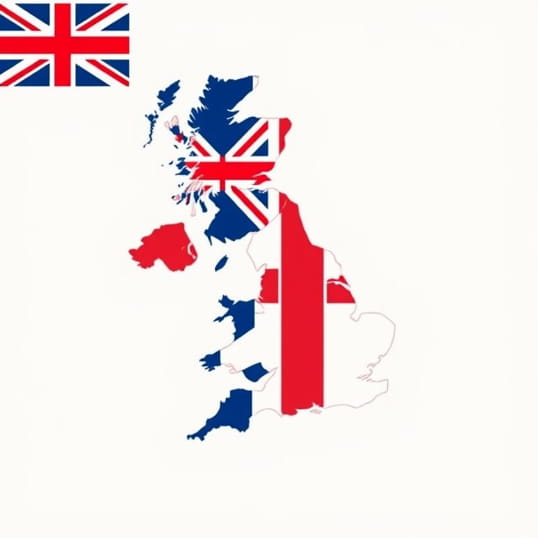
Great Britain Vs Uk
When discussing the geography and politics of the British Isles, many people often confuse the terms Great Britain and the United Kingdom. While they are closely related, these terms refer to different entities, each with its own historical, political, and geographical significance. Understanding the distinction between Great Britain and the UK is essential for clarity in discussions related to governance, geography, culture, and international relations. This distinction also helps in understanding maps, travel, and global references to the region.
Definition of Great Britain
Great Britain is the largest island in the British Isles, located off the northwest coast of mainland Europe. It comprises three countries England, Scotland, and Wales. Geographically, Great Britain does not include Northern Ireland or any other smaller surrounding islands. The term Great Britain is often used in contexts relating to the island itself, such as sports teams, historical references, and cultural identity. Understanding Great Britain in its geographic sense is the first step in differentiating it from the United Kingdom.
Historical Context of Great Britain
The concept of Great Britain has deep historical roots. The island was gradually unified under a single monarchy in the early 18th century, following the Acts of Union in 1707, which combined England and Scotland into the Kingdom of Great Britain. Wales had already been incorporated into the English crown centuries earlier. The formation of Great Britain marked a significant political shift, influencing trade, military power, and cultural development in Europe. Today, Great Britain remains an essential geographic and political reference.
Definition of the United Kingdom
The United Kingdom, officially known as the United Kingdom of Great Britain and Northern Ireland, is a sovereign country that includes four constituent nations England, Scotland, Wales, and Northern Ireland. Unlike Great Britain, the UK encompasses the northeastern part of the island of Ireland (Northern Ireland) in addition to the island of Great Britain. The United Kingdom is recognized as a single political entity with a centralized government, although Scotland, Wales, and Northern Ireland have varying degrees of devolved powers.
Formation of the United Kingdom
The United Kingdom was formed through a series of political unions. Following the creation of Great Britain in 1707, the UK expanded in 1801 when Ireland joined, forming the United Kingdom of Great Britain and Ireland. In 1922, most of Ireland became an independent republic, leaving Northern Ireland as part of the UK. The United Kingdom’s formation reflects centuries of political negotiation, conflict, and collaboration among the British Isles’ nations, shaping its current structure and international recognition.
Key Differences Between Great Britain and the UK
While Great Britain and the United Kingdom are often used interchangeably in casual conversation, they are distinct in several ways
- GeographyGreat Britain refers to the island containing England, Scotland, and Wales. The UK includes Great Britain and Northern Ireland.
- Political StructureGreat Britain does not have a separate government; it refers only to the landmass. The United Kingdom is a sovereign country with a central government based in London.
- International IdentityIn international contexts, such as the Olympics or the United Nations, the UK is recognized as the official country. Great Britain may be used in sporting contexts, but legally it is not a sovereign state.
Maps and Terminology
Maps of the British Isles clearly illustrate the distinction. The island of Great Britain is the largest landmass, while Northern Ireland lies to its west on the island of Ireland. Using precise terminology is important in academic, governmental, and educational contexts. Referring to the UK when discussing international relations, governance, or legal matters is accurate, while Great Britain is more appropriate when referring to the island itself or regional matters within England, Scotland, and Wales.
Cultural Implications
The distinction between Great Britain and the UK also affects cultural identity and representation. People from England, Scotland, Wales, and Northern Ireland may identify differently based on their national heritage. In sports, for instance, football teams often compete separately for each country, while the Olympics use Team GB to represent the UK except Northern Ireland athletes, who can choose to represent either the UK or Ireland. Understanding these cultural nuances is important for recognizing the complex identities within the region.
Language and Traditions
Within Great Britain, English is the dominant language, but Scotland and Wales also preserve Gaelic and Welsh languages, respectively. Northern Ireland includes both English and Irish influences. Traditional music, festivals, and local customs vary widely between these nations, reflecting a rich tapestry of cultural diversity. While part of a united political entity, the distinct traditions of each country contribute to the unique character of the UK and Great Britain.
Economic and Political Roles
The United Kingdom operates as a single economic and political entity, managing foreign policy, defense, and monetary policy. It has a constitutional monarchy with the monarch serving as the head of state, while the government led by the Prime Minister oversees administrative affairs. Great Britain, as an island, does not function as an independent political entity but is central to the UK’s governance, hosting the capital city London and the majority of the population and economic activity.
International Relations
The UK represents Great Britain and Northern Ireland in international organizations and agreements. It negotiates trade deals, diplomatic relationships, and treaties as a sovereign nation. Understanding that Great Britain alone does not hold this political authority clarifies its role in global affairs and legal matters. Northern Ireland’s inclusion in the UK adds layers of political complexity, particularly concerning relations with the Republic of Ireland and the European Union.
Common Misconceptions
Many people confuse the terms due to casual usage in media, conversation, and sports. Common mistakes include referring to the UK as Great Britain or assuming Great Britain includes Northern Ireland. These misconceptions can lead to misunderstandings in legal, educational, and international contexts. Clear usage helps maintain accuracy and respects the identities of the nations within the UK.
Sports Confusion
Sports events often contribute to the confusion. For example, the football associations of England, Scotland, Wales, and Northern Ireland compete separately in international tournaments, whereas the Olympic team is referred to as Team GB. This duality highlights the distinction between the geographic island of Great Britain and the political entity of the United Kingdom.
Educational Clarity
Teaching the difference between Great Britain and the UK is important for students studying geography, history, and international relations. Using maps, timelines, and case studies helps illustrate how political boundaries evolved and how cultural identities intersect with national governance. Awareness of these distinctions fosters a better understanding of the British Isles and global politics.
Understanding the difference between Great Britain and the United Kingdom is essential for clarity in geography, politics, and culture. Great Britain refers specifically to the island containing England, Scotland, and Wales, while the United Kingdom is a sovereign country that includes Northern Ireland as well. The distinction affects maps, international recognition, cultural identity, and political representation. By recognizing these differences, one can better appreciate the historical evolution, cultural diversity, and political structure of the British Isles. Whether discussing travel, education, or international relations, using the correct terminology ensures accuracy and respect for the unique identities of England, Scotland, Wales, and Northern Ireland within the UK.