Is A Hooded Merganser A Duck
The Hooded Merganser is a fascinating bird that often raises questions among bird watchers and nature enthusiasts about its classification. Many people wonder, is a Hooded Merganser a duck? At first glance, its small size, diving behavior, and presence in freshwater habitats might suggest that it is indeed a type of duck. Understanding its characteristics, taxonomy, and behavior helps clarify this question and provides insight into why this species is considered part of the duck family. Exploring the Hooded Merganser’s unique features can also enhance appreciation for its ecological role and distinctive appearance.
Taxonomy and Classification
The Hooded Merganser, scientifically known as Lophodytes cucullatus, belongs to the family Anatidae, which includes ducks, geese, and swans. Within this family, it falls under the subfamily Merginae, which is commonly referred to as the diving ducks. This subfamily is known for birds that feed primarily on fish and other aquatic animals, often diving underwater to catch their prey. The classification confirms that the Hooded Merganser is indeed a type of duck, although it is distinct from more common dabbling ducks that feed at the surface of the water.
Physical Characteristics
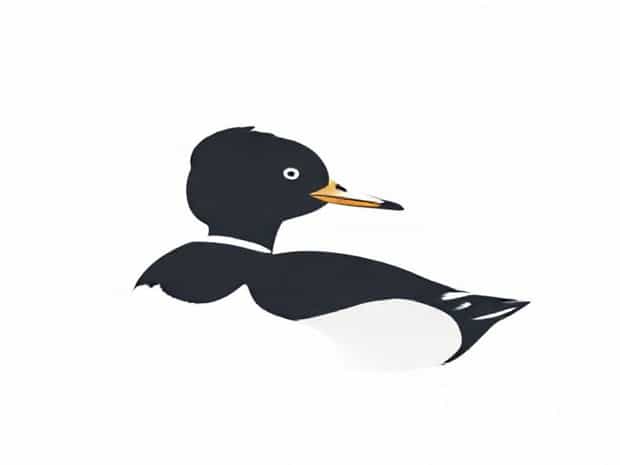
One of the most striking features of the Hooded Merganser is its crest or hood,” which can be raised or lowered. Males display a large white patch on the crest, contrasting sharply with dark feathers, while females have a more subdued brownish crest. They are relatively small ducks, measuring about 16 to 19 inches in length, and weigh between 14 to 27 ounces. Their narrow, serrated bills are adapted for catching fish, a key trait that distinguishes them from many other duck species. Their eyes are bright yellow, and their plumage exhibits intricate patterns, especially in males during the breeding season.
Habitat and Distribution
Hooded Mergansers are typically found in freshwater environments such as rivers, ponds, lakes, and wooded swamps. They prefer areas with abundant aquatic vegetation, fallen trees, or submerged logs that provide cover and nesting opportunities. These ducks are native to North America and are commonly found in the eastern United States, the Great Lakes region, and parts of Canada. During the winter, some populations migrate south to milder climates, although many remain in the northern range if the water remains unfrozen.
Behavior and Diet
Behaviorally, Hooded Mergansers are diving ducks, which means they hunt for food underwater rather than dabbling on the surface. Their diet consists primarily of fish, aquatic insects, crustaceans, and small amphibians. They are capable of quick, agile dives, which allow them to capture prey efficiently. During the breeding season, males display courtship behaviors that include raising their crests and performing visual displays to attract females. These behaviors, along with their feeding strategies, further support their classification within the duck family.
Reproduction and Nesting
The Hooded Merganser nests in tree cavities near water, a behavior typical of some diving ducks. They may also use nest boxes provided by wildlife enthusiasts or conservation programs. Females lay clutches of 7 to 15 eggs, which they incubate for approximately 30 days. After hatching, ducklings are highly precocial, meaning they are able to leave the nest and feed themselves shortly after birth. The female leads them to nearby water, teaching them foraging skills and protection strategies. This reproductive strategy is consistent with other ducks, reinforcing that Hooded Mergansers are indeed a duck species.
Conservation Status
Hooded Mergansers are currently listed as a species of least concern by conservation organizations. However, habitat loss due to wetland drainage, pollution, and deforestation poses challenges for some local populations. Conservation efforts, including the protection of freshwater habitats and the provision of nest boxes, have helped stabilize their numbers. Bird watchers and naturalists play an important role in observing these ducks and supporting conservation initiatives.
Distinguishing Hooded Mergansers from Other Ducks
While the Hooded Merganser is a duck, it is often mistaken for other small waterfowl because of its size and behavior. Unlike dabbling ducks such as mallards, which feed at the surface, Hooded Mergansers dive to catch fish and often exhibit rapid, darting movements. Their narrow, serrated bills are another distinguishing feature, designed specifically for gripping slippery prey. Additionally, the striking crest and patterned plumage make males easily recognizable compared to more uniformly colored duck species.
Observation Tips
Bird watchers seeking to observe Hooded Mergansers can look for them in quiet, forested ponds or slow-moving streams. Males are more visible during the breeding season due to their bold plumage, while females are camouflaged in brown tones for protection. Observing their diving behavior, small flocks, and courtship displays can provide insight into their unique behaviors and confirm identification. Binoculars and field guides are useful tools for anyone looking to learn more about this species in the wild.
the Hooded Merganser is indeed a duck, classified under the family Anatidae and subfamily Merginae. While it differs from more common dabbling ducks in its diving behavior, diet, and specialized physical features, it shares key characteristics with other duck species, including reproductive strategies and ecological roles. Its striking crest, agile diving abilities, and distinctive feeding habits make it a unique and fascinating member of the duck family. Understanding its classification, habitat, and behavior not only answers the question of whether a Hooded Merganser is a duck but also highlights the diversity and adaptability of waterfowl species in North America.