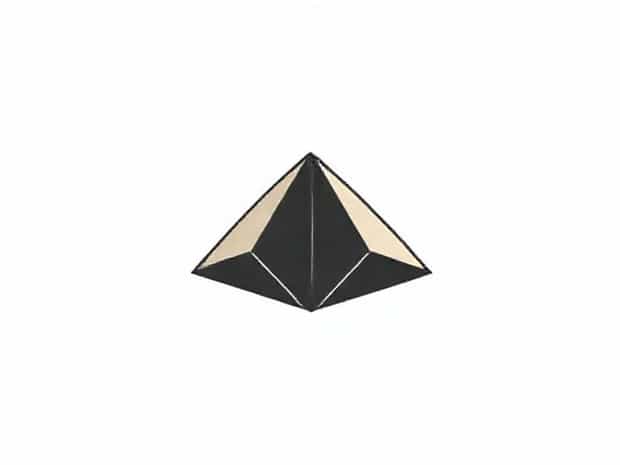
How To Draw A Pentagonal Pyramid
Learning how to draw a pentagonal pyramid is an excellent way to strengthen your geometry and drawing skills. This solid figure, with its five-sided polygon base and triangular faces meeting at a single apex, appears in both mathematical studies and real-world architectural designs. A well-drawn pentagonal pyramid diagram requires careful planning, neat lines, and correct labelling. Understanding each step helps students visualize three-dimensional shapes and their properties. With patience, anyone can master the technique of sketching this geometric solid clearly and accurately.
Understanding the pentagonal pyramid
A pentagonal pyramid is a three-dimensional figure with a base shaped like a pentagon and five triangular faces that rise from each edge of the base to meet at one apex. Together, the base and triangles form a solid with six faces, ten edges, and six vertices. This unique structure is often used in geometry lessons, architectural blueprints, and even in art to demonstrate balance and symmetry. Before learning how to draw it, it is important to understand its components and proportions.
Key parts of the pyramid
- BaseA regular pentagon, meaning all sides and angles are equal.
- EdgesTen line segments, with five belonging to the base and five connecting the apex to each corner of the pentagon.
- ApexThe single point above the base where all triangular faces meet.
- FacesOne pentagonal base and five triangular lateral faces.
- VerticesSix points in total, including five from the base and one apex.
Materials needed for drawing
To draw a neat pentagonal pyramid, you only need a few basic tools. Using the right materials ensures that your drawing looks symmetrical and precise.
- Pencil and eraser for sketching and correcting mistakes.
- Ruler for drawing straight and accurate lines.
- Protractor or compass for constructing the pentagon with equal sides and angles.
- Fine-tip pen (optional) to trace the final drawing and make labels clearer.
- Graph paper (optional) for easier alignment of angles and edges.
Step-by-step instructions to draw a pentagonal pyramid
Follow these steps carefully to create a clear, well-proportioned drawing of a pentagonal pyramid. It may take a few attempts to achieve perfect symmetry, but practice will improve the result.
Step 1 Draw the base pentagon
Start with a regular pentagon. You can use a protractor or compass to make sure all five sides are equal in length and all angles measure 108 degrees. Place it horizontally on your paper so that it forms the foundation of your pyramid.
Step 2 Mark the apex
Decide where you want the apex to be. Place it directly above the center of the pentagon base to ensure symmetry. Use a ruler to lightly mark a vertical guideline extending upward from the pentagon’s center to determine the position of the apex.
Step 3 Connect apex to base vertices
From the apex point, draw straight lines to each of the five vertices of the pentagon. These will form the triangular lateral faces. Make sure the lines are neat and converge correctly at the apex.
Step 4 Show hidden edges
Since the pentagonal pyramid is a three-dimensional object, some edges will not be directly visible. Use dashed lines to represent the hidden edges of the base and any triangular faces not visible from the viewer’s perspective. This technique helps the drawing look more realistic and geometrically accurate.
Step 5 Finalize and label the parts
Trace over the visible edges with a darker pencil or pen. Then, clearly label important parts such as the base, edges, apex, and triangular faces. If the drawing is for a geometry assignment, you can number the vertices (A, B, C, D, E for the pentagon and P for the apex) to make descriptions easier.
Text-based representation of a pentagonal pyramid
If you are unable to include an actual diagram, a text-based sketch can serve as a basic reference
P (Apex) /|\ \ \ / | \ \ \ / | \ \ \ A---B---C---D---E (Pentagon Base) Labels P = Apex ABCDE = Pentagonal Base Lines PA, PB, PC, PD, PE = Lateral Edges
Tips for accuracy and neatness
Drawing geometric shapes requires patience and practice. Here are some tips to make your pentagonal pyramid diagram look professional and accurate
- Always begin with light pencil strokes to make corrections easier.
- Check that the base pentagon is regular; otherwise, the pyramid will look uneven.
- Place the apex high enough to give the pyramid proper height and balance.
- Use dashed lines to distinguish hidden edges, which adds depth to the drawing.
- Label all important parts clearly for easy reference during explanations.
Applications of pentagonal pyramids
Understanding how to draw a pentagonal pyramid is not only useful in geometry exercises but also valuable in different fields. For example, architects and engineers often rely on pyramid structures to explore stability and symmetry in design. Artists may use pyramids in sketches or paintings to create depth and structure. Students can also use this knowledge in project work or mathematics competitions.
In mathematics
Drawing a pentagonal pyramid helps students understand three-dimensional geometry, surface area, and volume. Once the diagram is complete, it can be used to calculate properties using formulas.
In architecture
Pyramids, including pentagonal ones, inspire unique building designs. Their geometric stability makes them strong models for real-world structures, particularly when exploring modern, unconventional shapes.
In art and design
Artists often include pyramids in their work to practice perspective drawing. A pentagonal pyramid provides a more complex challenge than a triangular or square pyramid, making it excellent practice for developing drawing skills.
Common mistakes to avoid
Even though the process seems straightforward, learners often encounter difficulties when sketching a pentagonal pyramid. Below are common mistakes and how to avoid them
- Uneven pentagon base always measure sides and angles carefully.
- Apex not centered this makes the pyramid appear slanted.
- Incorrect hidden edges remember to use dashed lines for parts not visible.
- Neglecting labels without labels, the educational purpose of the drawing is reduced.
Mastering how to draw a pentagonal pyramid enhances both mathematical understanding and drawing ability. The process begins with a regular pentagon base, followed by positioning the apex, connecting edges, and carefully distinguishing visible and hidden lines. With practice, the drawing becomes both accurate and visually clear. By labelling all essential parts and applying neat techniques, anyone can create a well-structured diagram that serves in education, architecture, or artistic practice. The pentagonal pyramid remains a fascinating shape, blending geometry and creativity into one exercise that rewards patience and precision.