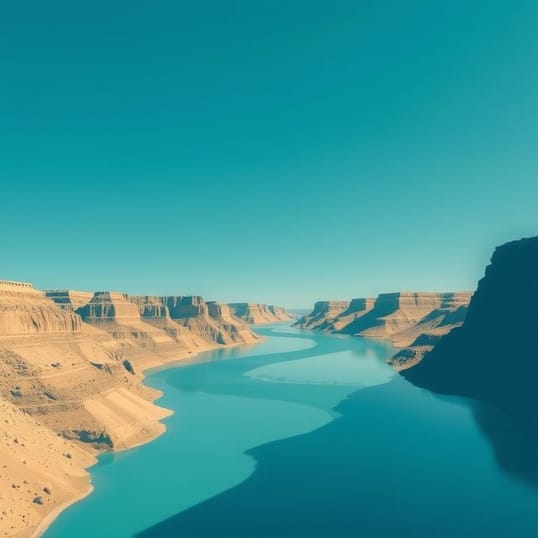
How Long Is The Euphrates River
The Euphrates River is one of the most historically significant and geographically prominent rivers in the world, often associated with the cradle of civilization in Mesopotamia. Flowing through multiple countries in the Middle East, the river has been a source of water, life, and cultural development for thousands of years. Many people are curious about how long the Euphrates River actually is, as understanding its length helps put into perspective its importance for agriculture, transportation, and human settlements. The river’s journey through Turkey, Syria, and Iraq highlights both its natural grandeur and the modern challenges it faces due to environmental and political factors.
Geographical Overview of the Euphrates River
The Euphrates River originates in eastern Turkey, where its headwaters arise from the confluence of several smaller streams and tributaries in the Armenian Highlands. From there, it flows southeast through Syria before entering Iraq, ultimately merging with the Tigris River to form the Shatt al-Arab, which empties into the Persian Gulf. The river passes through diverse terrains, including mountainous regions, arid plains, and fertile valleys, supporting both natural ecosystems and human communities along its banks.
Length of the Euphrates River
The total length of the Euphrates River is approximately 2,800 kilometers (1,740 miles), making it the longest river in Western Asia. Its extensive length allows it to traverse various climatic zones and geographical regions, influencing agriculture, transportation, and settlement patterns throughout history. The river’s length is divided among three main countries
- TurkeyApproximately 1,230 kilometers (764 miles), where the river begins in the highlands and flows through several Turkish provinces.
- SyriaAbout 710 kilometers (441 miles), where it passes through arid regions and supports agricultural communities.
- IraqRoughly 900 kilometers (560 miles), where it joins the Tigris and contributes to the formation of the Shatt al-Arab waterway before reaching the Persian Gulf.
Historical Significance of the River
The Euphrates River has played a central role in human history, particularly in Mesopotamia, which is often called the cradle of civilization.” Ancient cities such as Babylon, Ur, and Mari were established along its banks, taking advantage of fertile soil and the river’s water for irrigation. Over the centuries, the river’s length facilitated trade, cultural exchange, and the development of complex societies. It enabled transportation and communication across vast distances, connecting communities in Turkey, Syria, and Iraq.
Role in Agriculture and Settlements
The length of the Euphrates River has been critical for sustaining agriculture in otherwise arid regions. The river’s waters irrigate extensive fields of wheat, barley, and other crops, supporting populations along its course. Ancient irrigation systems and canals were built to harness the river’s flow, allowing civilizations to thrive for millennia. Even today, the Euphrates remains a lifeline for farmers and rural communities, highlighting how its length and reach are directly tied to human survival and development.
Modern Importance and Water Management
In contemporary times, the Euphrates River continues to be of immense importance for Turkey, Syria, and Iraq. Its length covers multiple regions that rely on the river for drinking water, agriculture, industry, and electricity generation through hydroelectric dams. Large-scale projects, particularly in Turkey, have sought to control the river’s flow and utilize its resources efficiently. The river’s length and path across borders, however, create challenges for water-sharing agreements, international relations, and sustainable management.
Environmental Challenges Along Its Length
The long course of the Euphrates exposes it to a variety of environmental challenges. Climate change, reduced rainfall, dam construction, and over-extraction for agriculture have contributed to decreasing water levels in parts of the river. Pollution from industrial and agricultural runoff also affects water quality, impacting both humans and ecosystems. Efforts to monitor and manage the river across its 2,800 kilometers are critical to preserving its ecological integrity and sustaining the communities that depend on it.
Ecological Significance
The Euphrates River’s extensive length creates a diverse set of habitats for flora and fauna. From mountainous regions in Turkey to marshlands in Iraq, the river supports a wide range of wildlife, including fish, birds, and mammals. The river’s floodplains are particularly important for maintaining biodiversity and providing fertile soil for agriculture. Protecting these ecosystems along the entire length of the Euphrates is essential for both environmental conservation and human well-being.
Cultural and Archaeological Sites
Because the river stretches across multiple historical regions, it is home to numerous archaeological and cultural sites. Ancient temples, city ruins, and historical monuments line its banks, demonstrating how civilizations developed in proximity to the Euphrates. Its length allowed for the spread of culture, religion, and technology over vast areas, linking distant communities through trade routes and communication networks. Understanding the full length of the river also provides insight into the spatial distribution of these historical sites.
Challenges in Measuring the Euphrates’ Length
Measuring the exact length of the Euphrates River can be challenging due to its meandering path, seasonal changes in flow, and multiple tributaries. River courses can shift over time due to natural erosion, sediment deposition, and human intervention. Nonetheless, the generally accepted length of around 2,800 kilometers provides a framework for understanding the river’s scale, its impact on civilizations, and its role in the environment. Researchers use satellite imagery, hydrological data, and historical records to track its course accurately.
International Cooperation and River Management
Given that the Euphrates traverses several countries, international cooperation is essential to manage its resources effectively. Agreements and treaties aim to balance water usage between upstream and downstream nations, ensuring that agricultural, industrial, and domestic needs are met. The river’s length makes coordinated management complex but necessary, particularly during periods of drought or conflict. Sustainable practices are critical to maintaining the Euphrates as a vital water source for generations to come.
The Euphrates River is approximately 2,800 kilometers (1,740 miles) long, flowing through Turkey, Syria, and Iraq before joining the Tigris and emptying into the Persian Gulf. Its length has made it a central feature in human history, providing water for agriculture, supporting settlements, and facilitating trade and cultural exchange. Modern challenges such as climate change, dam construction, and water management underscore the importance of sustainable practices along its entire course. From its headwaters in the mountains of Turkey to its marshlands in Iraq, the Euphrates River continues to be a lifeline for millions of people and a symbol of the enduring connection between natural waterways and human civilization. Understanding how long the river is helps contextualize its ecological, historical, and economic significance across the Middle East.