Defensive Walls In Battlements
Throughout history, defensive walls in battlements have stood as some of the most iconic symbols of human ingenuity and survival. From medieval castles to fortified cities, these structures were not merely architectural marvels but essential lifelines that determined the fate of entire communities. They were designed to repel invaders, protect inhabitants, and showcase the strength of kingdoms or empires. Studying defensive walls in battlements provides a glimpse into military strategy, engineering brilliance, and the cultural values of societies that prioritized protection as a cornerstone of existence.
The Role of Defensive Walls in Battlements
Defensive walls in battlements were constructed with the primary purpose of resisting enemy attacks. They created barriers that delayed or completely stopped advancing forces. These walls were often combined with towers, gates, and moats, making it extremely difficult for hostile armies to breach. In times when siege warfare was common, having a strong system of defensive walls could mean the difference between victory and destruction.
Aside from their military role, these walls often symbolized political power and authority. A city enclosed by high, thick battlement walls projected wealth, organization, and dominance. They were not just protection but also a form of propaganda that displayed the might of rulers to both allies and enemies.
Key Features of Battlement Walls
The design of defensive walls in battlements varied depending on geography, available resources, and technological development. However, certain features were nearly universal because they proved effective in battle.
Merlons and Crenels
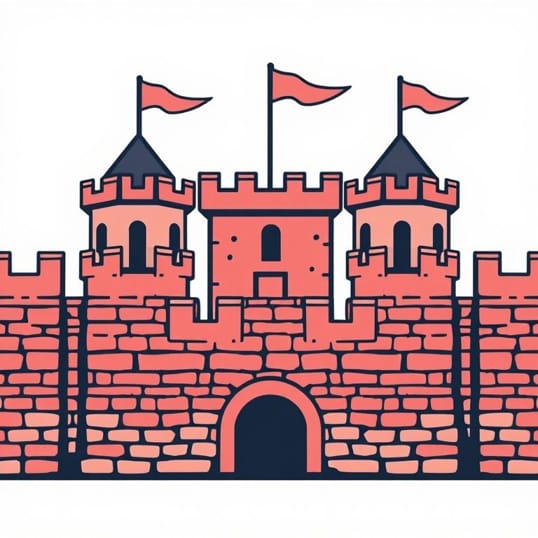
Perhaps the most recognizable feature of battlement walls is the alternating pattern of merlons and crenels. Merlons are the solid upright sections that provided cover for defenders, while crenels are the gaps that allowed archers to shoot arrows or crossbow bolts. This design offered both protection and offensive capability, allowing defenders to strike without exposing themselves fully to incoming fire.
Machicolations
Machicolations were stone projections with openings in the floor through which defenders could drop stones, boiling water, or burning oil on attackers attempting to scale the walls. This feature added another layer of protection against direct assaults at the base of the fortification.
Walkways and Parapets
Walkways built along the tops of defensive walls allowed soldiers to patrol, transport supplies, and reposition quickly during combat. Parapets, or protective walls at the edge of the walkways, ensured that defenders could fight effectively without excessive exposure to enemy projectiles.
Materials and Construction Techniques
The effectiveness of defensive walls in battlements often depended on the materials used and the craftsmanship of builders. In regions rich in stone, such as Europe and the Middle East, massive stone blocks were favored for their durability. In contrast, areas lacking in stone might rely on brick, wood, or earth reinforced with other materials.
Construction techniques included layering walls with multiple defensive barriers, creating double or triple walls in some fortresses. These multiple layers forced attackers to breach one wall only to face another, buying defenders valuable time to organize counterattacks. Mortar, lime, and sometimes iron clamps were used to strengthen the structures further, ensuring they could withstand both natural erosion and the force of siege engines.
Defensive Strategies Supported by Battlements
Defensive walls were not passive barriers; they played an active role in military strategy. Their design enabled defenders to use height and structure to their advantage.
Archer Superiority
By stationing archers along the battlements, defenders could fire from above with increased accuracy and range. This advantage often forced attackers to take cover or sustain heavy casualties before they could even approach the walls.
Delayed Sieges
Strong walls extended the length of sieges, exhausting enemy supplies and morale. Attackers had to employ siege towers, battering rams, and trebuchets to make progress, giving defenders more opportunities to resist or call for reinforcements.
Psychological Warfare
The very sight of massive defensive walls and battlements often discouraged smaller or less-equipped armies. The intimidation factor of towering stone fortifications cannot be underestimated, as it played a role in deterring conflict altogether.
Examples of Famous Defensive Walls and Battlements
Across different regions and eras, some fortifications stand out for their size, durability, or historical importance. These examples illustrate how widespread and essential defensive walls were to societies worldwide.
- The Great Wall of ChinaSpanning thousands of miles, it combined battlements, towers, and natural barriers to protect Chinese dynasties from nomadic invasions.
- Medieval Castles of EuropeCastles in England, France, and Germany often featured complex battlements designed to resist siege engines and armies.
- Walls of ConstantinopleConsidered nearly impregnable for centuries, these layered defenses protected the Byzantine Empire until the rise of gunpowder artillery.
- Middle Eastern FortressesMany Islamic and Crusader-era fortifications in the Middle East featured advanced battlement designs adapted to desert environments.
Technological Advancements and the Decline of Battlements
For centuries, defensive walls in battlements were the ultimate form of protection. However, the invention of gunpowder and cannons in the late Middle Ages dramatically changed warfare. Stone walls that once repelled arrows and catapults crumbled under the power of explosive artillery. As firearms and cannons became more common, battlements gradually lost their effectiveness.
Despite this decline, the principles behind battlement design influenced later military architecture. Fortresses in the gunpowder era incorporated angled bastions, star-shaped walls, and earthen ramparts that absorbed cannon fire. While traditional crenellated battlements faded, their legacy continued in evolving fortification systems.
Cultural Significance of Defensive Walls
Beyond warfare, defensive walls in battlements carried cultural and symbolic significance. They represented safety, unity, and identity for the communities they protected. In many cultures, city walls became central to local pride and mythology. Festivals, rituals, and even legal systems were often tied to the boundaries defined by these fortifications.
Architecturally, battlements influenced styles of civic buildings, churches, and even decorative art. The image of crenellated walls became associated with authority and endurance, a motif still used in modern architecture and design.
Modern Relevance and Legacy
Today, defensive walls in battlements are admired primarily as historical relics and tourist attractions. Castles, city walls, and ancient fortresses attract millions of visitors each year, offering educational insight into the past. Their enduring presence also reminds us of the resourcefulness of earlier civilizations in the face of constant conflict.
Military historians continue to study these structures to understand ancient tactics, while architects and engineers marvel at the craftsmanship that allowed many of these walls to survive for centuries. In a symbolic sense, defensive walls remain metaphors for security and resilience in literature, politics, and popular culture.
Defensive walls in battlements are a testament to human determination to safeguard communities, assert power, and adapt to changing threats. Their designs combined functionality with symbolism, making them both formidable in war and iconic in culture. While their military role eventually diminished with the rise of artillery, their architectural and historical importance endures. By studying these fortifications, we gain insight not only into ancient warfare but also into the resilience and creativity of societies that shaped our world.