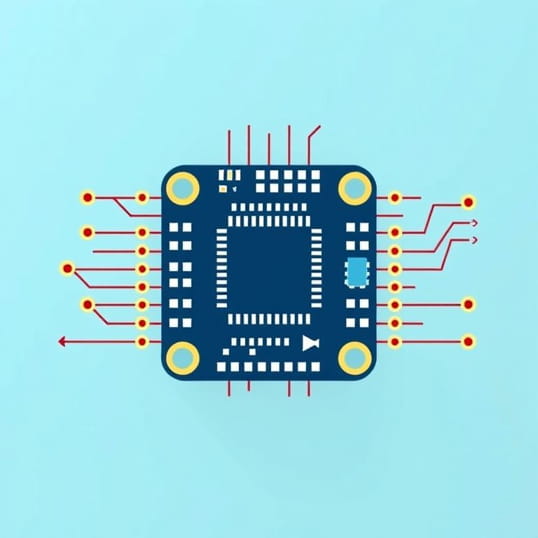
Explain How A Microcontroller Can Be Programmed
Programming a microcontroller is an essential skill in modern electronics and embedded systems. Microcontrollers are compact integrated circuits designed to control specific functions in devices ranging from home appliances to advanced robotics. To program a microcontroller, engineers and hobbyists write code that instructs the device how to interact with sensors, actuators, and other components. Understanding the steps involved, the tools required, and the best practices ensures that the microcontroller performs the desired tasks efficiently and reliably.
Understanding Microcontrollers
A microcontroller is a small computer on a single chip, containing a processor, memory, and input/output peripherals. Unlike general-purpose computers, microcontrollers are designed for dedicated tasks. Common examples include Arduino boards, PIC microcontrollers, and STM32 series. Programming a microcontroller allows users to control physical devices, process data from sensors, and communicate with other systems through protocols like UART, I2C, or SPI.
Steps to Program a Microcontroller
The process of programming a microcontroller typically involves several key steps, including choosing the right microcontroller, writing code, compiling it, and uploading it to the device. Each step requires careful attention to ensure the microcontroller behaves as expected.
Step 1 Selecting a Microcontroller
Choosing the appropriate microcontroller depends on the project requirements. Factors such as processing speed, memory size, number of input/output pins, and communication interfaces are important. For instance, an Arduino Uno is suitable for simple educational projects, while an STM32 microcontroller may be chosen for more complex, high-performance applications.
Step 2 Writing the Program
Programming begins with writing code using a programming language supported by the microcontroller. Common languages include C, C++, and Python for microcontrollers like MicroPython. The code typically includes instructions for reading sensor data, processing information, and controlling actuators such as motors or LEDs.
- Initialize hardware components such as sensors, displays, and communication modules.
- Define the main program logic to handle inputs and outputs.
- Include delay functions or timers for precise control of operations.
Step 3 Compiling the Code
Once the code is written, it must be compiled into a binary format that the microcontroller can understand. Compilation converts human-readable code into machine code, which is executed by the microcontroller’s processor. Most development environments provide a compile button or command that checks the code for errors and generates the necessary binary files.
Step 4 Uploading the Program
After compilation, the next step is to upload the program to the microcontroller. This is usually done via a USB connection, though some microcontrollers support wireless programming through Bluetooth or Wi-Fi. The process involves placing the microcontroller into a programming mode, sending the compiled binary, and verifying that it has been correctly written to memory.
Tools for Microcontroller Programming
Various tools and environments simplify microcontroller programming
Integrated Development Environments (IDEs)
IDEs provide a comprehensive platform for writing, compiling, and uploading code. Examples include
- Arduino IDEUser-friendly and widely used for educational and hobby projects.
- Microchip MPLABSuitable for PIC microcontrollers.
- STM32CubeIDEIdeal for STM32 microcontrollers, offering advanced debugging and configuration tools.
Programmers and Debuggers
Some microcontrollers require external programmers to upload code, especially in professional applications. Debuggers allow developers to step through code, set breakpoints, and monitor variables, which is useful for troubleshooting complex systems.
Libraries and Frameworks
Using pre-written libraries simplifies the programming process. Libraries provide functions for handling sensors, displays, motors, and communication protocols, allowing users to focus on the core logic of their projects rather than low-level hardware control.
Best Practices in Programming Microcontrollers
Following best practices ensures reliable and efficient operation of the microcontroller
- Write modular code with functions or classes for repetitive tasks.
- Comment code thoroughly to improve readability and maintainability.
- Use consistent naming conventions for variables and functions.
- Test code incrementally to identify and fix errors early.
- Consider power management and memory limitations to optimize performance.
Advanced Programming Techniques
For more complex applications, advanced techniques can be employed
Interrupts
Interrupts allow the microcontroller to respond immediately to external events, such as button presses or sensor signals, without waiting for the main program loop.
Timers and PWM
Timers are used to execute tasks at precise intervals, while Pulse Width Modulation (PWM) controls devices like motors and LEDs with varying intensity or speed.
Communication Protocols
Microcontrollers often communicate with other devices using protocols like UART, SPI, or I2C. Programming these interfaces allows for integration with other sensors, displays, and external systems.
Common Applications
Programmed microcontrollers are used in countless applications
- Home automation systems controlling lights, temperature, and security devices.
- Robotics projects, including autonomous vehicles and robotic arms.
- Wearable devices like smart watches and fitness trackers.
- Industrial automation for controlling machinery and monitoring processes.
Programming a microcontroller involves selecting the right device, writing and compiling code, and uploading it to the hardware. By using the appropriate tools, following best practices, and understanding advanced techniques like interrupts, timers, and communication protocols, users can develop versatile and reliable embedded systems. Mastering microcontroller programming opens opportunities in electronics, robotics, home automation, and many other fields, allowing individuals to create intelligent systems that interact seamlessly with the physical world.