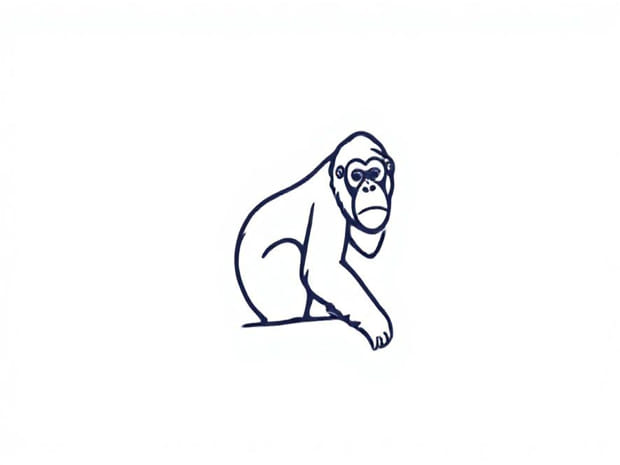
How To Draw An Orangutan
Drawing an orangutan is a rewarding experience that allows artists to explore the unique anatomy, expressions, and textures of one of the most fascinating primates in the animal kingdom. Orangutans are known for their long, strong arms, expressive faces, and dense reddish-brown fur, making them both challenging and enjoyable subjects to draw. Understanding how to capture their proportions, facial features, and body posture is essential for creating a realistic or stylized illustration. Whether your goal is a wildlife sketch, a digital painting, or a cartoon version, learning how to draw an orangutan can enhance your skills in animal anatomy, texture rendering, and expressive detail.
Understanding Orangutan Anatomy
Before beginning a drawing, it is crucial to study the anatomy of an orangutan. These primates have long, powerful arms that are much longer than their legs, allowing them to swing from tree branches with ease. Their hands and feet are well-adapted for gripping, with opposable thumbs and strong fingers. The face of an orangutan is highly expressive, with a prominent brow ridge, wide-set eyes, and a pronounced jaw. Males often have large cheek pads called flanges. The body is covered with thick, reddish-brown hair that varies in length and density across different areas. Understanding these features helps you create a drawing that is proportionally accurate and anatomically convincing.
Gathering Reference Material
Reference material is essential when drawing an orangutan. Photographs, videos, and wildlife documentaries provide detailed views of their posture, fur texture, and expressions. Observing orangutans in motion helps you capture natural poses, such as sitting, climbing, or swinging. Even studying sketches and illustrations by wildlife artists can provide insights into how to simplify complex forms while maintaining accuracy. Good references allow you to understand how light interacts with the orangutan’s fur and how shadows define its musculature.
Basic Steps to Draw an Orangutan
Breaking the drawing process into steps makes it easier to capture the complexity of an orangutan’s form. Starting with basic shapes and gradually refining them ensures accurate proportions and helps maintain balance throughout the illustration.
Step 1 Sketching the Basic Shapes
Begin by drawing simple shapes to outline the orangutan’s body. Use an oval for the torso and a smaller oval for the head. Add elongated ovals for the arms and shorter ovals for the legs. This basic framework establishes proportion and position, allowing you to adjust the pose before adding details. A slight curve in the spine can suggest movement or a natural sitting posture.
Step 2 Defining the Head and Facial Features
Next, focus on the head and facial features. Draw the eyes, nose, and mouth according to the orangutan’s unique structure. The eyes are round and expressive, often conveying emotion. The nose is broad with flared nostrils, and the mouth is wide with a prominent jawline. For male orangutans, consider adding cheek pads. Sketch the ears slightly behind the eyes, partially covered by fur. Pay attention to facial proportions, as the face is one of the most recognizable features of an orangutan.
Step 3 Outlining the Limbs and Hands
Orangutans have long, muscular arms, so emphasize their length and curvature. Hands and feet are essential for grip, so add elongated fingers and toes with slight curves. Ensure the arms appear powerful yet flexible, showing the potential for swinging or climbing. The legs are shorter but sturdy, and the knees may be bent if the orangutan is sitting or crouching. Using reference images here is especially helpful for realistic limb positioning and joint angles.
Adding Fur and Texture
Fur is a defining characteristic of an orangutan, and capturing its texture is crucial for a realistic drawing. Use short, overlapping strokes to suggest the density and direction of the hair. Pay attention to areas where fur is longer, such as the arms and shoulders, and where it is shorter, like the face and hands. Varying stroke length and pressure can add depth and dimension, creating a more lifelike appearance. For stylized drawings, simplify the fur into flowing lines or larger shapes to maintain the overall form without excessive detail.
Shading and Volume
Shading helps make your orangutan drawing appear three-dimensional. Use light and shadow to define the body’s musculature, the curves of the face, and the depth of the limbs. Shadows under the arms, along the torso, and around the face add realism. Highlight areas where light naturally falls, such as the top of the head and shoulders. Proper shading conveys weight and volume, making your illustration more dynamic and engaging.
Tips for Realistic Drawings
- Focus on proportions long arms, shorter legs, and a rounded torso.
- Observe facial expressions carefully; orangutans have expressive eyes and mouths.
- Layer the fur using overlapping strokes for depth and texture.
- Use reference images for poses and natural movements.
- Pay attention to light and shadow to create volume.
- Refine details gradually, starting from basic shapes to complex textures.
Tips for Cartoon or Stylized Orangutans
For a cartoon or stylized version, exaggeration can enhance personality. Make the eyes larger and rounder, exaggerate the arm length, or simplify the fur into bold, flowing shapes. Emphasize facial expressions to convey emotion, such as curiosity or playfulness. Stylized hands and feet can be less anatomically precise, focusing instead on expressive gestures. Coloring with bright, warm tones can make your orangutan drawing appealing for children’s books or educational illustrations.
Common Mistakes to Avoid
Artists often make several common mistakes when drawing orangutans. One is incorrect limb proportions, especially making the arms too short. Another is neglecting facial detail, which reduces the orangutan’s recognizable expression. Overcomplicating fur can overwhelm the drawing, while insufficient shading can make the body appear flat. Maintaining correct proportions, studying references, and layering details gradually help avoid these pitfalls.
Enhancing Your Orangutan Drawing
Once the basic drawing is complete, consider adding background elements such as jungle foliage, tree branches, or a forest canopy. These contextual elements can enhance the sense of environment and scale. Coloring adds vibrancy and realism, highlighting the reddish-brown fur and subtle facial tones. Adding small details, such as wrinkles, shadows in the fur, or highlights in the eyes, further enhances the drawing. For educational purposes, labeling body parts can also make the illustration informative.
Practice and Observation
Consistent practice is key to mastering orangutan drawings. Sketching multiple poses and studying movement helps improve proportion, anatomy, and expression. Observing real orangutans in videos or wildlife documentaries provides insight into their behavior and gestures, which can be reflected in your artwork. Over time, repeated practice allows for more accurate and expressive drawings, whether for realistic, stylized, or cartoon representations.
Drawing an orangutan requires careful observation, attention to proportions, and a focus on fur texture and expression. By starting with basic shapes, refining facial features, detailing limbs, and applying shading, artists can create realistic and compelling illustrations. For stylized versions, exaggeration of key features and expressive gestures can make the drawing engaging and fun. With consistent practice and study of references, drawing an orangutan becomes an enjoyable way to explore animal anatomy, expression, and texture while producing beautiful, lifelike artwork.
- Key Features Long arms, short legs, expressive face, reddish-brown fur
- Materials Needed Pencils, erasers, paper, optional coloring tools
- Drawing Styles Realistic, cartoon, stylized
- Important Tips Observe references, maintain proportions, layer fur, shade for volume
- Enhancements Background foliage, highlights, facial expressions
- Common Mistakes Incorrect limb proportions, flat shading, overcomplicated fur