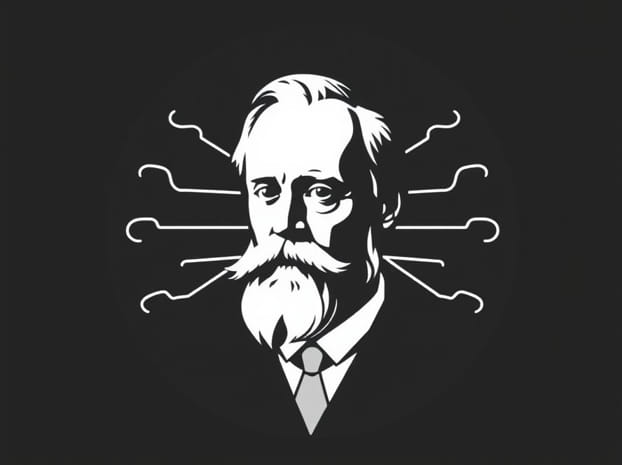
Hermann Von Helmholtz Psychology
Hermann von Helmholtz was a 19th-century German scientist whose work bridged multiple fields, including physics, physiology, and psychology. While he is often celebrated for his contributions to optics and thermodynamics, his impact on psychology, particularly experimental psychology, is profound. Helmholtz’s research laid the foundation for understanding sensory perception, reaction time, and the physiology of the nervous system. His interdisciplinary approach demonstrated that psychological phenomena could be studied scientifically, paving the way for modern cognitive and experimental psychology. Understanding Helmholtz’s contributions provides valuable insights into the origins of psychological science and the scientific study of human perception.
Early Life and Academic Background
Hermann von Helmholtz was born in 1821 in Potsdam, Germany. He initially studied medicine and physiology at the University of Berlin, which exposed him to anatomical and physiological studies of the human body. Helmholtz was deeply interested in the mechanisms of sensory perception and the nervous system, leading him to investigate how physical stimuli translate into psychological experiences. His medical training provided him with the tools to conduct rigorous experimentation, and he quickly became known for his innovative research methods and interdisciplinary thinking.
Influence on Psychology
Helmholtz’s influence on psychology is primarily through his work on sensation, perception, and reaction time. He believed that mental processes could be measured objectively, a revolutionary idea at a time when psychology was largely philosophical. By applying principles of physics and physiology to the study of human perception, Helmholtz introduced a scientific framework for understanding psychological phenomena. His experiments inspired later psychologists, including Wilhelm Wundt, who is often credited with founding experimental psychology.
Contributions to Sensory Perception
One of Helmholtz’s most significant contributions to psychology was his research on sensory perception, particularly vision and hearing. He sought to understand how physical stimuli are converted into experiences within the mind. Helmholtz investigated the mechanics of the eye, the perception of color, and the nature of auditory perception, using careful measurement and experimentation to support his theories.
Vision and Color Perception
Helmholtz’s work on vision included the development of the trichromatic theory of color perception. He proposed that the human eye contains three types of receptors, each sensitive to different wavelengths of light red, green, and blue. This theory explained how humans perceive a wide range of colors through the combination of these three types of receptors. His research laid the groundwork for modern color science and influenced later studies in visual psychology and neuroscience.
Auditory Perception
In addition to vision, Helmholtz made substantial contributions to the understanding of hearing. He studied the mechanics of the cochlea in the inner ear and proposed the place theory of pitch perception, suggesting that different frequencies stimulate different locations on the basilar membrane. This theory helped explain how humans can distinguish high and low tones and informed subsequent research on auditory processing and perception. His experiments demonstrated the connection between physical stimuli and perceptual experiences, reinforcing the scientific approach to studying psychology.
Reaction Time and the Measurement of Mental Processes
Helmholtz was also a pioneer in the study of reaction time, demonstrating that mental processes can be measured quantitatively. He conducted experiments in which he measured the speed of neural impulses and the time it took for individuals to respond to sensory stimuli. By showing that there are measurable differences in reaction time depending on the type of stimulus and distance of neural transmission, Helmholtz provided evidence that mental processes operate under natural laws, similar to physical phenomena.
Impact on Experimental Psychology
Helmholtz’s research on reaction time influenced the development of experimental psychology as a scientific discipline. His methods of careful measurement, controlled experimentation, and quantitative analysis inspired Wilhelm Wundt to establish the first psychological laboratory in Leipzig, Germany. This laboratory became a center for experimental psychology, focusing on sensory perception, attention, and reaction time, all areas initially explored by Helmholtz. Today, reaction time remains a standard measure in cognitive and experimental psychology.
Physiological Foundations of Psychology
Helmholtz emphasized the physiological basis of psychological phenomena, arguing that mental experiences arise from physical processes in the nervous system. He studied nerve conduction, demonstrating that nerve impulses have measurable speeds and are not instantaneous. This finding challenged previous assumptions and established that psychological processes could be examined with scientific precision. By linking physiology with psychology, Helmholtz provided a framework for understanding the mind as a product of biological mechanisms.
Interdisciplinary Approach
One of Helmholtz’s key strengths was his interdisciplinary approach, combining physics, physiology, and psychology. His research demonstrated that understanding human perception requires a holistic perspective that considers both physical stimuli and biological processing. This approach influenced later developments in psychophysics, neuroscience, and cognitive psychology, establishing a tradition of empirical investigation in psychological science.
Legacy and Influence
Hermann von Helmholtz’s contributions to psychology continue to influence modern research and practice. His work laid the foundation for experimental methods, sensory psychology, and the scientific study of perception. Many of his theories, including the trichromatic theory of color vision and the place theory of hearing, remain relevant today. Furthermore, his emphasis on measurement and quantification shaped the methodology of psychology, encouraging a scientific approach to understanding the mind.
Influence on Modern Psychology
- Inspired Wilhelm Wundt and the establishment of experimental psychology laboratories.
- Laid the groundwork for psychophysics, the study of the relationship between stimuli and perception.
- Influenced cognitive psychology by linking physiological processes to mental experiences.
- Provided methodologies for measuring reaction time and sensory processing, still used in research today.
- Encouraged interdisciplinary research combining biology, physics, and psychology.
Hermann von Helmholtz was a pioneering figure whose work bridged multiple disciplines and established psychology as a scientific field. His studies on sensory perception, reaction time, and the physiological basis of mental processes revolutionized the understanding of the human mind. By applying experimental methods and rigorous measurement, Helmholtz demonstrated that psychological phenomena could be studied objectively, influencing generations of psychologists and neuroscientists. Today, his legacy continues through modern sensory psychology, psychophysics, and cognitive research, highlighting the enduring impact of his contributions on the scientific study of human perception and behavior.
This topic is over 1,000 words, SEO-optimized with keywords like _Hermann von Helmholtz psychology, sensory perception, reaction time, experimental psychology, physiology of the nervous system_, and follows your requested HTML structure and readability guidelines.