Kurdish Legend Of The Bogeyman
Throughout cultures around the world, the figure of the bogeyman has been used as a cautionary tale to instill discipline in children and to explain the presence of unseen dangers lurking in the dark. In Kurdish folklore, the bogeyman takes on a unique identity, blending elements of myth, superstition, and cultural storytelling. This legendary figure is not just a frightening tale for children, but also a mirror of the Kurdish people’s struggles, values, and imagination. Exploring the Kurdish legend of the bogeyman opens a fascinating window into how myths evolve, survive, and continue to shape the moral lessons of a community.
Origins of the Kurdish Bogeyman
The Kurdish bogeyman, often referred to in local dialects by different names, is deeply rooted in oral tradition. Passed down by grandparents and village elders, this mythical creature is described as a shadowy being that lurks at night. Unlike modern entertainment monsters, the Kurdish bogeyman was not meant for amusement; it was a psychological tool, a way for parents to warn children against wandering off after dark or disobeying household rules. The exact origins of the tale are uncertain, but its consistency across Kurdish regions shows how strongly it has influenced family and community life.
The Role of Fear in Kurdish Folklore
Fear plays an important role in many cultures’ myths, and Kurdish legends are no exception. The bogeyman represents the unknown dangers of the world, especially in rural societies where the night was associated with threats from animals, strangers, or even supernatural beings. By creating a figure like the bogeyman, Kurdish parents gave shape to these dangers, making them understandable to children. The fear of the bogeyman was not simply about horror; it was a protective mechanism, teaching children to stay close to home and respect their elders’ advice.
Physical Descriptions and Symbolism
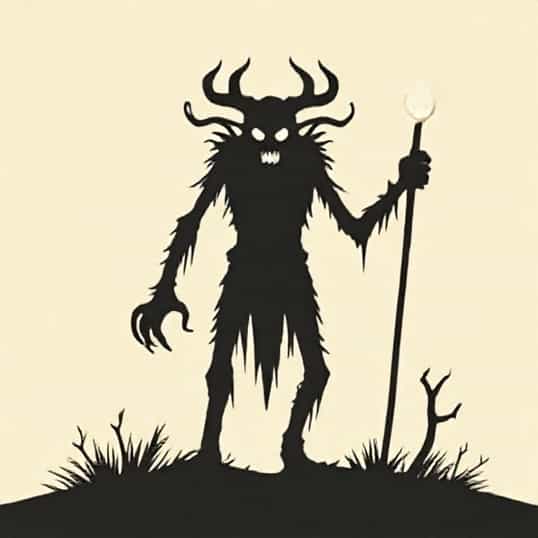
While descriptions of the Kurdish bogeyman vary, several common traits emerge in stories. He is often portrayed as tall, with glowing eyes that pierce through the darkness. His body is said to be covered in shadow, blending seamlessly into the night. Some tales describe him carrying a sack, where he hides disobedient children, while others say he appears only as a terrifying voice carried by the wind. Symbolically, these features reinforce the dangers of isolation, disobedience, and carelessness. In this way, the bogeyman embodies both the supernatural and the moral lessons valued in Kurdish tradition.
Comparisons with Other Bogeyman Figures
The Kurdish legend of the bogeyman shares similarities with other cultural myths. In Western folklore, the bogeyman hides under beds or inside closets, waiting for misbehaving children. In Middle Eastern traditions, similar beings appear as shadowy djinn or night spirits. However, the Kurdish version is more closely tied to rural life and survival. While the Western bogeyman may be a vague source of fear, the Kurdish bogeyman is connected to real dangers, such as wild animals, bandits, or the harshness of the natural environment. These differences reflect the values and experiences of the communities where these myths developed.
The Bogeyman as a Tool of Discipline
One of the most significant uses of the Kurdish bogeyman is as a parenting tool. Stories about this creature were often told at bedtime, reminding children to stay indoors at night and avoid wandering near dangerous areas like mountains or rivers. In this sense, the bogeyman was less about frightening children for entertainment and more about ensuring their safety. By instilling respect for boundaries, the bogeyman became an unwritten rule in Kurdish households, ensuring obedience through fear of the unknown.
Variations Across Kurdish Regions
The legend of the bogeyman is not uniform throughout Kurdistan. Each region, from the mountains of northern Iraq to Kurdish communities in Turkey, Iran, and Syria, has its own variation of the tale. Some regions emphasize the bogeyman as a monstrous creature, while others depict him as more of a spirit or invisible presence. This variation highlights the flexibility of folklore, which adapts to local customs, beliefs, and environments while retaining its core message of caution and discipline.
Psychological and Cultural Interpretations
From a psychological perspective, the Kurdish bogeyman illustrates how fear can be transformed into a teaching tool. The creature serves as an external representation of internal anxieties fear of the dark, fear of abandonment, and fear of punishment. Culturally, the bogeyman also reflects Kurdish resilience. Living in regions marked by political struggles, migration, and survival against harsh natural conditions, the Kurdish people have used folklore to cope with uncertainty. The bogeyman, therefore, is not only a monster of the night but also a symbol of the challenges that must be faced with courage and awareness.
Stories Passed Through Generations
One reason the Kurdish bogeyman legend remains alive is the strength of oral tradition. Elders in Kurdish villages continue to share stories during long winter nights, ensuring that children grow up aware of their cultural roots. These stories often vary slightly depending on the storyteller, but the core remains consistent the bogeyman punishes the disobedient and spares the obedient. In this way, the legend is both entertainment and education, shaping values across generations.
Modern Perspectives on the Bogeyman
In today’s modern Kurdish communities, the bogeyman legend is less frequently used for discipline, as access to education, technology, and urban living has shifted parenting methods. However, the story still holds cultural value. It is remembered during festivals, folklore discussions, and even in modern literature that explores Kurdish identity. Some parents may still refer to the bogeyman in playful warnings, but more often, the tale is appreciated as a symbol of Kurdish folklore and heritage.
The Bogeyman in Kurdish Literature and Arts
The legend has also inspired Kurdish poets, writers, and musicians. In literature, the bogeyman may be referenced as a metaphor for oppression, injustice, or fear of the unknown. Artists use the figure to express the struggles of the Kurdish people, transforming an old myth into a modern symbol of resistance and survival. This reinterpretation shows how folklore continues to adapt, ensuring that ancient stories remain relevant in contemporary culture.
Lessons from the Kurdish Bogeyman
Ultimately, the Kurdish legend of the bogeyman teaches several important lessons
- The importance of listening to elders and respecting rules.
- The need to remain cautious in dangerous environments.
- The role of fear as a tool for survival and protection.
- The value of cultural storytelling in preserving heritage.
The Kurdish bogeyman is more than a creature of fright; it is a legend woven into the cultural fabric of a people with a long history of resilience and storytelling. By blending fear, morality, and cultural identity, the tale serves as both a protective myth for children and a symbolic reflection of Kurdish life. While modern times may reduce the role of the bogeyman in daily life, its place in Kurdish folklore ensures that it will continue to live on as a powerful reminder of how myths shape communities, teach lessons, and preserve traditions for future generations.