Is The Solar Eclipse
The solar eclipse is one of the most captivating astronomical events observable from Earth, drawing the attention of scientists, skywatchers, and casual observers alike. A solar eclipse occurs when the Moon passes between the Earth and the Sun, temporarily obscuring the Sun’s light either partially or completely. This celestial alignment creates a dramatic effect in the sky, with the Sun appearing to darken or vanish for a short period. Understanding what a solar eclipse is, how it occurs, its types, and its significance in both science and culture helps explain why this event has fascinated humans for centuries.
What Is a Solar Eclipse?
A solar eclipse happens when the Moon moves directly between the Earth and the Sun, casting a shadow on the Earth’s surface. This shadow can cover a small or large area depending on the type of eclipse. Solar eclipses are relatively rare events for any given location because the Moon’s shadow only sweeps across specific parts of the Earth. The phenomenon provides a unique opportunity to study the Sun’s corona, the outermost layer of its atmosphere, which is normally hidden by the brightness of sunlight. Observing a solar eclipse requires careful safety measures, such as specialized eclipse glasses or pinhole projectors, to prevent eye damage.
How Solar Eclipses Occur
- The Moon orbits the Earth, and its path occasionally aligns with the Sun and Earth.
- When perfect alignment occurs, the Moon’s shadow falls on the Earth.
- The shadow has two main parts the umbra, where the Sun is completely blocked, and the penumbra, where only part of the Sun is obscured.
- The observer’s location within the shadow determines whether the eclipse is total, partial, or annular.
- Solar eclipses follow predictable patterns based on celestial mechanics, known as the Saros cycle.
Types of Solar Eclipses
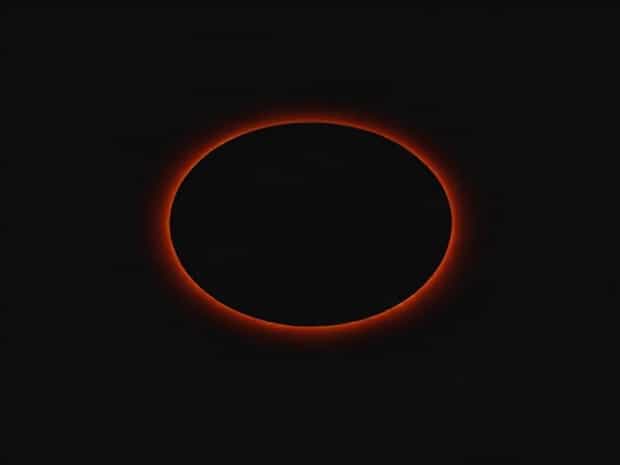
There are several types of solar eclipses, each offering a distinct visual experience. A total solar eclipse occurs when the Moon completely covers the Sun, resulting in a brief period of darkness during daytime. This is considered the most dramatic type of eclipse. An annular solar eclipse happens when the Moon covers the Sun’s center but leaves a ring-like edge, known as the ring of fire, visible. Partial solar eclipses occur when only a portion of the Sun is obscured, which is more common but less visually striking. Hybrid eclipses combine features of total and annular eclipses along different parts of the path of the Moon’s shadow.
Key Types of Solar Eclipses
- Total Eclipse – the Moon completely covers the Sun, creating daytime darkness.
- Annular Eclipse – the Moon leaves a ring of the Sun visible around its edges.
- Partial Eclipse – only part of the Sun is obscured by the Moon.
- Hybrid Eclipse – shifts between total and annular depending on the observer’s location.
Scientific Significance of Solar Eclipses
Solar eclipses are not only visually stunning but also scientifically important. During a total eclipse, the Sun’s corona becomes visible, allowing astronomers to study its structure and temperature. Historical observations of eclipses have contributed to key discoveries, such as the confirmation of general relativity through the bending of light around the Sun. Solar eclipses also provide opportunities to study the effects of sudden darkness on the environment, including temperature drops, animal behavior, and atmospheric changes. They remain a valuable tool for both professional scientists and amateur astronomers seeking to better understand our solar system.
Scientific Observations
- Study of the Sun’s corona and magnetic fields.
- Verification of astrophysical theories, including gravitational effects.
- Observation of changes in Earth’s atmosphere and temperature.
- Tracking animal and plant responses to sudden darkness.
- Educational outreach and public engagement with astronomy.
Safety Considerations During a Solar Eclipse
Looking directly at the Sun without proper protection can cause severe eye damage or permanent blindness. During a solar eclipse, even a sliver of the Sun can be harmful. Eclipse viewers should always use certified solar viewing glasses or indirect viewing methods, such as pinhole projectors or solar filters on telescopes. It is crucial to avoid makeshift methods like sunglasses, which do not provide sufficient protection. Proper safety ensures that people can enjoy the spectacle without risking eye health.
Safe Viewing Practices
- Use ISO-certified eclipse glasses specifically designed for solar viewing.
- Employ pinhole projectors to safely observe the Sun indirectly.
- Use solar filters on telescopes or binoculars for magnified views.
- Avoid looking at the Sun through unprotected lenses, sunglasses, or cameras.
- Supervise children closely to prevent accidental exposure.
Cultural and Historical Significance
Throughout history, solar eclipses have held deep cultural and symbolic meanings. Ancient civilizations often viewed eclipses as omens or messages from the gods. Many myths and legends emerged around eclipses, with stories interpreting the Sun being swallowed or obscured by supernatural forces. Today, solar eclipses continue to captivate people, inspiring festivals, photography, and scientific gatherings. Observing a solar eclipse can create a sense of awe and connection to the universe, bridging both scientific understanding and human imagination.
Cultural Impact
- Historical myths interpreting eclipses as supernatural events.
- Modern celebrations and public gatherings to witness eclipses.
- Photography and media coverage capturing eclipse phenomena.
- Inspiring educational programs and astronomy outreach.
- Encouraging cross-cultural fascination with celestial events.
Predicting Solar Eclipses
Thanks to advanced astronomical calculations, scientists can accurately predict solar eclipses decades in advance. The Moon’s orbit, Earth’s rotation, and the Sun’s position allow astronomers to determine the time, location, and type of eclipse for any given year. These predictions help communities prepare for viewing events and ensure safety measures are in place. The predictability of solar eclipses highlights the precision of celestial mechanics and provides an opportunity for public engagement in science and education.
Prediction Factors
- Orbital mechanics of the Moon and Earth.
- Path of the Moon’s shadow across the Earth.
- Timing of totality and partial phases.
- Geographic location for optimal viewing.
- Historical eclipse cycles like the Saros cycle.
The solar eclipse is an extraordinary astronomical event that blends science, beauty, and cultural significance. By understanding how a solar eclipse occurs, its types, and its impact on science and society, we can appreciate why people have been captivated by this phenomenon for centuries. Observing a solar eclipse safely allows us to witness the grandeur of the cosmos while deepening our understanding of celestial mechanics. Whether through scientific study or personal experience, the solar eclipse remains a powerful reminder of the dynamic and interconnected universe we inhabit.