Is The Milky Way On The Ecliptic?
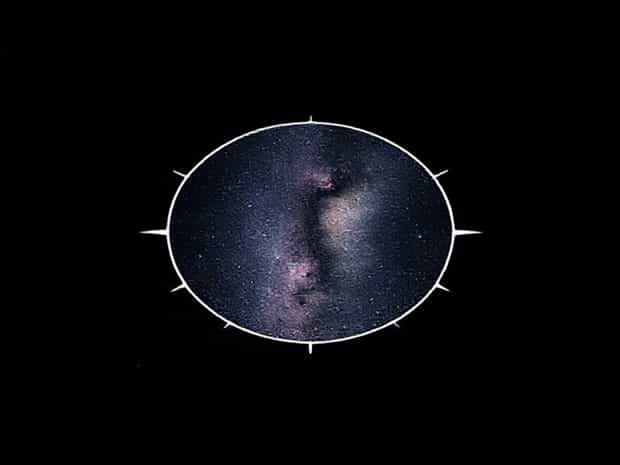
The Milky Way is one of the most striking features of the night sky, visible as a dense band of stars stretching across the heavens. Many people wonder about its relationship to the ecliptic, the apparent path the Sun takes through the sky over the course of a year. Understanding whether the Milky Way lies on the ecliptic requires a grasp of both the structure of our galaxy and the geometry of the Solar System’s orbital plane. While the ecliptic represents the plane of Earth’s orbit around the Sun, the Milky Way is the plane of our galaxy, consisting of billions of stars, dust, and gas. The orientation of these two planes relative to each other explains why the Milky Way does not align perfectly with the ecliptic but intersects it at certain points, creating unique celestial patterns.
Understanding the Ecliptic
The ecliptic is a fundamental concept in astronomy, describing the Sun’s apparent path across the celestial sphere as Earth orbits around it. This plane defines the positions of the zodiac constellations and is central to astrology and observational astronomy. The ecliptic is tilted approximately 23.5 degrees relative to Earth’s equatorial plane due to the axial tilt of the planet, influencing the seasons and the apparent motion of the Sun. All planets in the Solar System orbit roughly along this plane, which is why the Moon and planets are usually found near the ecliptic when observed from Earth. Understanding this plane is essential to determining the relationship between the Solar System and the Milky Way.
The Structure of the Milky Way
The Milky Way is a barred spiral galaxy, roughly 100,000 light-years in diameter, containing hundreds of billions of stars. It has a flattened disk shape with a central bulge and spiral arms extending outward. The plane of the Milky Way, known as the galactic plane, is where most of its stars, gas, and dust are concentrated. From Earth, this plane appears as a dense, luminous band across the night sky, particularly visible in areas with low light pollution. Unlike the ecliptic, the galactic plane is not defined by the Solar System but by the collective structure of the galaxy. Its orientation relative to Earth’s position creates the visual impression of the Milky Way cutting across various constellations.
Orientation Between the Ecliptic and the Milky Way
The ecliptic and the plane of the Milky Way are not aligned. The two planes intersect at an angle of approximately 60 degrees. This means that the Sun’s apparent path along the zodiac does not follow the densest part of the Milky Way. However, there are regions where the ecliptic crosses the Milky Way, such as near the constellations Sagittarius and Gemini. These intersections allow astronomers and skywatchers to observe planets and other celestial bodies against the backdrop of the galaxy, creating spectacular views. The angular relationship between the ecliptic and the galactic plane is crucial for understanding why certain times of the year are better for observing the Milky Way in relation to the zodiac constellations.
Visible Intersections in the Night Sky
The points where the ecliptic intersects the Milky Way are often significant in observational astronomy. For example, the Sun passes near the Milky Way’s dense region in Sagittarius during late November to December. This area contains the galactic center, home to a supermassive black hole and numerous star clusters. Similarly, in June, the ecliptic intersects the Milky Way near the constellation Gemini, allowing observers to view parts of the galaxy along the Sun’s apparent path. These intersections are temporary from a visual perspective, as the Sun’s brightness prevents direct observation during daylight, but they are essential for planning astronomical observations and astrophotography.
Implications for Astronomy
The fact that the Milky Way is not on the ecliptic has important consequences for astronomical observation and research. Since the plane of the galaxy is inclined relative to the Solar System, stars and deep-sky objects in the Milky Way are not evenly distributed along the ecliptic. This affects the visibility of certain celestial objects, the path of meteor showers, and the location of zodiacal light, which is sunlight scattered by interplanetary dust near the ecliptic. Astronomers must consider the orientation of both planes when studying the structure of the galaxy, mapping stars, or planning observations of transient events such as comets and eclipses.
The Role in Astrophotography
For astrophotographers, understanding the relationship between the Milky Way and the ecliptic is critical. Capturing the Milky Way in conjunction with planets along the ecliptic can produce stunning images, but requires knowledge of when and where these intersections occur. For instance, during summer in the Northern Hemisphere, the galactic core near Sagittarius rises in the southeast, while planets may be aligned along the ecliptic in different parts of the sky. Planning exposures and timing shots based on these celestial alignments allows photographers to showcase both planetary motion and the splendor of the galactic plane in a single frame.
Astrological Perspectives
In astrology, the ecliptic represents the path of the Sun through the zodiac signs, influencing horoscopes and celestial interpretations. The Milky Way, while not part of traditional astrology, is sometimes referenced in modern interpretations for its symbolic significance, representing cosmic awareness or spiritual insight. Its position relative to the ecliptic can be considered in specialized charts, particularly when studying galactic phenomena or deep-space influences. Although astrology primarily relies on the ecliptic, the Milky Way provides an additional layer of context, linking the Solar System to the larger galactic environment.
Observing the Milky Way Along the Ecliptic
Even though the Milky Way is not aligned with the ecliptic, observers can still witness moments where planets or the Sun’s path intersect the galactic plane. During these times, planets appear superimposed against the backdrop of dense star fields. Meteor showers originating from cometary debris along the ecliptic can also traverse areas near the Milky Way, creating a rich celestial display. Amateur astronomers often plan observing sessions around these intersections to maximize visual impact, making it possible to appreciate both the Solar System and the galaxy simultaneously.
The Milky Way is not on the ecliptic; it is inclined at an angle of about 60 degrees relative to the plane of Earth’s orbit around the Sun. This means that while the ecliptic and the galactic plane intersect at certain points, they largely follow separate paths in the sky. Understanding this relationship is essential for astronomy, astrophotography, and even modern astrological interpretations. The intersections of the ecliptic with the Milky Way provide unique observational opportunities, allowing viewers to see planets, the Sun, and other celestial bodies against the rich background of our galaxy. By appreciating the spatial orientation of these planes, observers gain a deeper understanding of both our Solar System and the broader structure of the Milky Way.
Ultimately, the Milky Way’s inclination relative to the ecliptic reminds us of the vast scales and complex geometry of the cosmos. While Earth traces its path along the ecliptic, the galaxy’s plane extends far beyond, filled with stars, nebulae, and cosmic phenomena. Observing the points where these planes intersect offers both scientific insight and awe-inspiring beauty, highlighting the intricate connections between our Solar System and the broader universe in which it resides. Understanding this celestial geometry enhances our appreciation of the night sky and the galaxy that surrounds us.