Is It Cubicle Or Cubical
English can sometimes be confusing, especially when it comes to words that sound similar but have distinct meanings. One such pair is cubicle” and “cubical.” Many people wonder which word to use in different contexts, and using the wrong term can lead to confusion in both writing and conversation. Understanding the difference between these two words is important for clarity, precision, and effective communication. This topic will explore their definitions, origins, proper usage, examples, and common mistakes to help readers confidently distinguish between “cubicle” and “cubical.”
Understanding Cubicle
The termcubiclerefers to a small, enclosed space within a larger room, often used for work, privacy, or personal activities. Cubicles are commonly found in offices, libraries, and other professional or study environments. They provide a semi-private area that helps people focus while still being part of a larger space.
Origins of Cubicle
The word “cubicle” originates from the Latin wordcubiculum, meaning “bedroom” or “sleeping chamber.” Over time, its usage evolved to describe any small, partitioned space within a larger room. In modern English, “cubicle” most commonly refers to office workstations separated by partitions.
Examples of Cubicle in Sentences
- “She decorated her office cubicle with plants and personal photos.”
- “The open-plan office was divided into several cubicles to give employees a sense of privacy.”
- “He spent most of his workday in a cubicle typing reports and answering emails.”
Cubicles are essential in office design because they balance privacy with accessibility. They are usually designed to maximize space efficiency while maintaining comfort for workers.
Understanding Cubical
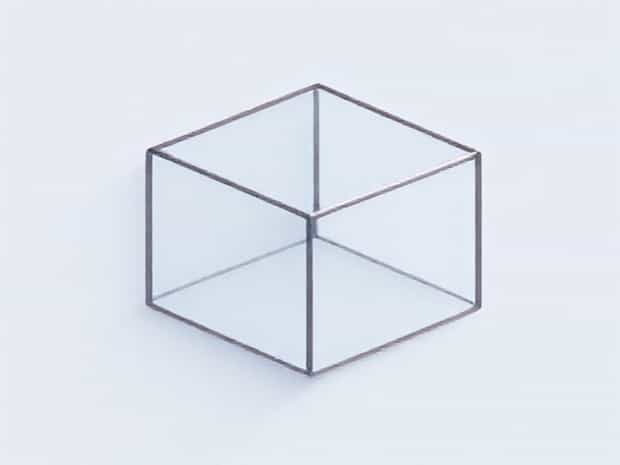
The wordcubicalis an adjective that relates to the shape of a cube or something resembling a cube. It is used primarily in mathematical, geometric, or architectural contexts to describe objects that have equal dimensions in height, width, and depth, or to convey the general sense of cube-like proportions.
Origins of Cubical
“Cubical” comes from the Latin wordcubicus, which means “pertaining to a cube.” It is closely linked to geometry and is often used in technical or scientific discussions to describe three-dimensional objects with cube-like characteristics.
Examples of Cubical in Sentences
- “The designer created a cubical sculpture that reflected sunlight from all angles.”
- “Mathematics students calculated the volume of several cubical containers.”
- “The architect suggested a cubical layout for the new building to maximize space efficiency.”
Cubical objects are not necessarily small or enclosed like cubicles. The term is descriptive of shape rather than function, making it distinct from “cubicle” in meaning and usage.
Key Differences Between Cubicle and Cubical
While “cubicle” and “cubical” may sound similar, their meanings, functions, and contexts are quite different. Understanding these differences is crucial for correct usage
- CubicleRefers to a small, partitioned space, often used for work or privacy. Common in office environments. Noun.
- CubicalDescribes something shaped like a cube or having cube-like dimensions. Primarily used in geometry, design, and architecture. Adjective.
In short, “cubicle” is about the function and space within a room, while “cubical” is about shape and dimensions.
Common Mistakes
Many people mistakenly use “cubical” when they mean “cubicle” and vice versa. Common mistakes include
- “He worked in a cubical all day” – Incorrect. The correct word is “cubicle.”
- “The cubicle sculpture was impressive” – Incorrect. The correct word is “cubical” if describing shape.
- Using “cubicle” in math or geometry to describe a cube – Incorrect.
To avoid these mistakes, always consider whether you are referring to a physical workspace (cubicle) or the geometric shape of an object (cubical).
Usage in Everyday Contexts
Office and Work Environments
Cubicles are most commonly used in professional settings to create individual workspaces in open-plan offices. They are functional and designed to give employees privacy while maintaining easy communication with colleagues.
- Examples “Each employee has a cubicle equipped with a computer and filing cabinet.”
- Office cubicles can vary in size, height, and design, depending on the company’s needs.
Mathematics and Geometry
Cubical is used primarily in educational and technical contexts to describe shapes, volumes, and spatial arrangements. In classrooms, textbooks, and architectural discussions, “cubical” conveys precise information about dimensions.
- Examples “Calculate the volume of a cubical tank with sides measuring two meters.”
- Architectural models often include cubical components for design accuracy.
“cubicle” and “cubical” are two distinct words that serve different purposes in English. “Cubicle” refers to a small, enclosed workspace within a larger room, often used in offices or libraries for privacy and focus. “Cubical,” on the other hand, is an adjective describing objects that have the shape of a cube or cube-like dimensions, commonly used in mathematics, geometry, and design. While the words sound similar, their meanings are separate, and confusing them can lead to misunderstanding. Understanding these distinctions, knowing the contexts in which each word is used, and applying them correctly in writing and speech ensures clarity, accuracy, and professionalism. By following these guidelines, writers, students, and professionals can confidently use “cubicle” and “cubical” without error, improving both communication and comprehension in various settings.