Is Anubis The God Of Death
Among the many deities of ancient Egypt, Anubis holds a fascinating place in mythology and culture. He is often recognized as the jackal-headed god associated with death, embalming, and the afterlife. Yet, many people wonder is Anubis truly the god of death, or does his role extend beyond that? To understand his position, it is essential to explore his symbolism, functions in funerary practices, and his significance in Egyptian religion. By examining these aspects, we can see why Anubis was both feared and revered, becoming one of the most memorable figures in the pantheon.
The Role of Anubis in Ancient Egypt
Anubis was primarily connected with death and what followed it. However, rather than being the direct god of death, he was more accurately the guardian of the dead. Egyptians saw him as the protector who ensured safe passage into the afterlife. He was believed to oversee mummification, guide souls through the underworld, and weigh the hearts of the deceased against the feather of Ma’at, which represented truth and justice.
Protector of the Dead
Anubis was considered a powerful guardian. He watched over tombs and cemeteries, ensuring that no harm came to the bodies or spirits of those who had passed away. In a society that placed immense importance on burial rituals, this role was crucial. Without Anubis, Egyptians feared the dead might wander without rest.
Guide of Souls
In addition to protecting the body, Anubis was believed to guide the ka, or the spirit, into the afterlife. This journey was not simple, as the soul had to pass through tests and dangers. Anubis acted as a psychopomp, a figure who escorts souls safely from the world of the living to the realm of the dead.
The Weighing of the Heart
One of the most iconic roles of Anubis was during the judgment of the soul. In the Hall of Ma’at, Anubis placed the heart of the deceased on one side of a scale and the feather of truth on the other. If the heart was heavier due to sins, the soul would be devoured by Ammit, a terrifying beast. If it balanced or was lighter, the soul was allowed to continue into the eternal afterlife. This symbolic act made Anubis a god of justice as well as death.
- Anubis ensured fairness in judgment.
- He acted as a neutral presence rather than a punishing one.
- The ritual reinforced the Egyptian belief in moral order.
Anubis and Mummification
Another central aspect of Anubis’s role was his connection to embalming. Priests who performed mummification often wore masks resembling the head of Anubis to symbolize his presence during the ritual. By doing so, they invited his protection and guidance. Through this association, Anubis was closely linked to the preservation of the body, which Egyptians believed was essential for the afterlife.
Symbolism of the Jackal
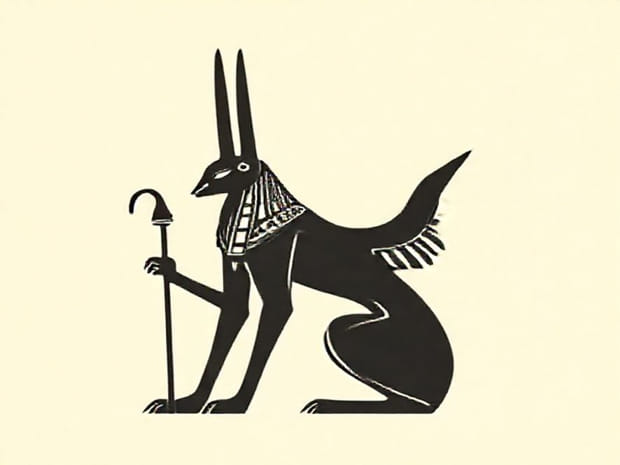
Anubis is commonly depicted with the head of a black jackal. This imagery was not random. Jackals were often seen near cemeteries, scavenging for remains. By giving Anubis the appearance of a jackal, the Egyptians transformed a feared animal into a divine protector. The black color represented both the fertile soil of the Nile and the promise of rebirth.
Was Anubis the God of Death?
While Anubis was deeply connected with death, calling him the god of death is only partially accurate. In Egyptian mythology, Osiris eventually took the central role as the ruler of the dead and god of the underworld. Anubis, however, remained vital as a guardian, embalmer, and guide. His role was not to bring death but to protect and assist those who had already passed away. This distinction is important in understanding his true place in the pantheon.
Anubis vs. Osiris
To clarify, Osiris was the lord of the underworld and overseer of resurrection. Anubis, on the other hand, was a facilitator. He prepared the dead for Osiris’s judgment and guarded them during the process. Together, they formed a complementary partnership that reflected the Egyptian worldview of balance and harmony.
Worship and Temples of Anubis
Although Anubis did not have as many grand temples as other gods, his worship was widespread. Many tombs and funerary inscriptions called upon his protection. Small statues, amulets, and carvings of Anubis were placed in burial chambers to ensure that he would watch over the deceased. His cult spread across Egypt, proving his significance in everyday religious practices.
Anubis in Rituals
Funeral rites often invoked Anubis through prayers and chants. He was asked to purify the body, safeguard it from corruption, and guide the spirit. This ritual presence reinforced the belief that death was not an end but a transition.
Anubis in Egyptian Art
Depictions of Anubis are among the most recognizable in ancient Egyptian art. He is often shown as a man with a black jackal head, sometimes holding a scepter or standing beside a scale. These artistic representations emphasized his dual role as both fierce protector and fair judge. Through art, Egyptians reminded themselves of the importance of moral conduct and preparation for the afterlife.
Anubis Beyond Ancient Egypt
The influence of Anubis did not end with the fall of ancient Egypt. His figure appears in Greek and Roman writings, often merged with similar gods of the underworld. In modern times, Anubis continues to inspire literature, films, and video games. He is often portrayed as a mysterious and powerful god, keeping alive his connection with death and mystery. This lasting presence proves the enduring fascination with Anubis as a cultural symbol.
So, is Anubis the god of death? The answer is more nuanced. Anubis was not the one who caused death, nor was he the ultimate ruler of the underworld that role belonged to Osiris. Instead, Anubis stood as the guardian of the dead, the overseer of mummification, and the fair guide in judgment. His significance lay in his ability to protect, purify, and guide souls on their journey to eternity. This is why his legacy remains powerful today, reminding us of humanity’s timeless questions about mortality and what lies beyond.