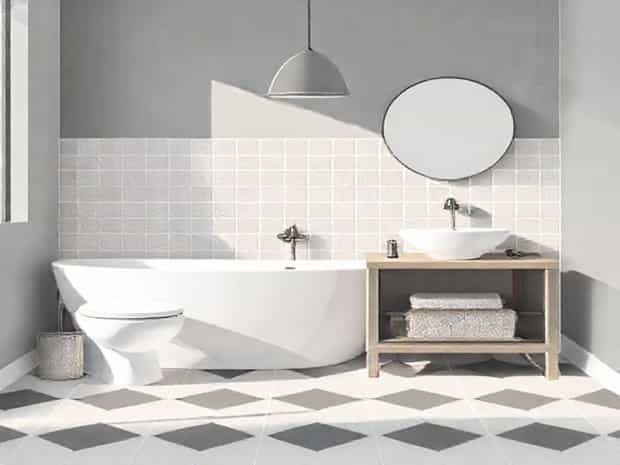
For Bathroom Floor Tiles
Choosing the right materials and finishes for bathroom floor tiles is an important decision that affects both the functionality and aesthetics of your bathroom. Bathroom floors experience constant exposure to water, humidity, and foot traffic, so selecting durable, water-resistant, and slip-resistant tiles is essential. Beyond practicality, the style, color, and texture of the tiles contribute to the overall look of the space, creating either a modern, elegant, or cozy atmosphere. Understanding the types of tiles, installation methods, and maintenance requirements can help homeowners make informed choices that enhance the bathroom’s beauty and longevity.
Types of Bathroom Floor Tiles
There is a wide variety of tiles suitable for bathroom floors, each with unique characteristics, advantages, and aesthetic appeal. Knowing the differences between tile types allows you to choose a solution that meets both style and practical needs.
Ceramic Tiles
Ceramic tiles are among the most popular choices for bathroom floors due to their affordability, durability, and wide range of designs. They are made from clay that is fired at high temperatures and often glazed to provide water resistance and a smooth finish. Glazed ceramic tiles offer a variety of colors and patterns, while unglazed tiles provide a more natural, matte appearance.
Porcelain Tiles
Porcelain tiles are denser and more water-resistant than standard ceramic tiles, making them ideal for high-moisture environments like bathrooms. They are less prone to cracking or chipping and come in a variety of finishes, including polished, matte, and textured. Porcelain tiles can also mimic natural stone or wood, offering a sophisticated look without the maintenance challenges of real materials.
Natural Stone Tiles
Natural stone tiles, such as marble, granite, or travertine, provide a luxurious and timeless aesthetic. Each tile has a unique pattern and color, adding character to the bathroom floor. However, natural stone is porous and may require sealing to prevent water damage and staining. Stone tiles also tend to be more expensive and require careful maintenance to keep them looking pristine.
Vinyl and Luxury Vinyl Tiles
Vinyl tiles are an affordable, water-resistant, and low-maintenance option for bathroom floors. Luxury vinyl tiles (LVT) are designed to mimic the appearance of natural materials like wood or stone while offering superior durability and comfort underfoot. Vinyl tiles are softer and warmer than ceramic or stone tiles, making them comfortable for bare feet, but they may not have the same lifespan as more durable materials.
Choosing the Right Tile for Your Bathroom Floor
Selecting the perfect tile involves considering practical requirements, design preferences, and overall bathroom style. Here are some key factors to consider
Slip Resistance
Bathroom floors are prone to becoming wet, so slip resistance is critical for safety. Look for tiles with a textured surface or a slip resistance rating suitable for bathroom use. Matte or textured finishes often provide better traction than polished or glossy tiles.
Durability and Water Resistance
Since bathrooms experience frequent moisture exposure, water-resistant materials like porcelain, ceramic, and vinyl are excellent choices. Durability is also important to withstand daily foot traffic, cleaning, and occasional dropped items. Consider thicker tiles for added strength and long-term performance.
Size and Layout
The size and layout of tiles can significantly affect the appearance of the bathroom floor. Large tiles can make small bathrooms feel more spacious, while smaller tiles, like mosaics, are ideal for creating intricate patterns or accommodating sloped surfaces around drains. Consistency in grout lines and alignment is key for a polished finish.
Color and Style
Color choices impact the mood and perceived size of the bathroom. Light colors and neutral tones create a bright, airy atmosphere, while darker tiles add elegance and depth. Patterned or textured tiles can become a focal point, but it’s important to balance design elements to avoid overwhelming the space.
Installation Considerations
Proper installation is essential for long-lasting and functional bathroom floors. Tile installation involves preparing the subfloor, applying adhesive or mortar, placing tiles accurately, and sealing grout lines to prevent water infiltration. Hiring a professional installer or following precise DIY instructions ensures a smooth, even surface and avoids future issues such as cracking, uneven tiles, or water seepage.
Subfloor Preparation
The subfloor must be clean, level, and structurally sound before installing bathroom tiles. Any imperfections, such as uneven surfaces or loose materials, can compromise tile adhesion and lead to cracking. Using a cement backer board or waterproof membrane is often recommended to provide extra protection against moisture.
Grout and Sealing
Grout fills the spaces between tiles and provides structural support. Selecting the right type of grout, whether sanded or unsanded, ensures durability and resistance to cracking. Sealing the grout and, if applicable, stone tiles, prevents water absorption, mold growth, and staining. Regular resealing extends the life of the bathroom floor and maintains its appearance.
Maintenance and Cleaning Tips
Maintaining bathroom floor tiles keeps them looking new and ensures safety over time. Regular cleaning prevents dirt, soap scum, and mildew buildup while protecting grout and tile surfaces.
Daily Cleaning
Use a soft mop or microfiber cloth to clean tiles regularly. Mild soap or tile-specific cleaners can remove dirt and residue without damaging the surface. Avoid harsh chemicals or abrasive scrubbers that may scratch or dull tiles.
Deep Cleaning
Periodically, deep cleaning is necessary to remove grout stains, mold, and stubborn dirt. A mixture of water and baking soda or a gentle commercial cleaner can help. For natural stone, use cleaners specifically formulated for stone surfaces to avoid etching or discoloration.
Preventive Measures
- Use bath mats or rugs in high-traffic areas to reduce wear and water exposure.
- Wipe up spills promptly to prevent staining or water damage.
- Inspect grout lines regularly and reseal as needed to maintain protection.
- Avoid dragging heavy objects across the floor to prevent scratches or cracks.
Choosing the right tiles for your bathroom floor is a balance between aesthetics, functionality, and long-term maintenance. Whether you prefer ceramic, porcelain, natural stone, or vinyl, understanding the benefits, installation requirements, and maintenance practices is essential. Proper selection and care ensure a bathroom floor that is beautiful, safe, and durable for years to come. With the right planning and attention to detail, bathroom floor tiles can transform the space into a comfortable and stylish sanctuary that complements your home’s overall design.