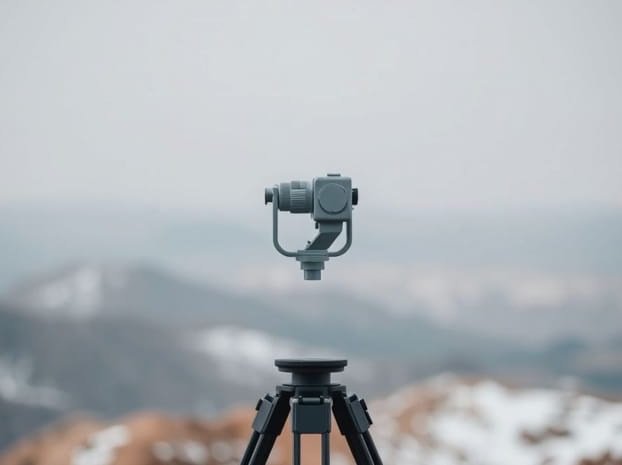
Elimination Of Parallax In Theodolite
In surveying and civil engineering, precision is crucial for accurate measurements and reliable results. The theodolite, a widely used optical instrument, plays a central role in measuring horizontal and vertical angles with high accuracy. However, one of the challenges faced while using a theodolite is parallax error. Parallax occurs when the image of the object being sighted and the crosshairs of the telescope do not coincide perfectly on the focal plane of the eyepiece, leading to measurement inaccuracies. Eliminating parallax in theodolite operation is therefore essential for precise angular measurements, and understanding the methods to do so is fundamental for surveyors and engineers.
Understanding Parallax in Theodolites
Parallax is an optical phenomenon that arises due to the relative displacement of the image of the object and the reticle or crosshair inside the telescope. When the observer’s eye moves slightly, the object image appears to shift relative to the crosshair. In a theodolite, this displacement can result in significant errors, especially when measuring long distances or conducting detailed surveys. The error is more noticeable when the object is very close or the instrument is improperly focused. Eliminating parallax ensures that the line of sight from the telescope aligns perfectly with the measuring scale, providing accurate angular readings.
Causes of Parallax in Theodolites
- Incorrect focusing of the telescope eyepiece or objective lens.
- Misalignment between the crosshairs and the focal plane of the telescope.
- Observer’s eye not positioned correctly along the optical axis.
- Mechanical wear or improper calibration of the instrument.
Importance of Eliminating Parallax
Eliminating parallax is vital in surveying because even a minor angular error can translate to significant positional errors on the ground. For instance, a slight misalignment when measuring angles in a construction site can result in structural inaccuracies or misplacement of key features. In high-precision engineering projects, the reliability of theodolite readings directly affects project quality, cost, and safety. Therefore, understanding and applying proper parallax elimination techniques is crucial for professionals who depend on theodolite measurements.
Steps to Eliminate Parallax in a Theodolite
Surveyors and engineers follow systematic procedures to remove parallax errors when using a theodolite. These steps ensure that the telescope is correctly focused, and the line of sight coincides with the crosshairs.
1. Focusing the Eyepiece
The first step in eliminating parallax is to focus the eyepiece so that the crosshairs appear sharp and clear. This is done by covering the objective lens and adjusting the eyepiece focus until the reticle is distinct. Focusing the eyepiece correctly ensures that the crosshairs are at the focal plane of the eye and prevents the observer’s eye from compensating incorrectly.
2. Focusing the Objective Lens
Once the eyepiece is focused, the next step is to adjust the objective lens to bring the object being sighted into sharp focus. This is typically achieved by turning the focusing knob until the object image is clear and well-defined. Proper focusing of the objective lens ensures that the object’s image coincides with the focal plane of the crosshairs, effectively minimizing parallax.
3. Eye Positioning
The observer’s eye must be aligned correctly along the optical axis of the telescope. Any deviation in eye position can reintroduce parallax errors. Surveyors are trained to position their eyes consistently behind the eyepiece and avoid lateral or vertical movements while taking readings. This practice ensures that the object image remains aligned with the crosshairs.
4. Verification of Parallax Elimination
After focusing, it is important to verify that parallax has been eliminated. This can be done by moving the eye slightly left, right, up, and down while observing the crosshairs. If the crosshairs and the object image remain coincident without apparent relative motion, parallax has been successfully removed. If any displacement is observed, further adjustments to the eyepiece or objective lens are necessary.
Advanced Methods to Minimize Parallax
Modern theodolites often incorporate advanced optical systems and mechanical adjustments to reduce parallax automatically. These may include reticle alignment mechanisms, auto-focusing objectives, and precision-engineered eyepieces. Additionally, digital theodolites use electronic imaging systems to eliminate reliance on human eye positioning, thereby significantly reducing parallax-related errors. Nevertheless, understanding the traditional methods of parallax elimination remains important for both educational purposes and practical use of older instruments.
Best Practices for Surveyors
- Always focus the eyepiece before observing any object.
- Ensure the objective lens is adjusted to bring the object into sharp focus.
- Keep the eye positioned directly along the optical axis and avoid lateral movements.
- Regularly check and calibrate the instrument to maintain mechanical alignment.
- Use verification techniques to confirm that parallax has been eliminated before taking critical measurements.
Consequences of Neglecting Parallax
Failure to eliminate parallax can lead to systematic errors in survey measurements. This can result in incorrect plotting of points, improper alignment of construction features, and miscalculations in project design. In long-term projects, such errors can accumulate, leading to significant discrepancies and potential financial losses. Therefore, parallax elimination is not only a matter of precision but also a critical component of project integrity and safety.
The elimination of parallax in theodolite usage is a fundamental practice in surveying and civil engineering. By understanding the causes of parallax and applying proper focusing techniques for both the eyepiece and objective lens, surveyors can ensure highly accurate measurements. Correct eye positioning, verification procedures, and adherence to best practices are essential for maintaining precision in angular readings. While modern instruments offer technological solutions to reduce parallax, mastery of traditional methods remains crucial for effective surveying. Eliminating parallax ultimately enhances measurement reliability, improves project outcomes, and upholds the standards of professional engineering practice.