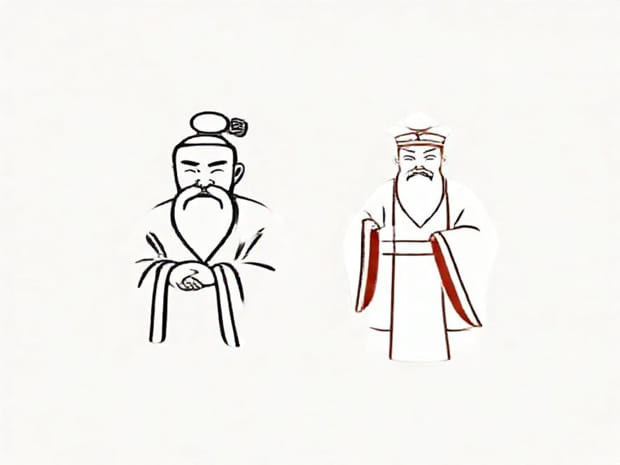
Difference Between Confucius And Mencius
Confucius and Mencius are two of the most influential figures in Chinese philosophy, shaping the moral, social, and political landscape of China for centuries. While both philosophers belong to the Confucian tradition, their teachings reflect distinct approaches to human nature, governance, and ethics. Understanding the differences between Confucius and Mencius helps in appreciating the evolution of Confucian thought and its impact on Chinese culture, education, and philosophy. Their ideas continue to resonate in modern times, influencing leadership, personal conduct, and societal values.
Background and Historical Context
Confucius, also known as Kong Fuzi, lived during the 6th to 5th century BCE, a period of social unrest and political fragmentation in China known as the Spring and Autumn period. His philosophy focused on restoring moral order and harmony in society through ethical behavior, education, and proper governance. Confucius emphasized the importance of rituals, filial piety, and virtue as the foundation of a stable and just society.
Mencius, or Mengzi, lived approximately a century after Confucius, during the Warring States period. This was a time of even greater political instability, where competing states sought power and influence. Mencius built upon Confucian teachings, expanding ideas about human nature, benevolent government, and the moral responsibility of rulers. His philosophy is often seen as an extension and elaboration of Confucius’ principles, adapting them to a changing social and political environment.
Philosophical Focus
Confucius
Confucius’ philosophy primarily centers on ethics, social relationships, and proper conduct. He believed that personal virtue and moral education are essential for maintaining societal order. Key concepts in his teachings include
- Ren (Humaneness)– The central virtue, emphasizing kindness, empathy, and moral integrity.
- Li (Rituals and Etiquette)– Proper conduct, ceremonies, and respect for traditions as a way to harmonize society.
- Filial Piety– Respect and devotion to parents and ancestors as the foundation of moral behavior.
- Education– Lifelong learning as a means to cultivate virtue and wisdom.
Mencius
Mencius focused more explicitly on human nature and political philosophy. He argued that humans are inherently good and that their moral development depends on nurturing innate virtues. Mencius emphasized the role of rulers in creating a just and benevolent government, highlighting the link between morality and effective leadership. Key concepts in his teachings include
- Inherent Goodness– Belief that humans are born with moral inclinations, such as compassion and righteousness.
- Role of Government– Leaders should act benevolently, prioritize the welfare of the people, and earn loyalty through virtue.
- Moral Cultivation– Encouraging individuals to recognize and develop their innate moral tendencies.
- Critique of Tyranny– Advocating for resistance against unjust rulers and promoting the Mandate of Heaven as a moral guideline for governance.
View on Human Nature
One of the most significant differences between Confucius and Mencius lies in their views on human nature. Confucius did not explicitly define whether humans are inherently good or bad. Instead, he emphasized the importance of moral education, self-discipline, and learning from role models to cultivate virtue and proper behavior. For Confucius, external guidance and social structures are crucial in shaping a moral society.
Mencius, however, strongly argued that human nature is inherently good. He believed that everyone possesses innate virtues, such as empathy, righteousness, and a sense of propriety, but these qualities must be nurtured and developed through education and supportive social environments. According to Mencius, the environment and upbringing play a significant role in whether these innate virtues flourish or diminish.
Approach to Governance
Confucius
Confucius emphasized the moral responsibility of rulers but focused more on personal virtue than explicit political theory. He believed that a ruler’s personal ethics and example would naturally inspire subjects to follow suit, creating harmony and social order. The key aspects of governance according to Confucius include
- Leading by moral example rather than force.
- Upholding justice, fairness, and ethical conduct.
- Promoting education and virtue among officials and citizens.
Mencius
Mencius provided a more detailed framework for political philosophy, emphasizing the welfare of the people as the core responsibility of rulers. He believed that rulers who failed to act benevolently could lose the Mandate of Heaven, legitimizing rebellion or removal. Mencius’ ideas include
- Government should prioritize the needs and wellbeing of the people.
- Rulers must cultivate personal virtue and act ethically to maintain legitimacy.
- Oppression or neglect of the populace invalidates a ruler’s authority.
Educational Philosophy
Confucius placed a strong emphasis on education as a means to cultivate virtue, wisdom, and social responsibility. His approach was practical, focusing on moral development, understanding of rituals, and ethical behavior in everyday life. He encouraged self-reflection, mentorship, and lifelong learning as tools for personal and societal improvement.
Mencius, while valuing education, concentrated on helping individuals recognize and cultivate their innate goodness. He stressed introspection and moral self-cultivation, guiding students to develop empathy, compassion, and righteousness. Mencius’ educational philosophy complements his belief in inherent human goodness, highlighting the need to nurture natural virtues through guidance and reflection.
Impact and Legacy
Both Confucius and Mencius left enduring legacies that shaped Chinese culture, philosophy, and governance. Confucius laid the foundation for Confucian ethics, social harmony, and moral education. His teachings influenced generations of scholars, leaders, and ordinary citizens, forming the moral backbone of Chinese society.
Mencius expanded and deepened Confucian thought, particularly regarding human nature and the moral duties of rulers. His ideas on inherent goodness, benevolent governance, and social responsibility enriched Confucian philosophy and provided practical guidance for ethical leadership. Together, their philosophies form a comprehensive system that continues to inform Chinese education, politics, and cultural values.
In summary, while both Confucius and Mencius belong to the Confucian tradition, they differ in key areas. Confucius emphasized moral cultivation, social rituals, and leading by example, without explicitly defining human nature. Mencius focused on the inherent goodness of humans, the moral duties of rulers, and the development of innate virtues. Understanding these differences allows for a deeper appreciation of Confucian philosophy, its historical context, and its continuing influence on ethics, governance, and education. Their complementary teachings continue to inspire individuals and leaders to pursue virtue, compassion, and justice in both personal and societal contexts.