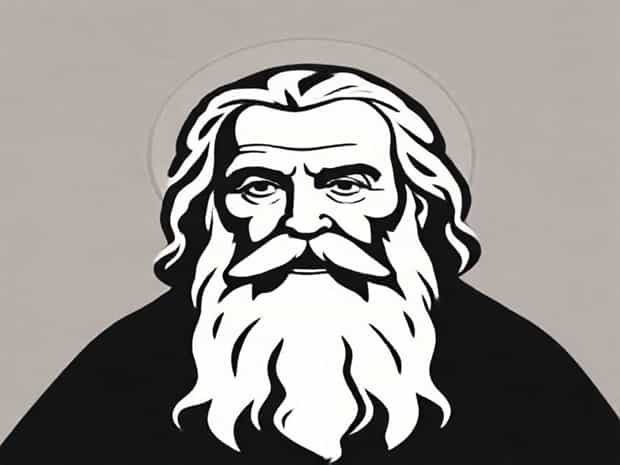
Johannes Moreelse ? Heraclitus
Johannes Moreelse, a Dutch Baroque painter active during the early 17th century, is renowned for his evocative portrayal of the ancient Greek philosopher Heraclitus. His painting, often referred to as Heraclitus,” captures the philosopher’s melancholic demeanor, earning him the epithet “the Weeping Philosopher.” This artwork stands as a testament to Moreelse’s skill in blending classical themes with the emotive depth characteristic of the Baroque period.
Johannes Moreelse The Artist Behind the Canvas
Born around 1603 in Utrecht, Netherlands, Johannes Moreelse was the son of Paulus Moreelse, a prominent portrait painter. Under his father’s tutelage, Johannes honed his artistic talents before furthering his studies in Rome in 1627. During his time in Rome, he was inducted into a papal knight order, reflecting his growing recognition in artistic circles. Moreelse’s work is often associated with the Utrecht Caravaggism movement, characterized by dramatic lighting and realistic depictions of subjects. His oeuvre includes portraits, allegorical scenes, and historical subjects, though only a limited number of works are attributed to him, with his death occurring in 1634 during a plague epidemic in his hometown.
Heraclitus The Subject of the Painting
Heraclitus, who lived circa 535-475 BC in Ephesus, is best known for his assertion that “everything flows,” emphasizing the constant state of change in the universe. Unlike his contemporaries, Heraclitus believed that stability is an illusion. His thoughts on the unity of opposites and the role of fire as a transformative element shaped his philosophical legacy. Often depicted as “the Weeping Philosopher,” Heraclitus is portrayed in a state of sorrowful contemplation, reflecting his views on the transient nature of human existence.
The Painting “Heraclitus” by Johannes Moreelse
Created around 1630, Moreelse’s “Heraclitus” is an oil painting on canvas measuring 59.5 x 68.5 cm. The artwork presents the philosopher in a somber pose, with his hands clasped in sorrowful contemplation beside a globe. The globe, a symbol of worldly knowledge and dominion, becomes a poignant reminder of earthly transience. This depiction aligns with Heraclitus’ philosophical outlook, emphasizing the fleeting nature of human endeavors.
Symbolism in the Artwork
The choice of a globe in the painting is significant, representing the world and its impermanence. Heraclitus’ clasped hands, a posture also seen in depictions of mourning or penitent saints, transcend their religious origins, highlighting the universal theme of human vulnerability. The dark, muted tones of the painting further underscore the melancholic mood, drawing viewers into a reflective state on the nature of existence.
Artistic Style and Techniques
Moreelse’s painting exemplifies the Baroque style, characterized by dramatic use of light and shadow, known as chiaroscuro. This technique enhances the emotional depth of the subject, creating a sense of immediacy and intimacy. The realistic portrayal of Heraclitus, with intricate details such as the texture of his robes and the subtle play of light on his face, showcases Moreelse’s mastery in capturing human emotion and character.
Legacy and Influence
Moreelse’s “Heraclitus” continues to be studied for its artistic and philosophical depth. The painting not only reflects the Baroque era’s emphasis on emotional expression but also serves as a visual interpretation of Heraclitus’ enduring philosophical ideas. It invites viewers to contemplate the transient nature of life and the inevitability of change, themes that remain relevant across centuries.
Johannes Moreelse’s portrayal of Heraclitus stands as a significant contribution to both art and philosophy. Through his skillful use of the Baroque style and symbolic elements, Moreelse brings to life the contemplative nature of the ancient philosopher. The painting serves as a timeless reminder of the impermanence of human existence and the constant flow of change that defines our world.