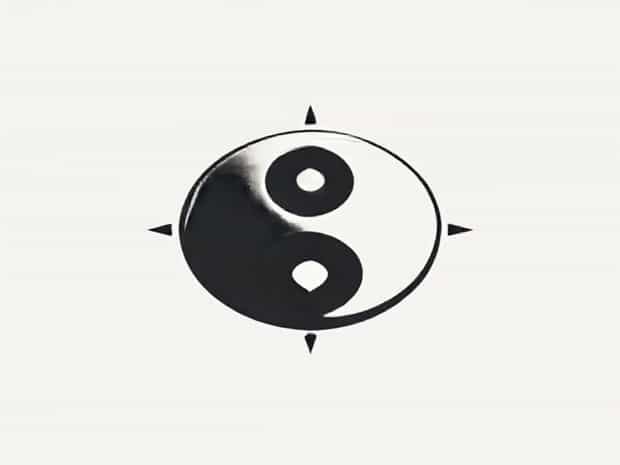
Is Yin Yang Sacrilegious
The symbol of yin and yang has fascinated people for centuries, representing balance, harmony, and the duality of existence. Yet, in some circles, the question arises is yin yang sacrilegious? This question often appears when individuals from different religious backgrounds encounter the symbol and interpret it through the lens of their own beliefs. Some see it as a neutral philosophical idea, while others fear it contradicts their faith or appears to challenge their understanding of God, morality, or creation. Exploring this debate requires a closer look at what yin yang means, how it is used, and why some may consider it problematic.
The Meaning of Yin and Yang
In Chinese philosophy, yin and yang describe the interconnected forces that make up the universe. Yin is often associated with qualities such as darkness, receptivity, coldness, and passivity, while yang represents light, activity, warmth, and assertiveness. Together, they symbolize that opposites are not enemies but complementary forces. One cannot exist without the other, and balance between the two creates harmony.
This idea is central to Taoism but also influences Confucian thought, traditional Chinese medicine, and martial arts. At its core, yin yang is less about religion in the Western sense and more about describing the patterns of nature and existence.
Why Some Consider Yin Yang Sacrilegious
The concern about yin yang being sacrilegious usually comes from religious traditions that view truth as absolute rather than relative. To some, the yin yang symbol may appear to blur the lines between good and evil, light and darkness, or God and creation. In monotheistic religions such as Christianity or Islam, the idea of balance between opposing forces might seem to conflict with teachings about divine authority and moral clarity.
Common Concerns
- It may suggest moral relativism, where good and evil are seen as equal rather than absolute.
- It could be interpreted as promoting dualism, which conflicts with beliefs in a single, ultimate God.
- The association with Taoism or Eastern spirituality may raise concerns about idolatry or mixing faiths.
- Some worry that adopting the symbol invites spiritual confusion or dishonors sacred teachings.
Understanding the Symbol Beyond Religion
For many people, yin yang is not a religious symbol but a philosophical or cultural one. It can be seen as a metaphor for balance in everyday life such as balancing work and rest, strength and gentleness, or logic and intuition. In this sense, it becomes a practical tool for understanding human behavior and natural rhythms rather than a challenge to religious faith.
Even in the West, people often use yin yang casually to describe complementary relationships without attaching spiritual or religious meaning to it. For example, one might say two friends are like yin and yang because their opposite personalities complement each other.
Comparisons to Other Religious Symbols
Debates about whether yin yang is sacrilegious are similar to discussions about other symbols, such as meditation practices, mandalas, or yoga. For some believers, using symbols from outside their tradition feels like compromising faith. For others, these practices can be adapted as neutral tools for wellness or reflection. The interpretation often depends on intention and understanding.
Theological Perspectives
Different religions have different ways of evaluating symbols like yin yang. Some adopt a strict approach, avoiding anything associated with other belief systems. Others allow room for cultural borrowing if the practice is stripped of religious meaning. Understanding these perspectives helps clarify why some call yin yang sacrilegious while others embrace it as harmless.
Christian Views
Some Christians see yin yang as conflicting with the belief in one God who is wholly good, without equal opposing forces. However, other Christians may view the concept metaphorically, seeing parallels between yin yang and biblical teachings on balance, such as the importance of both justice and mercy.
Islamic Views
In Islam, strict monotheism emphasizes avoiding shirk (associating partners with God). Some Muslims may view yin yang as unnecessary or spiritually confusing, while others may interpret it as a cultural symbol rather than an act of worship.
Eastern Religions
In Taoism, yin yang is not sacrilegious at all it is central to understanding harmony in the universe. In Buddhism, it is often seen as compatible with teachings about balance and impermanence. Thus, what one group may call sacrilegious, another may see as sacred or essential.
Practical Uses of Yin Yang
Beyond religion, yin yang is widely used in health, design, and psychology. Traditional Chinese medicine uses yin yang to explain bodily processes and imbalances. In martial arts, it describes how strength and softness must work together. Even in modern psychology, the idea of balancing different aspects of personality resonates strongly.
These uses show that yin yang functions more as a framework for understanding balance than as a religious ritual. For many, this makes the symbol practical rather than sacrilegious.
The Role of Intention
Whether yin yang is sacrilegious often depends on how a person uses it. If someone adopts the symbol as a form of worship or replacement for their faith, it could indeed be viewed as conflicting with certain religious beliefs. However, if they use it as a metaphor for balance or a decorative motif, the meaning may shift away from spiritual concerns.
Intent shapes how symbols function. A cross can be a religious emblem or simply a design element, depending on context. The same logic applies to yin yang.
Finding Balance in Interpretation
Instead of asking only whether yin yang is sacrilegious, it may be more helpful to ask how people interpret and use it. For some, avoiding the symbol may strengthen their religious identity. For others, embracing it may offer insight into balance and interconnectedness. Neither approach is inherently right or wrong it depends on one’s personal values and spiritual framework.
So, is yin yang sacrilegious? The answer is not universal. For Taoists and many in Eastern traditions, yin yang is deeply meaningful and sacred. For some Christians and Muslims, it may appear sacrilegious because it seems to conflict with their understanding of divine truth. For others, it is simply a cultural or philosophical symbol of balance. The debate reflects how symbols carry different meanings depending on context, intention, and belief. Ultimately, whether yin yang is seen as sacrilegious depends less on the symbol itself and more on the worldview of the person interpreting it.