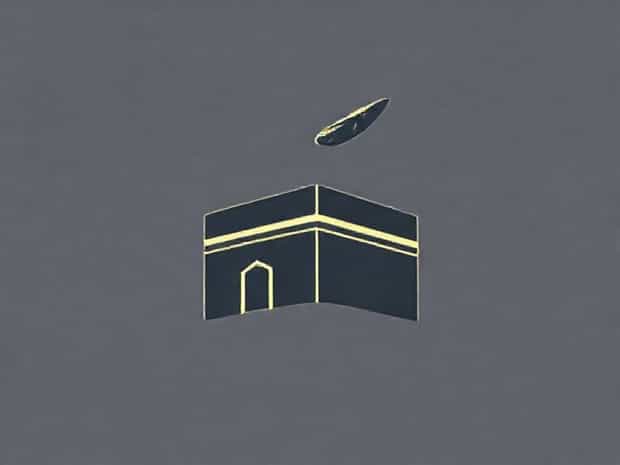
Is The Kaaba A Meteorite?
The Kaaba, located in the heart of the Masjid al-Haram in Mecca, Saudi Arabia, is one of the most sacred sites in Islam. Millions of Muslims around the world direct their prayers toward it and visit it annually during the Hajj pilgrimage. A common question that arises among both believers and scholars is whether the Kaaba contains a meteorite or is itself a meteorite. This question stems from the presence of the Black Stone, or al-Hajar al-Aswad, set into one corner of the Kaaba, which some claim has celestial origins. Understanding this topic requires examining religious tradition, historical accounts, and scientific perspectives regarding the Kaaba and the Black Stone.
The Significance of the Kaaba in Islam
The Kaaba is considered the House of God (Bayt Allah) and serves as the qibla, the direction Muslims face during prayer. According to Islamic tradition, the Kaaba was originally built by the Prophet Ibrahim (Abraham) and his son Ismail (Ishmael) as a monotheistic house of worship. Over centuries, it became a central religious and cultural symbol for the Arab people. The structure itself is a cube-shaped building draped in a black cloth known as the kiswah. While its physical structure is significant, the spiritual importance of the Kaaba transcends its material composition.
The Black Stone (Al-Hajar Al-Aswad)
The Black Stone is set into the eastern corner of the Kaaba and holds particular religious importance. Islamic tradition holds that it was sent from heaven and that the Prophet Muhammad kissed it during the Hajj pilgrimage. Pilgrims often try to touch or kiss the Black Stone as part of the tawaf, the ritual circumambulation of the Kaaba. The stone is believed to have originally been white but turned black due to absorbing the sins of humanity. While it is central to religious rituals, the scientific composition of the stone has led to speculation about its possible extraterrestrial origin.
Scientific Perspectives on the Black Stone
Many scientists and historians have examined the Black Stone to determine its nature. Some suggest it could be a meteorite due to its dark color, irregular shape, and reported hardness. Meteorites are fragments of rock or metal from space that survive passage through the Earth’s atmosphere and impact the surface. Certain descriptions of the Black Stone, such as its rounded shape and ability to withstand centuries of exposure, have fueled the theory that it might be a space rock. However, scientific verification is limited because the stone is embedded in the Kaaba and is not accessible for detailed testing.
Arguments Against the Meteorite Theory
Despite the speculation, several arguments suggest the Black Stone may not be a meteorite. First, historical accounts indicate that it was sometimes described as being soft or composed of multiple fragments, which differs from the typical composition of most meteorites. Second, there is no direct scientific analysis available due to religious restrictions, so claims of extraterrestrial origin remain speculative. Additionally, some Islamic scholars emphasize the spiritual rather than physical significance of the Black Stone, suggesting that its importance lies in faith and tradition rather than scientific classification.
Historical Accounts and Traditions
Historical sources provide a variety of descriptions of the Black Stone. Early Muslim historians and scholars wrote about its color, texture, and the role it played in religious rituals. Some accounts mention that it was once broken into pieces and later repaired, indicating that it may not be a single solid rock. These historical perspectives support the idea that the stone’s significance is primarily religious and symbolic. The Kaaba itself, while a physical structure, has been rebuilt and renovated multiple times over the centuries, further complicating any analysis of its materials.
Religious Interpretations
In Islamic belief, the Black Stone is revered as a divine gift rather than a mere geological object. Its potential meteorite origin is sometimes acknowledged in scholarly discussions, but the focus is generally on its spiritual value. Muslims are taught that touching or kissing the Black Stone symbolizes a connection with the divine and the continuation of the Prophet Muhammad’s practices. The question of whether it is a meteorite becomes secondary to its role in faith, ritual, and religious heritage.
Comparative Analysis with Other Sacred Stones
The idea of sacred stones with possible celestial origins is not unique to Islam. Many cultures and religions around the world have venerated stones believed to come from the sky. In some traditions, meteorites were considered gifts from the gods or manifestations of divine power. This context helps to understand why the Black Stone might be viewed as extraordinary and why the theory of its meteorite origin persists. It also illustrates the human tendency to attribute spiritual significance to rare and unusual natural objects.
Cultural Impact of the Black Stone
Regardless of its origin, the Black Stone has had a profound impact on Muslim culture. Its role in rituals, teachings, and pilgrimage practices underscores its centrality in Islamic spirituality. The stone has inspired religious art, poetry, and storytelling throughout history. For millions of Muslims, the Black Stone serves as a tangible link to divine presence and historical continuity, reinforcing the unity of the global Muslim community during rituals like Hajj and Umrah.
The question of whether the Kaaba or more specifically the Black Stone is a meteorite remains unresolved. Scientific evidence is inconclusive, and direct testing is not permitted due to the sacred nature of the object. While some physical characteristics of the Black Stone suggest it could be extraterrestrial, historical, religious, and cultural perspectives emphasize its spiritual significance rather than its geological classification. The Kaaba and the Black Stone continue to serve as profound symbols of faith, devotion, and religious heritage for Muslims worldwide. The focus on their divine and ritual importance highlights that the spiritual meaning of sacred objects often transcends their physical origins.
Ultimately, whether or not the Black Stone is a meteorite is less important than its role in connecting millions of believers to their faith. Its veneration reflects a blend of history, tradition, and spiritual symbolism that has endured for centuries. As both a religious artifact and a subject of scholarly curiosity, the Black Stone demonstrates the complex interplay between science, faith, and culture, reminding us that some mysteries are valued not for their physical explanation but for the meaning they hold in human experience.