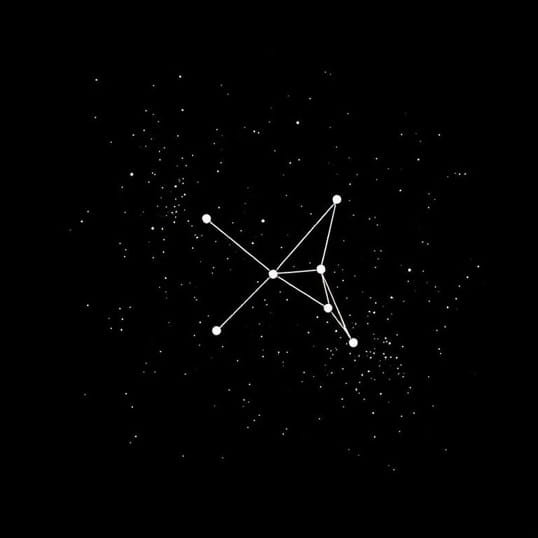
Facts About Camelopardalis Constellation
The Camelopardalis constellation is one of the lesser-known but fascinating constellations in the northern sky, offering a unique glimpse into the wonders of astronomy. Its name, derived from the Latin word for giraffe, reflects the constellation’s long and stretching pattern of stars, reminiscent of a giraffe’s neck. Despite being relatively faint and not home to very bright stars, Camelopardalis has intrigued astronomers for centuries due to its position near the north celestial pole and the variety of celestial objects it contains. Observing Camelopardalis provides insights into both stellar formations and the history of constellation mapping, making it a subject of interest for both amateur stargazers and professional astronomers alike.
Overview of Camelopardalis
Camelopardalis is a large constellation in the northern hemisphere, introduced in the early 17th century. It spans a significant area of the sky but lacks stars that are visible to the naked eye for most casual observers. This constellation is bordered by several notable constellations, including Ursa Major, Cassiopeia, and Perseus. Its placement near the north celestial pole makes it circumpolar in many northern latitudes, meaning it can be seen throughout the year without setting below the horizon.
Location and Visibility
- Right Ascension Approximately 4 hours
- Declination Around +70 degrees
- Best Viewed Northern Hemisphere during winter months
- Area 757 square degrees, making it one of the larger constellations in the sky
Though the stars of Camelopardalis are not particularly bright, its extensive coverage in the sky and the interesting celestial objects contained within make it a rewarding target for telescope observation. Its position also allows astronomers to study northern circumpolar stars and distant galaxies that lie in the same region.
Historical Significance
The Camelopardalis constellation was first introduced by Dutch astronomer Petrus Plancius in the early 17th century. Unlike many constellations rooted in Greek and Roman mythology, Camelopardalis was created during the age of exploration to fill gaps in the northern sky that lacked named constellations. Its name, which combines the Latin words for camel and leopard, reflects medieval attempts to describe a giraffe, an exotic animal introduced to Europe through exploration of Africa.
Modern Astronomy and Mapping
Today, Camelopardalis is officially recognized as one of the 88 modern constellations by the International Astronomical Union. It serves as a reference point for amateur and professional astronomers studying northern skies, particularly when locating deep-sky objects. Although it lacks mythological stories compared to more ancient constellations, its historical introduction reflects human curiosity and the drive to systematically map the stars for navigation and scientific observation.
Notable Stars in Camelopardalis
Despite the overall faintness of the constellation, several stars in Camelopardalis are of particular interest due to their unique properties and roles in stellar observation. None of its stars are first-magnitude, but a few stand out as reference points or subjects of scientific study.
Alpha Camelopardalis
Alpha Camelopardalis is the brightest star in the constellation, classified as a blue supergiant. It is located approximately 4,000 light-years from Earth and is notable for its high luminosity and extreme temperature. Alpha Camelopardalis is a valuable target for studying the evolution of massive stars and their eventual fate as supernovae.
Beta Camelopardalis
Beta Camelopardalis is a yellow-white giant star, considerably less bright than Alpha but still significant for stellar observation. Its properties provide contrast to the more massive and hotter stars in the constellation, illustrating the diversity of stellar evolution within the same region of the sky.
Other Notable Stars
- Gamma Camelopardalis – a binary star system with interesting orbital characteristics
- Delta Camelopardalis – a giant star exhibiting mild variability in brightness
- 20 Camelopardalis – a relatively nearby star studied for parallax measurements
Deep-Sky Objects in Camelopardalis
In addition to its stars, Camelopardalis contains several deep-sky objects, including galaxies, star clusters, and nebulae. These objects are particularly appealing to amateur astronomers with telescopes or astrophotography equipment, as they provide glimpses into distant regions of the universe.
Galaxies
- NGC 2403 – a spiral galaxy part of the M81 Group, similar to the Milky Way
- NGC 1502 – an open cluster that can be observed with medium-sized telescopes
- NGC 1569 – a dwarf irregular galaxy undergoing active star formation
Star Clusters and Nebulae
Camelopardalis also contains several open clusters and faint nebulae. While not as visually striking as some constellations like Orion, these objects provide excellent targets for long-exposure astrophotography and scientific study of stellar populations.
Observing Tips for Camelopardalis
Given that Camelopardalis lacks very bright stars, locating it requires patience and familiarity with surrounding constellations. Observers often use Ursa Major’s Big Dipper asterism or Cassiopeia’s distinctive W shape as reference points. A dark-sky location away from urban light pollution greatly enhances visibility, making it possible to see fainter stars and deep-sky objects.
Best Times to Observe
- Late winter to early spring provides optimal viewing in the Northern Hemisphere
- Circumpolar position allows partial visibility year-round in high northern latitudes
- Using binoculars or small telescopes increases the number of observable stars and deep-sky objects
Scientific and Educational Importance
Camelopardalis may not be as famous as Orion or Ursa Major, but it holds significant value for scientific observation. Its stars and deep-sky objects provide opportunities to study stellar evolution, galaxy formation, and the structure of the Milky Way’s outskirts. Educational programs often use Camelopardalis to teach concepts such as stellar classification, parallax measurement, and the history of constellation mapping. The constellation’s relative faintness makes it an interesting case study in observation techniques and the importance of dark-sky preservation.
The Camelopardalis constellation, though faint and relatively obscure, offers a wealth of information for astronomers, students, and stargazers. From its historical origins in the 17th century to its fascinating assortment of stars and deep-sky objects, Camelopardalis exemplifies the diversity and richness of the northern sky. Its unique positioning, circumpolar visibility, and inclusion of galaxies, clusters, and interesting stellar systems make it a valuable area for observation and study. Understanding Camelopardalis enhances appreciation for both the history of astronomy and the complexity of the universe, encouraging continued exploration and discovery in one of the northern sky’s most expansive constellations.