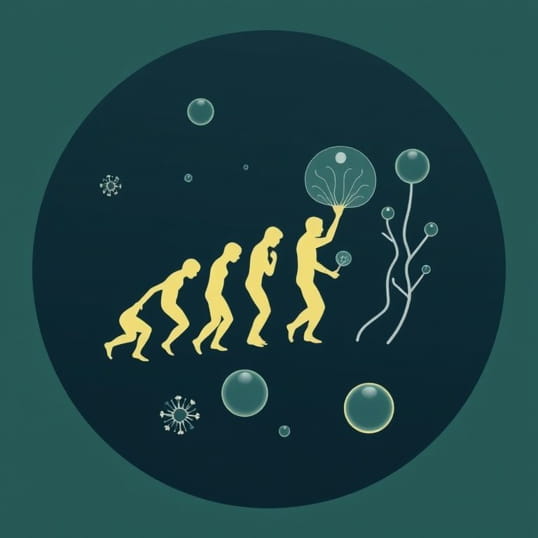
De Novo Evolution Of Macroscopic Multicellularity
The emergence of macroscopic multicellularity represents one of the most profound transitions in the history of life on Earth. While unicellular organisms dominated for billions of years, the evolution of complex, multicellular organisms allowed for specialization, larger body sizes, and ecological diversity that fundamentally reshaped ecosystems. The term de novo evolution of macroscopic multicellularity refers to instances where multicellular structures evolved independently from unicellular ancestors, rather than from pre-existing multicellular lineages. Studying these events provides deep insights into evolutionary biology, developmental processes, and the mechanisms that drive complexity in living systems. Researchers investigate how cellular adhesion, communication, and differentiation emerge to form organized, macroscopic structures that function as cohesive organisms.
Understanding De Novo Multicellularity
De novo evolution implies that multicellularity arises independently in distinct lineages without being inherited from an already multicellular ancestor. This contrasts with multicellular lineages that have diversified over millions of years from a common multicellular progenitor. De novo multicellularity often starts with simple aggregation of cells or clonal division, gradually developing into macroscopic structures capable of coordinated growth and reproduction. Studying these processes helps clarify the selective pressures and genetic innovations that favor multicellular organization.
Key Features of Macroscopic Multicellularity
- Cellular adhesion Mechanisms that allow cells to stick together and maintain structural integrity.
- Communication pathways Signaling systems that coordinate activities between cells.
- Cell differentiation The ability of individual cells to adopt specialized roles within the organism.
- Reproductive cooperation Division of labor that includes somatic and reproductive cells.
Mechanisms Driving Multicellular Evolution
The evolution of multicellularity involves multiple biological mechanisms that enable unicellular organisms to form cohesive, functional groups. Adhesion molecules are often the first step, allowing cells to aggregate physically. Genetic and epigenetic changes can facilitate communication between cells, ensuring coordinated responses to environmental stimuli. Additionally, selective pressures such as predation, resource acquisition, and environmental stability can drive the formation of larger, multicellular structures that confer survival advantages.
Cellular Aggregation and Adhesion
Aggregation occurs when unicellular organisms come together, sometimes in response to environmental cues. Initially, these aggregates may be temporary or loosely connected. Over time, genetic adaptations can enhance adhesion, creating more stable multicellular clusters. These early structures provide advantages such as protection from predators, enhanced feeding efficiency, and environmental buffering, which favor the persistence of multicellular forms.
Communication and Signaling
For multicellular organisms to function as integrated units, cells must communicate effectively. Signaling pathways, including chemical messengers and surface receptors, enable cells to coordinate growth, movement, and differentiation. These communication systems allow multicellular structures to respond collectively to environmental changes, optimize nutrient use, and regulate developmental patterns. Effective intercellular communication is essential for the evolution of macroscopic complexity.
Cell Differentiation and Division of Labor
One of the hallmarks of macroscopic multicellularity is cellular specialization. Not all cells perform the same functions; some may become reproductive cells while others adopt somatic roles that support the organism. This division of labor increases efficiency and allows the organism to exploit ecological niches more effectively. Genetic regulation and epigenetic mechanisms play critical roles in guiding differentiation, ensuring that cells adopt the appropriate identities at the correct developmental stages.
Examples of De Novo Macroscopic Multicellularity
Several experimental and natural systems illustrate the de novo evolution of multicellularity. Volvocine algae, such asVolvox, provide a well-studied example where simple unicellular ancestors gave rise to spherical, multicellular colonies with specialized reproductive and somatic cells. Laboratory experiments with yeast and bacteria have also demonstrated the emergence of multicellular structures under selective pressures, such as predation or resource limitation. These studies show that multicellularity can evolve relatively rapidly under appropriate ecological conditions.
Volvocine Algae
- Derived from unicellular Chlamydomonas-like ancestors.
- Exhibit differentiation between somatic and reproductive cells.
- Serve as a model for studying the transition from unicellularity to multicellularity.
Experimental Evolution in Yeast
- Yeast cells evolved to form multicellular clusters under selective pressure for rapid settling.
- Mutations enhancing cell adhesion were key drivers.
- Clusters displayed cooperative behavior and improved survival.
Bacterial Multicellularity
- Some bacteria, likeBacillus subtilis, form biofilms with differentiated roles.
- Biofilms protect bacteria from environmental stressors.
- These structures demonstrate how simple multicellularity can provide adaptive advantages.
Evolutionary Implications
The de novo evolution of macroscopic multicellularity has broad implications for understanding evolutionary theory. It demonstrates that multicellularity can arise multiple times independently, suggesting that the transition is a common evolutionary solution to environmental challenges. Studying these transitions helps identify convergent genetic and cellular mechanisms that underpin complex life. Furthermore, it provides insights into the origins of animal, plant, and fungal multicellularity, highlighting how selective pressures shape evolutionary trajectories.
Convergent Evolution
Different lineages that evolved multicellularity independently often exhibit similar features, such as cell adhesion molecules, signaling pathways, and division of labor. This convergent evolution indicates that there are common evolutionary solutions to the challenges of maintaining a multicellular body. By comparing these lineages, scientists can identify fundamental principles that govern the organization of complex life.
Implications for Complexity and Ecology
Macroscopic multicellularity allows organisms to occupy new ecological niches and form more complex ecosystems. Larger body size, mobility, and specialized tissues enable organisms to compete effectively for resources, avoid predation, and interact with other species. The emergence of multicellular life profoundly influenced the trajectory of evolution, paving the way for the diversity of plants, animals, and fungi observed today.
The de novo evolution of macroscopic multicellularity illustrates a major evolutionary transition from simple unicellular life to complex, organized organisms. Through mechanisms such as cellular adhesion, communication, and differentiation, unicellular ancestors can give rise to cohesive multicellular structures that function as integrated entities. Examples from volvocine algae, yeast, and bacteria demonstrate that multicellularity can emerge under selective pressures and provide adaptive advantages. Studying these transitions enhances our understanding of evolutionary biology, developmental processes, and the origins of complexity in life. By examining how macroscopic multicellularity arises independently across lineages, scientists can uncover fundamental principles that govern the evolution of complex organisms and ecosystems.