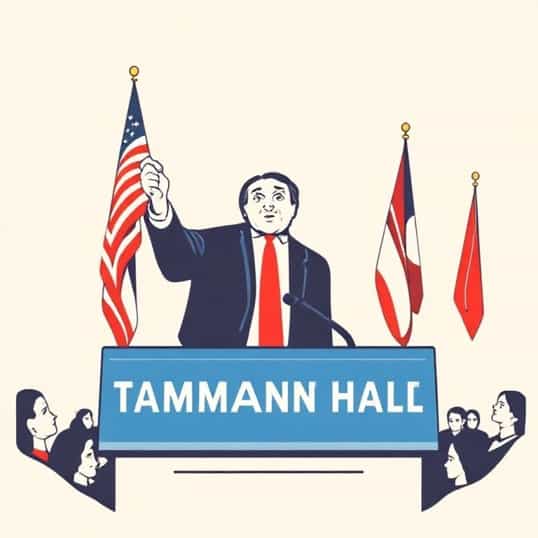
Leader Of The Tammany Hall Political Machine
The history of American politics is full of powerful organizations that have shaped local and national governance, but few have been as infamous or influential as Tammany Hall. Operating primarily in New York City during the 19th and early 20th centuries, Tammany Hall was both a political machine and a social organization that wielded enormous influence over elections, government appointments, and public policy. Central to its operation were its leaders, who guided the machine, maintained loyalty among its members, and orchestrated its strategies for power. Understanding the leader of the Tammany Hall political machine provides insight into the intersection of politics, corruption, and urban governance during this period.
The Origins of Tammany Hall
Tammany Hall began as a fraternal society in the late 18th century, initially focusing on charitable works and social networking for New York’s Democratic-Republican Party members. Over time, it evolved into a powerful political machine that controlled local politics by mobilizing voters, distributing patronage, and influencing elections. Its rise coincided with the massive influx of immigrants into New York City, particularly Irish immigrants, who became a key voting bloc. The organization offered assistance, jobs, and social services to these communities, creating a loyal electorate that supported Tammany’s candidates in municipal, state, and federal elections.
The Role of Leadership
The effectiveness of Tammany Hall as a political machine relied heavily on its leadership. Leaders acted as the central authority, setting strategy, distributing patronage, and maintaining discipline within the organization. They were responsible for coordinating election campaigns, ensuring voter loyalty, and negotiating with city officials. Leadership was often marked by charisma, political savvy, and, in many cases, a willingness to engage in corrupt practices to maintain power. The leader of Tammany Hall became synonymous with control over New York City politics, often overshadowing official governmental positions.
Famous Leaders of Tammany Hall
Several prominent figures shaped Tammany Hall during its peak. Each leader brought unique skills and strategies, contributing to the machine’s enduring influence
- William Boss TweedPerhaps the most infamous leader, Tweed dominated Tammany Hall in the mid-19th century. He was known for his ability to consolidate power, manipulate elections, and control city finances. Tweed and his associates engaged in widespread corruption, embezzlement, and bribery, enriching themselves while maintaining popular support among immigrant communities through social services and patronage.
- Richard CrokerSucceeding Tweed’s era of notoriety, Croker led Tammany Hall in the late 19th and early 20th centuries. He modernized the organization, emphasizing organizational efficiency, and maintained control over city politics through alliances, patronage, and strategic election management. Croker exemplified the balance between political pragmatism and maintaining Tammany’s public image.
- Charles F. MurphyMurphy led Tammany Hall from the early 1900s until the 1920s, focusing on reforming the organization’s image while maintaining its influence. He was instrumental in shaping policies that balanced progressive reforms with the machine’s traditional methods of voter mobilization and patronage.
Responsibilities of a Tammany Hall Leader
The leader of Tammany Hall had a multifaceted role that went beyond typical political duties. These responsibilities included
- Controlling nominations for political offices within New York City and influencing higher-level elections.
- Distributing patronage jobs and resources to maintain loyalty among members and constituents.
- Organizing voter turnout, often using networks of ward bosses to ensure high participation in elections.
- Negotiating with city officials, business leaders, and other political organizations to consolidate power.
- Managing the internal hierarchy of Tammany Hall, including resolving disputes and maintaining discipline among key operatives.
Influence on Urban Politics
The leader of Tammany Hall was pivotal in shaping the political landscape of New York City. Under strong leadership, the machine could control city policies, infrastructure projects, and municipal budgets. Leaders often leveraged their positions to promote allies, secure government contracts, and influence legislation. While this sometimes resulted in corruption and inefficiency, it also allowed Tammany Hall to provide tangible benefits to immigrant and working-class communities that were often neglected by other institutions.
Impact on Society and Governance
The leadership of Tammany Hall had a profound impact on urban governance. By mobilizing voters and providing social services, the organization filled gaps in public assistance and support. Immigrant communities, in particular, benefited from access to jobs, housing, and legal aid. However, the reliance on patronage and political manipulation also perpetuated systems of corruption, limiting transparency and accountability in government. Leaders had to navigate this delicate balance to maintain both public support and organizational dominance.
Controversies and Corruption
The leader of Tammany Hall often faced criticism for corruption and unethical practices. William Boss Tweed exemplified these controversies, with his administration notorious for embezzlement, inflated contracts, and bribery. The public and press frequently scrutinized Tammany leaders, and reform movements sought to dismantle the political machine. Despite these challenges, strong leadership allowed Tammany Hall to survive periods of scandal, adapt to new political realities, and continue influencing New York City politics for decades.
Legacy of Tammany Hall Leadership
The legacy of Tammany Hall leaders is complex. On one hand, they are remembered for corruption and manipulation; on the other, they played a significant role in shaping modern urban politics, advocating for immigrant communities, and building social networks that strengthened city governance. Leadership within Tammany Hall serves as a historical case study in political organization, demonstrating how power, loyalty, and strategy intersect to influence public life. The methods, successes, and failures of Tammany Hall leaders continue to inform studies of political machines and urban political systems.
The leader of the Tammany Hall political machine was more than a figurehead; they were the central authority driving one of the most influential political organizations in American history. From William Tweed to Richard Croker and Charles Murphy, these leaders mastered the art of political strategy, voter mobilization, and organizational control. While often associated with corruption, their leadership also provided essential services to immigrant communities and helped shape the social and political fabric of New York City. Understanding the role and influence of Tammany Hall leaders offers insight into the complexities of urban politics, the power of political machines, and the enduring impact of strong leadership on public life. The history of Tammany Hall remains a compelling example of how individual leadership can shape both opportunities and challenges within a city’s political ecosystem.
Overall, the study of Tammany Hall and its leaders highlights the dual nature of political power its capacity to achieve both social benefits and systemic abuses. By examining the leaders’ strategies, responsibilities, and societal impact, we gain a nuanced understanding of how political machines operated and influenced the development of modern governance in urban centers. The story of Tammany Hall’s leadership remains a vital part of the historical narrative of American politics, offering lessons for political scientists, historians, and anyone interested in the dynamics of power, loyalty, and public administration.