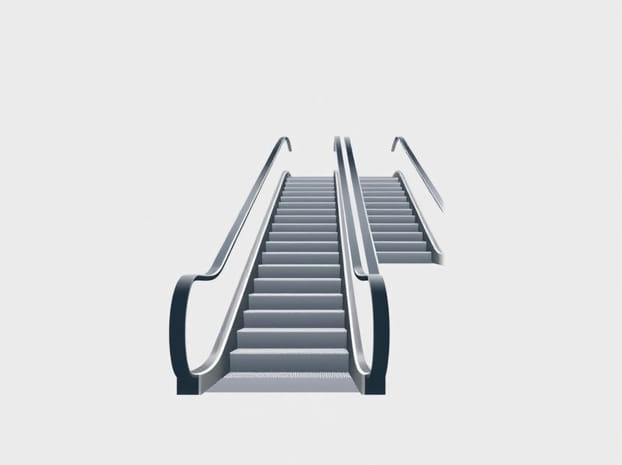
How Does An Escalator Work?
Escalators are a common sight in shopping malls, airports, train stations, and many other public places, yet many people rarely consider the intricate engineering behind their smooth, continuous motion. An escalator is a moving staircase designed to transport people between floors efficiently and safely. Unlike a simple elevator, it provides a steady flow of passengers without stopping, making it ideal for high-traffic areas. Understanding how an escalator works involves examining its mechanical components, power systems, safety features, and design principles. The combination of engineering precision and innovative design ensures that escalators operate reliably, handling thousands of passengers every day with minimal maintenance.
Basic Principle of an Escalator
At its core, an escalator functions as a conveyor system for people. The moving steps continuously circulate in a loop, carrying passengers from one level to another. The steps are connected to a pair of chains that rotate around gears at the top and bottom of the escalator. This motion is powered by an electric motor, which ensures consistent speed and smooth acceleration. The steps maintain a horizontal orientation while traveling along an inclined path, providing a stable platform for riders.
Key Components of an Escalator
Escalators are complex machines made up of several critical components, each performing a specific function to ensure safe and efficient operation. The main parts include
- StepsThe steps are the moving platforms on which passengers stand. Each step is designed with ridges for grip and safety, and they interlock to form a continuous loop.
- ChainsThe steps are attached to a pair of chains that guide their movement along the escalator track. These chains rotate around sprockets located at the top and bottom of the escalator.
- TracksTracks are metal rails that guide the steps as they move along the inclined path. They ensure that steps remain aligned and horizontal while ascending or descending.
- HandrailsHandrails move in sync with the steps to provide passengers with stability and balance. They are connected to a system of pulleys and chains powered by the escalator motor.
- Electric MotorThe motor powers the entire escalator system. It drives the main chain mechanism and the steps, ensuring consistent movement and speed control.
- Landing PlatformsThese are the stationary sections at the top and bottom of the escalator where passengers step on or off. They also house safety mechanisms, sensors, and emergency stop buttons.
How the Escalator Mechanism Works
The operation of an escalator is a fascinating combination of mechanics and electrical engineering. Here is a step-by-step explanation of the process
Step Movement
Each step is attached to a chain, and the chain runs over gears at the ends of the escalator. As the motor turns the gears, the chain moves, causing the steps to travel along the inclined tracks. The steps are designed to fold and flatten in a specific sequence as they pass around the sprockets, maintaining a continuous horizontal surface for riders.
Motor and Drive System
The electric motor, usually located at the top of the escalator, drives a gearbox that multiplies torque and reduces speed for smooth operation. This mechanical advantage allows the escalator to carry multiple passengers without overloading the motor. The drive system is connected to the main chain and step mechanism, translating rotational energy into linear motion.
Synchronization of Handrails
The handrail moves at the same speed as the steps, providing stability to passengers. It is linked to a separate drive system powered by the motor. Sensors and pulleys ensure that the handrail speed is perfectly synchronized with the steps to prevent accidents or misalignment.
Safety Features
Escalators are equipped with numerous safety mechanisms to protect passengers and ensure reliable operation. These include
- Emergency Stop ButtonsLocated at the top and bottom landings, these buttons immediately halt the escalator if pressed.
- Step DemarcationYellow lines on steps help passengers identify step edges and prevent tripping.
- Skirt BrushesInstalled along the sides of the escalator to prevent objects from getting caught between the steps and side panels.
- Speed SensorsDetect if the escalator is moving too fast or too slow and automatically adjust motor output.
- Automatic BrakesEngage if the escalator encounters a mechanical issue or overload, stopping the system safely.
Maintenance and Efficiency
Regular maintenance is crucial to keep an escalator operating efficiently. This includes lubricating the chains, inspecting step alignment, checking the motor and gearbox, and testing safety systems. Escalators are designed for durability and can operate continuously for years with proper care. Energy-efficient motors and regenerative drives are increasingly used in modern escalators to reduce electricity consumption and environmental impact.
Applications of Escalators
Escalators are widely used in public spaces where continuous and efficient transport of people is required. Some common applications include
- Shopping MallsEscalators help manage the flow of shoppers between multiple floors.
- AirportsEfficiently transport passengers between terminals, gates, and concourses.
- Train and Metro StationsFacilitate smooth movement of commuters and reduce congestion during peak hours.
- Hotels and Convention CentersProvide a convenient way to move large numbers of guests between levels.
Escalators are remarkable machines that combine mechanical precision, electrical engineering, and safety design to transport people efficiently and safely. By understanding the components, mechanisms, and safety systems involved, it becomes clear how escalators achieve smooth, continuous motion. Their widespread use in shopping centers, transportation hubs, and public facilities highlights their importance in modern infrastructure. With ongoing advancements in materials, motor efficiency, and safety technology, escalators continue to evolve, offering even more reliable and energy-efficient solutions for vertical transportation.