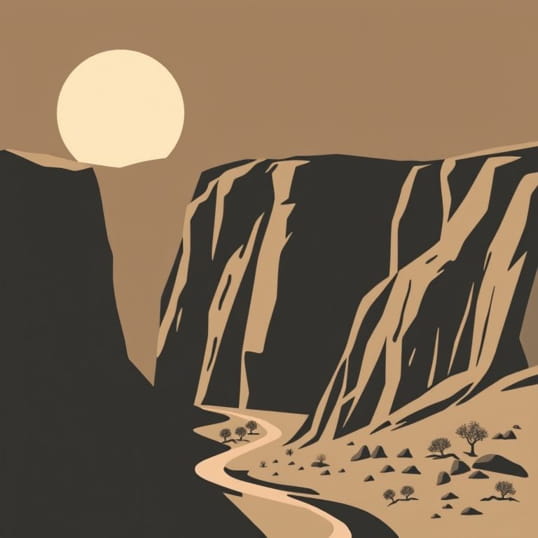
Definition Of Olduvai Gorge
Olduvai Gorge is one of the most important paleoanthropological sites in the world, often referred to as the Cradle of Mankind. Located in northern Tanzania, this site has provided scientists with crucial evidence about early human evolution, stone tool technology, and the cultural development of our ancestors. The definition of Olduvai Gorge extends beyond its physical description as a deep ravine; it embodies a place where layers of history have preserved the journey of humankind for nearly two million years. Its significance lies not only in the fossils discovered there but also in the stories those fossils tell about how early humans lived, adapted, and evolved in Africa’s changing landscapes.
Geographical Setting of Olduvai Gorge
Olduvai Gorge is situated within the Great Rift Valley, a vast geographical feature stretching through eastern Africa. The gorge itself is about 48 kilometers long and up to 90 meters deep, cutting through layers of sediment that have accumulated over millions of years. These exposed layers act like a natural archive, revealing a chronological record of environmental changes, animal life, and human presence in the region.
Formation of the Gorge
The gorge was formed primarily by faulting and erosion caused by the Rift Valley’s geological activity. Volcanic eruptions in the region deposited ash and lava, which preserved fossilized remains and tools. Over time, seasonal rains carved into the valley, exposing these hidden layers and making them accessible to archaeologists.
Definition of Olduvai Gorge in Archaeology
When defining Olduvai Gorge in archaeological terms, it is more than just a landmark; it is a layered timeline of human evolution. The gorge provides evidence of hominins, early human ancestors, who lived there approximately 2 million to 15,000 years ago. Its definition in scientific literature highlights it as a place where anthropology, paleontology, and geology intersect, offering a window into prehistoric life.
Key Discoveries
- Homo habilis fossilsDiscovered by Louis and Mary Leakey, these remains provided the first evidence of an early toolmaker species, often called handy man.
- Australopithecus boiseiThe discovery of this species highlighted the diversity of early hominins in East Africa.
- Stone toolsOlduvai Gorge gave its name to the Oldowan tool culture, the earliest known stone tool industry.
- Animal fossilsFossilized remains of extinct animals, such as ancient elephants and antelopes, shed light on the environment early humans inhabited.
Cultural Importance of Olduvai Gorge
The definition of Olduvai Gorge also includes its cultural significance. For the Maasai people who live near the gorge, the land holds spiritual and historical value. For scientists and educators, it serves as an outdoor laboratory and a symbol of humankind’s African origins. Its discoveries have shaped global narratives about human history and migration.
Oldowan and Acheulean Tools
The Oldowan tool culture, dating back about 2.6 million years, was defined by simple stone flakes and choppers used for cutting and processing food. Later, Acheulean tools, characterized by hand axes and cleavers, showed advances in technology and intelligence. These discoveries at Olduvai Gorge marked a turning point in defining human creativity and adaptation.
Scientific Contributions of Olduvai Gorge
The site has provided unmatched insight into early human behavior, diet, and survival strategies. By studying the remains and artifacts, researchers have been able to reconstruct how early humans hunted, scavenged, used fire, and interacted socially. The fossils and tools found at Olduvai Gorge helped scientists create a clearer timeline of human evolution, from primitive hominins to more advanced Homo erectus.
Leakey Family’s Role
Much of Olduvai Gorge’s fame is due to the pioneering work of Louis and Mary Leakey, along with their son Richard and daughter-in-law Meave. Their systematic excavations in the mid-20th century transformed our understanding of human origins. Their discoveries confirmed that Africa, and not Europe or Asia, was the birthplace of humanity.
Olduvai Gorge in the Modern World
Today, Olduvai Gorge remains an active research site. Archaeologists continue to uncover fossils and artifacts that refine the definition of early human history. The site is also a major tourist attraction, drawing visitors from around the world who want to witness firsthand the landscapes that shaped human evolution.
Conservation Efforts
Protecting Olduvai Gorge is crucial due to its fragility and historical value. The Tanzanian government, in cooperation with international organizations, has implemented conservation programs to safeguard the site from erosion, looting, and damage caused by increasing tourism. A museum at the site educates visitors about the discoveries and ongoing research.
Why Olduvai Gorge Matters
Olduvai Gorge is more than just a physical location; it is a symbol of humanity’s shared past. The fossils and artifacts found here provide a direct connection to the earliest humans who shaped our species’ journey. The definition of Olduvai Gorge encompasses science, culture, history, and identity. It continues to remind us that our story began in Africa, and the evidence preserved there remains essential for understanding who we are and where we come from.
Educational Impact
Students, scholars, and the general public benefit from the research conducted at Olduvai Gorge. Textbooks, documentaries, and museum exhibitions around the world reference the site as a foundation for understanding human origins. Its significance extends to inspiring new generations of scientists and encouraging global appreciation of cultural heritage.
The definition of Olduvai Gorge goes far beyond its geographical description as a ravine in Tanzania. It represents the essence of paleoanthropology and the roots of humanity. Through its fossils, tools, and preserved layers of history, the gorge continues to answer fundamental questions about human evolution while raising new ones for future exploration. As research continues, Olduvai Gorge stands as both a scientific treasure and a cultural landmark, reminding us of our deep connection to Africa and the long journey of human existence.