Major Stars In Ophiuchus
Ophiuchus, often referred to as the Serpent Bearer, is a large and fascinating constellation that lies around the celestial equator. Known for its distinctive shape and historical significance in astronomy, Ophiuchus contains several prominent stars that serve as key markers for stargazers and astronomers alike. This constellation has been studied for centuries, not only for its beauty but also for its role in understanding the structure of the Milky Way. Identifying the major stars in Ophiuchus helps in navigating the night sky, observing deep-sky objects, and appreciating the rich tapestry of constellations that surround our planet.
Overview of Ophiuchus
Ophiuchus is one of the largest constellations in the sky, spanning a significant area of the celestial sphere. It is traditionally depicted as a man holding a serpent, represented by the constellation Serpens, which is split into Serpens Caput and Serpens Cauda. The constellation’s location near the plane of the Milky Way means that it is densely populated with stars, star clusters, and nebulae. Ophiuchus is best visible during the summer months in the Northern Hemisphere, making it a popular target for amateur and professional astronomers.
Historical Significance
Historically, Ophiuchus has been recognized in various cultures. Ancient Greek astronomers identified it as Asclepius, the healer, who was associated with medicinal knowledge. Its stars were used for navigation and seasonal calendars. Modern astronomy continues to study Ophiuchus due to its rich stellar population, including variable stars, binary systems, and potential exoplanet hosts.
Major Stars in Ophiuchus
Ophiuchus hosts several significant stars that stand out for their brightness, size, and scientific interest. These stars are important for identifying the constellation and understanding stellar evolution. Some of the major stars include Rasalhague, Sabik, Yed Prior, Yed Posterior, and Zeta Ophiuchi.
Rasalhague (Alpha Ophiuchi)
Rasalhague, also known as Alpha Ophiuchi, is the brightest star in the Ophiuchus constellation. It is classified as a white giant star and is approximately 48 light-years from Earth. Rasalhague’s luminosity and position make it a key reference point for identifying the rest of the constellation. The star has a rapid rotation, which slightly flattens its shape, and its brightness makes it visible to the naked eye under clear skies. Rasalhague has also been studied for its potential to host stellar companions, although none have been confirmed so far.
Sabik (Eta Ophiuchi)
Sabik is another prominent star in Ophiuchus, often used to define the western boundary of the constellation. This binary star system lies approximately 88 light-years from Earth and consists of two stars that orbit each other closely. Sabik’s combined brightness allows it to be easily seen without a telescope, and it serves as a useful landmark for locating nearby constellations such as Serpens and Hercules. Its position near the celestial equator makes it accessible to observers in both hemispheres.
Yed Prior and Yed Posterior (Delta Ophiuchi and Epsilon Ophiuchi)
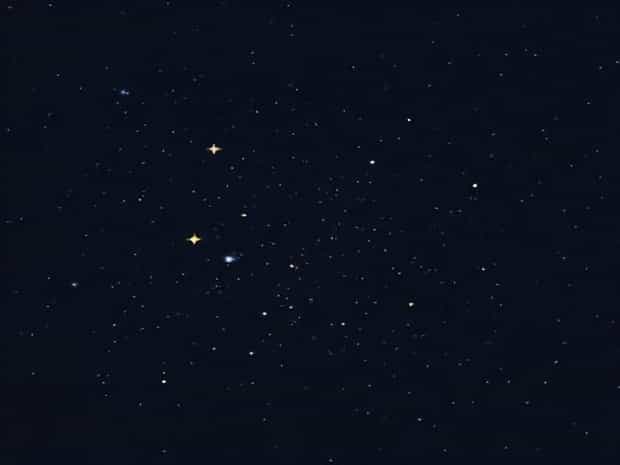
The stars Yed Prior and Yed Posterior, also known as Delta and Epsilon Ophiuchi, are red giants that provide a striking contrast to the white and blue stars in the constellation. Yed Prior, located at the shoulder of the Serpent Bearer, is approximately 171 light-years away and is noted for its deep orange-red hue. Yed Posterior, forming part of the same line, is slightly further at around 180 light-years. Both stars are prominent markers in the constellation and help observers trace the outline of Ophiuchus with ease.
Zeta Ophiuchi
Zeta Ophiuchi is a massive, hot, and blue star known for its high velocity through space. It is classified as an O-type star, one of the hottest types of stars known, and is approximately 366 light-years away from Earth. Zeta Ophiuchi is of particular interest to astronomers due to its rapid movement and its influence on the surrounding interstellar medium. The star’s stellar winds have created a bow shock in the surrounding gas, providing insights into stellar dynamics and star formation processes.
Additional Notable Stars
Besides the primary stars, Ophiuchus contains several other noteworthy stars, including Theta Ophiuchi, Kappa Ophiuchi, and Lambda Ophiuchi. Each of these stars contributes to the overall shape and navigational value of the constellation.
Theta Ophiuchi
Theta Ophiuchi is a multiple star system that serves as a point of interest for both amateur and professional astronomers. Its components vary in brightness and color, offering an excellent opportunity for observing stellar interactions. The system is located roughly 450 light-years away and is visible with small telescopes under favorable conditions.
Kappa Ophiuchi
Kappa Ophiuchi is a giant star that stands out due to its magnitude and position in the constellation’s northern region. It plays a role in forming the visual outline of Ophiuchus, connecting several of the constellation’s primary stars. Its distance is approximately 147 light-years, making it relatively close in astronomical terms.
Lambda Ophiuchi
Lambda Ophiuchi, also called Marfik, is a binary star system known for its orange-white hue. It marks the eastern end of the constellation and provides a reference for identifying adjacent star fields. Its spectral type and brightness make it an appealing target for observational astronomy.
Observational Tips
For those interested in viewing the major stars in Ophiuchus, several tips can enhance the experience. Observing during the summer months in the Northern Hemisphere offers the clearest view. Dark skies away from city lights improve visibility, particularly for fainter stars like Theta Ophiuchi. Using binoculars or a small telescope can help distinguish binary systems and color variations among the stars.
Star Mapping Techniques
- Identify Rasalhague as the starting point, since it is the brightest star.
- Trace the line connecting Sabik to Yed Prior and Yed Posterior to outline the main body of the constellation.
- Use Zeta Ophiuchi to explore the northern region of the constellation and observe its interaction with surrounding stars.
- Refer to adjacent constellations like Hercules and Serpens to confirm the boundaries of Ophiuchus.
Ophiuchus is a rich and fascinating constellation with a diverse array of major stars that capture the imagination of both amateur and professional astronomers. Stars such as Rasalhague, Sabik, Yed Prior, Yed Posterior, and Zeta Ophiuchi provide reference points for navigation, observation, and astrophotography. Understanding the characteristics, distances, and colors of these stars helps in appreciating the complexity and beauty of this celestial formation.
Observing the major stars in Ophiuchus offers not only an aesthetic experience but also a scientific one, as these stars provide insights into stellar evolution, binary interactions, and the structure of our galaxy. Whether for casual stargazing or detailed astronomical study, Ophiuchus presents a compelling section of the night sky, with its prominent stars guiding observers through the Serpent Bearer’s elegant form and illuminating the wonders of the cosmos.