Lc Of Vernier Caliper
The Vernier caliper is one of the most essential tools in mechanical and engineering measurements, widely recognized for its ability to measure with high precision. Among its components, the least count (LC) of the Vernier caliper plays a pivotal role in determining the accuracy of the measurements it provides. Understanding the concept of the LC is crucial for students, engineers, and technicians who rely on precise readings for their work. The LC essentially represents the smallest length that can be measured reliably using the instrument. This topic will delve into the concept of the least count of a Vernier caliper, how it is calculated, its significance, and practical tips for using it efficiently in various applications.
Understanding the Vernier Caliper
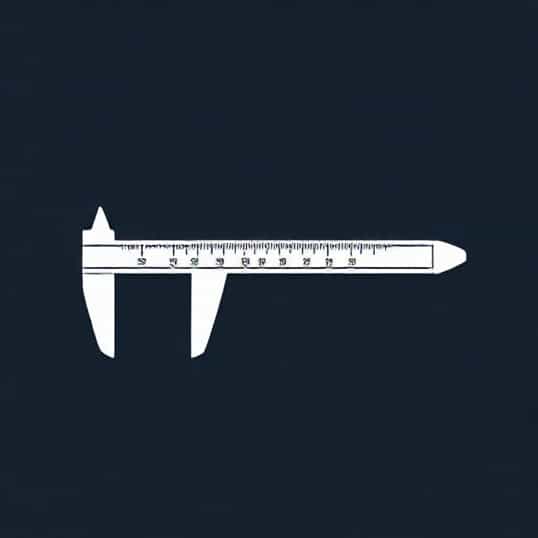
A Vernier caliper is a measuring instrument used to measure internal and external dimensions, as well as depths. It consists of a main scale and a sliding Vernier scale. The main scale provides measurements in standard units, while the Vernier scale allows for finer readings by showing fractions of the smallest divisions on the main scale. The combination of these two scales enables the user to achieve high precision, making the Vernier caliper a preferred instrument in mechanical workshops, laboratories, and educational settings.
Components of a Vernier Caliper
- Main ScaleThis is usually graduated in millimeters or inches, and it serves as the primary reference for measurements.
- Vernier ScaleA secondary sliding scale that allows the user to read values more precisely, often to a fraction of a millimeter.
- JawsThe caliper has two sets of jaws the larger ones measure external dimensions, and the smaller ones measure internal dimensions.
- Depth RodSome Vernier calipers come with a depth rod for measuring depths accurately.
What is the Least Count (LC)?
The least count of a Vernier caliper is defined as the smallest measurement that can be read accurately using the instrument. It determines the precision of the device. Essentially, the LC tells the user how fine the measurement can be, which is particularly important when small differences need to be detected. A smaller LC indicates a higher precision, which is why understanding and calculating the LC is critical for accurate measurements.
Formula for Least Count
The least count of a Vernier caliper can be calculated using the following formula
LC = Value of one main scale division – Value of one Vernier scale division
Here’s how it works
- First, determine the value of one division on the main scale (MSD). For instance, if 1 mm is marked per division, the MSD = 1 mm.
- Next, determine the value of one division on the Vernier scale (VSD). This is calculated by dividing the total length covered by the Vernier scale by the number of divisions on it.
- Finally, subtract the Vernier scale division value from the main scale division value to get the LC.
Example Calculation
Suppose a Vernier caliper has a main scale with 1 mm divisions and the Vernier scale has 10 divisions that match 9 mm on the main scale. The value of one Vernier scale division would be 9 mm / 10 = 0.9 mm. Using the formula
LC = 1 mm – 0.9 mm = 0.1 mm
Thus, the least count of this Vernier caliper is 0.1 mm, meaning it can measure dimensions accurately to the nearest 0.1 mm.
Importance of Least Count
The least count of a Vernier caliper is a fundamental aspect of measurement because it directly influences the accuracy and reliability of the readings. For engineers and scientists, even minor errors can have significant consequences, so knowing the LC ensures that measurements are within acceptable precision limits.
Applications in Real Life
- Mechanical EngineeringMeasuring the diameter of shafts, holes, and other components where precise tolerances are critical.
- ManufacturingEnsuring parts fit together accurately in assembly lines.
- EducationTeaching students the principles of precision measurement and error analysis.
- ResearchExperiments requiring high-accuracy measurement of materials or biological specimens.
Practical Tips for Accurate Measurement
While understanding the LC is important, proper handling of the Vernier caliper is equally critical to achieve accurate readings. Users must ensure the caliper is clean, properly aligned, and applied with consistent pressure. Reading the scales at eye level prevents parallax errors. In addition, always calibrate the instrument if it has been exposed to heavy use or extreme conditions, as this ensures that the LC remains valid.
Common Mistakes to Avoid
- Not zeroing the Vernier caliper before taking measurements.
- Applying too much force on the jaws, which can distort the measurement.
- Reading the scale from an angle, leading to parallax error.
- Ignoring the LC and assuming the instrument provides infinite precision.
Advanced Considerations
Some modern Vernier calipers come with digital readouts that can automatically display measurements, often bypassing the manual calculation of the LC. However, understanding the LC remains important because it defines the intrinsic precision of the instrument. Even digital calipers have a resolution limit, which is essentially their least count. Knowledge of the LC helps users interpret measurements critically and understand the limits of accuracy.
LC and Error Analysis
In precision measurement, the least count also serves as a basis for calculating measurement error. Typically, the error of a Vernier caliper is considered to be ±1 LC. For instance, if the LC is 0.1 mm, any measurement taken with the caliper could have an uncertainty of ±0.1 mm. Being aware of this helps engineers and scientists account for potential variations in their calculations and ensures designs and experiments remain reliable.
The least count of a Vernier caliper is a vital concept for anyone using this precise measuring instrument. It defines the smallest measurement the instrument can accurately register and serves as a guide for interpreting results. Understanding the calculation, significance, and application of the LC allows users to make accurate measurements, avoid errors, and ensure reliability in various fields such as mechanical engineering, research, manufacturing, and education. By mastering the concept of least count and practicing proper measurement techniques, users can fully utilize the capabilities of a Vernier caliper and maintain high standards of precision and accuracy in their work.