How Does Deforestation Cause Desertification?
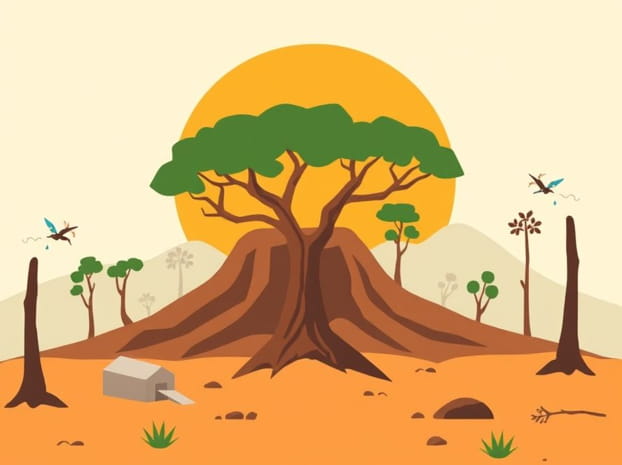
Deforestation is a major environmental challenge that has far-reaching consequences for ecosystems and human societies. One of the most serious outcomes of deforestation is desertification, the process by which fertile land gradually becomes arid and unproductive. The removal of trees and vegetation disrupts the natural balance of soil, water, and climate, accelerating land degradation and contributing to the expansion of desert-like conditions. Understanding how deforestation causes desertification is essential for environmental conservation, sustainable land management, and climate resilience. This topic explores the mechanisms, impacts, and preventive measures associated with deforestation-induced desertification, providing a comprehensive overview of the issue and its global significance.
Understanding Deforestation
Deforestation refers to the clearing, thinning, or removal of forests and trees for purposes such as agriculture, urban development, logging, and infrastructure expansion. Forests play a crucial role in maintaining ecological balance by supporting biodiversity, regulating the water cycle, stabilizing soil, and sequestering carbon. When these forests are removed, the consequences extend beyond the immediate loss of vegetation, affecting climate, soil quality, and water availability. Deforestation is particularly concerning in regions with fragile ecosystems, where the land is more susceptible to degradation and desertification.
Causes of Deforestation
- Agricultural ExpansionConversion of forested land into cropland or pasture for livestock.
- Logging and Timber ExtractionHarvesting trees for wood, paper, and construction materials.
- UrbanizationClearing forests for housing, roads, and industrial development.
- Mining ActivitiesForest removal for minerals and fossil fuel extraction.
- Natural FactorsWildfires, pests, and climate-induced stress that weaken forest cover.
What is Desertification?
Desertification is the degradation of land in arid, semi-arid, and dry sub-humid regions, primarily caused by human activities and climatic variations. It leads to the loss of soil fertility, reduced water availability, and diminished vegetation cover, transforming productive land into barren, desert-like conditions. Desertification not only threatens food security and livelihoods but also contributes to environmental problems such as dust storms, biodiversity loss, and altered local climates. Areas that experience deforestation are particularly vulnerable because the protective cover of trees and plants is removed, exposing soil to erosion and degradation.
Key Features of Desertification
- Soil erosion and nutrient depletion
- Reduction in vegetation cover and biodiversity
- Lower water retention and increased aridity
- Decline in agricultural productivity
- Increased frequency of sandstorms and dust events
How Deforestation Leads to Desertification
The connection between deforestation and desertification involves multiple interrelated processes that collectively degrade the land and reduce its capacity to support vegetation and human activity. By examining these mechanisms, it becomes clear how tree removal can trigger long-term environmental damage.
Soil Erosion and Degradation
Trees and forest vegetation anchor soil with their roots and protect it from the impact of rainfall and wind. When forests are cleared, the soil becomes exposed and vulnerable to erosion. Rainfall washes away topsoil, which is rich in nutrients, while wind can carry away finer ptopics, leaving behind infertile and compacted soil. This degradation reduces the soil’s ability to retain water and nutrients, creating conditions conducive to desertification.
Loss of Soil Moisture
Forests play a crucial role in maintaining soil moisture by providing shade, reducing evaporation, and recycling water through transpiration. When trees are removed, the land is exposed to direct sunlight, leading to higher evaporation rates. The loss of moisture weakens the soil structure, limits plant growth, and accelerates the desertification process. In arid and semi-arid regions, this effect is particularly pronounced because water availability is already limited.
Altered Water Cycles
Deforestation disrupts local and regional water cycles by reducing transpiration and decreasing rainfall. Trees release water vapor into the atmosphere, which contributes to cloud formation and precipitation. When forests are removed, this mechanism is weakened, leading to reduced rainfall and drier conditions. The resulting water scarcity further exacerbates soil degradation and hampers vegetation regrowth, accelerating the spread of desert-like conditions.
Loss of Vegetative Cover
Vegetation acts as a protective barrier against environmental stressors such as wind, sun, and heavy rain. When forests are removed, land loses its natural defense system, making it more susceptible to erosion, drought, and nutrient depletion. The absence of plant roots and organic matter also limits the natural regeneration of soil, creating a feedback loop that promotes desertification. Over time, barren land replaces once-productive ecosystems, making recovery difficult without significant human intervention.
Impacts of Deforestation-Induced Desertification
The consequences of desertification caused by deforestation extend beyond environmental degradation. They affect human communities, economies, and biodiversity. Understanding these impacts emphasizes the urgency of addressing deforestation and implementing sustainable land management practices.
Environmental Impacts
- Loss of biodiversity as plant and animal habitats are destroyed
- Increased frequency and severity of dust storms and sandstorms
- Altered local and regional climate patterns due to reduced vegetation and soil moisture
- Depletion of groundwater and surface water resources
- Reduced soil fertility and land productivity
Socioeconomic Impacts
Communities dependent on agriculture face reduced crop yields and livestock productivity due to degraded land. Desertification leads to food insecurity, poverty, and migration, as people are forced to leave unproductive lands. Economic losses arise from reduced agricultural output, increased costs for irrigation and soil rehabilitation, and damage to infrastructure caused by erosion and sand encroachment. Additionally, the long-term loss of ecosystem services, such as carbon sequestration and water filtration, affects societal well-being and resilience to climate change.
Preventive and Mitigation Measures
Addressing desertification requires a combination of sustainable land management, reforestation, and community engagement. Several measures can reduce the risk and impact of deforestation-induced desertification
- Afforestation and ReforestationPlanting trees and restoring vegetation cover to stabilize soil and maintain moisture.
- Soil Conservation TechniquesImplementing terracing, contour plowing, and mulching to prevent erosion and retain nutrients.
- Sustainable AgricultureUsing crop rotation, cover crops, and organic fertilizers to maintain soil health.
- Water ManagementConstructing rainwater harvesting systems, check dams, and irrigation improvements to conserve water.
- Community Awareness and Policy ImplementationEducating local populations about sustainable practices and enforcing regulations to prevent illegal logging and land degradation.
Deforestation is a primary driver of desertification, with far-reaching consequences for the environment, human societies, and global ecosystems. By removing trees and vegetation, deforestation destabilizes soil, disrupts water cycles, and reduces land productivity, ultimately transforming fertile areas into arid, desert-like conditions. The impacts are both ecological and socioeconomic, affecting biodiversity, climate, food security, and livelihoods. Preventing and mitigating desertification requires sustainable land management practices, reforestation, and strong community engagement. By understanding the mechanisms through which deforestation causes desertification, policymakers, communities, and individuals can work together to protect ecosystems, preserve soil fertility, and promote long-term environmental sustainability.