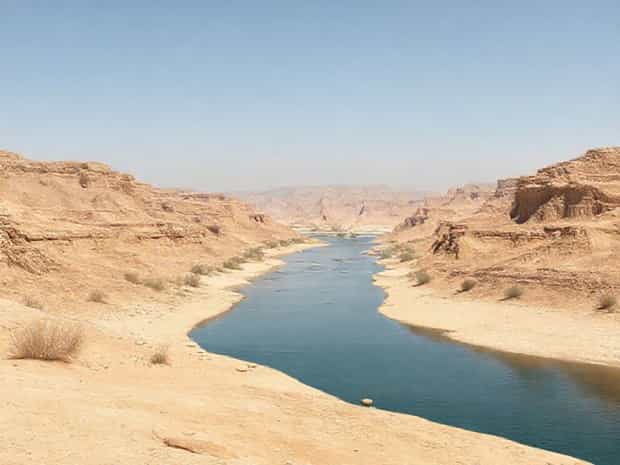
Did The Euphrates River Dry Up?
The Euphrates River is one of the most historically significant rivers in the world, often described as the cradle of ancient civilization. Flowing through Turkey, Syria, and Iraq, it has sustained life, agriculture, and trade for thousands of years. In recent years, however, reports and images have surfaced showing alarming declines in its water levels. This has led many to ask did the Euphrates River dry up? The answer is complex, as the river has not vanished completely but has experienced severe reductions that raise concerns for the environment, local communities, and regional stability.
The Importance of the Euphrates River
Understanding whether the Euphrates dried up requires recognizing its historical and modern importance. For centuries, the river has been a vital source of water for farming and drinking, especially in arid regions of Syria and Iraq. Alongside the Tigris, it formed Mesopotamia, where some of the earliest human civilizations emerged. Without the Euphrates, the fertile crescent that gave birth to agriculture, writing, and trade would not have existed in the same way.
Has the Euphrates River Completely Dried Up?
The Euphrates River has not completely dried up, but in several regions, its flow has been reduced to alarming levels. In Iraq and Syria, once-lush riverbanks now show cracked earth, stagnant pools, and abandoned farmlands. Satellite images confirm a drastic shrinkage in water volume. This situation has been caused by multiple factors, combining natural and human influences.
Areas Most Affected
- In Syria, sections of the Euphrates near Raqqa and Deir ez-Zor have seen reduced water flow, affecting electricity generation from dams.
- In Iraq, the downstream areas are hit hardest, where farmers report fields turning barren due to lack of irrigation.
- In Turkey, where the river originates, the water level is more stable, but heavy damming affects downstream flow.
Main Reasons for the Decline of the Euphrates
The drying of the Euphrates is not due to one single cause but rather a combination of human activities and environmental challenges.
Dams and Water Diversion
Turkey has built several large dams under its Southeastern Anatolia Project, diverting water for irrigation and hydroelectric power. While this has benefited Turkey, it has reduced the flow of water to Syria and Iraq. As a result, downstream countries receive only a fraction of the river’s natural supply.
Climate Change and Drought
Another major factor is the changing climate. Prolonged droughts in the Middle East, rising temperatures, and declining rainfall have worsened water scarcity. The Euphrates depends heavily on snowmelt from mountains in Turkey, and with global warming, snowpack has decreased, reducing river flow during hot summers.
Overuse and Mismanagement
In addition to dams and drought, poor water management has played a role. Inefficient irrigation systems, over-extraction of water for agriculture, and pollution have all contributed to the shrinking river. Farms along the Euphrates often rely on outdated methods that waste large amounts of water.
Impact on Communities and Ecosystems
The drying of the Euphrates has serious consequences for millions of people who rely on it. Beyond providing water, it sustains ecosystems, cultural heritage, and economies.
Effects on Agriculture
For thousands of years, farmers along the Euphrates cultivated wheat, barley, dates, and vegetables. With reduced water, crops are failing, and food security in Iraq and Syria is at risk. Many families have abandoned their farms and moved to urban areas in search of survival.
Hydroelectric Power Problems
Several dams, including Syria’s Tabqa Dam and Iraq’s Haditha Dam, rely on the Euphrates for hydroelectric energy. With water levels dropping, power shortages have worsened, adding to the region’s instability and limiting access to basic services.
Environmental Degradation
Fish populations and wetlands along the river are disappearing. Migratory birds that once relied on the Euphrates for stopovers now struggle to find suitable habitats. The loss of biodiversity is accelerating as the ecosystem collapses.
Humanitarian Consequences
Communities that depend on the Euphrates face a humanitarian crisis. Shortages of clean water increase health risks, especially waterborne diseases. Economic hardships force people to migrate, creating pressure on already fragile regions.
Prophecies and Symbolic Interpretations
The drying of the Euphrates has also gained attention because of religious and symbolic interpretations. Some texts, particularly in Christian and Islamic traditions, mention the Euphrates in prophecies about the end of times. While scientists explain the drying as a result of human activity and climate change, these interpretations add cultural and emotional weight to the river’s decline.
International Disputes and Political Tensions
Water scarcity along the Euphrates has also become a political issue. Turkey, Syria, and Iraq have long argued over rights to the river. Without strong agreements on water sharing, tensions may escalate, making the Euphrates not only an environmental concern but also a geopolitical challenge.
- Turkey controls the river’s source and therefore has significant power.
- Syria suffers from reduced water flow and struggles with internal conflict.
- Iraq, at the end of the river, is the most vulnerable, with communities facing severe shortages.
Efforts to Save the Euphrates
Despite the grim situation, there are efforts to revive and preserve the Euphrates. Solutions require cooperation across borders and sustainable management practices.
Improved Water Management
Introducing modern irrigation systems, reducing water waste, and shifting to crops that require less water could help farmers adapt. Governments must also enforce stricter pollution controls to protect water quality.
International Cooperation
Turkey, Syria, and Iraq need stronger agreements on fair water sharing. Without cooperation, unilateral damming and overuse will continue to harm the river.
Climate Action
Addressing climate change is essential for the Euphrates’ future. Global and regional efforts to reduce greenhouse gases, protect forests, and restore wetlands can help stabilize the river’s flow.
So, did the Euphrates River dry up? The answer is not absolute. The river has not disappeared, but its decline is undeniable and alarming. The once-mighty Euphrates now struggles to sustain the people, lands, and ecosystems that depend on it. The combination of climate change, damming, and poor management has brought the river to one of its lowest points in history. Whether the Euphrates recovers depends on human choices cooperation, conservation, and sustainable practices may still protect this historic river for future generations.