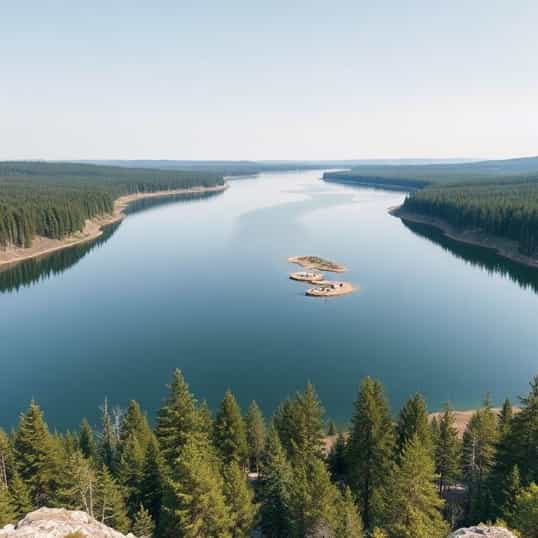
Largest Oxbow Lake In The World
Oxbow lakes are fascinating natural formations created when a river changes its course, leaving a curved body of water isolated from the main channel. Among these unique lakes, one stands out as the largest oxbow lake in the world, attracting the attention of geographers, environmentalists, and travelers alike. Understanding its size, formation, ecological importance, and global recognition provides insight into river dynamics, natural habitats, and human interaction with freshwater systems. This lake demonstrates how geological processes can create striking and ecologically rich landscapes over time.
Definition of an Oxbow Lake
An oxbow lake is a crescent-shaped body of water formed when a meander from a river is cut off, creating a standalone lake. This typically happens over years as rivers erode their banks and deposit sediments along curves. Eventually, the river may cut a new, straighter path, leaving the old meander separated from the main flow. The term oxbow comes from the U-shaped collar used on oxen, which closely resembles the shape of these lakes. These lakes are often shallow, rich in biodiversity, and provide unique habitats for various aquatic species.
Formation Process
The formation of an oxbow lake begins with a meandering river. Water flows faster on the outer edge of bends, causing erosion, while sediments accumulate on the inner edge, creating point bars. Over time, erosion can narrow the neck of a meander, and during a flood, the river may cut through the neck, leaving a separate U-shaped lake. The largest oxbow lake in the world formed through similar natural processes, but on a grand scale, involving significant river dynamics and centuries of geographical evolution. Studying this lake helps scientists understand river meandering, sediment deposition, and landscape transformation.
The Largest Oxbow Lake in the World
The largest oxbow lake in the world is Lake Chicot, located in the state of Arkansas in the United States. Lake Chicot was formed from a meander of the Mississippi River and covers an area of approximately 22,000 acres, making it one of the most extensive oxbow lakes globally. The lake stretches over 24 miles in length, offering a massive water body that supports a variety of fish, birds, and aquatic plants. Its size, ecological richness, and accessibility have made it an important resource for recreation, fishing, and wildlife conservation.
Geographical Location
Lake Chicot is situated near the city of Lake Village in southeastern Arkansas, close to the Mississippi River. The proximity to the river explains its formation, as past river meanders were eventually cut off due to natural shifts in the river’s course. The lake is bordered by fertile farmland and wetlands, contributing to its ecological diversity. Understanding the lake’s location also highlights its connection to the larger Mississippi River Basin, which is one of the most significant hydrological systems in North America.
Ecological Importance
Lake Chicot provides a habitat for numerous species of fish, birds, amphibians, and plants. The shallow areas and wetlands around the lake support fish like bass, crappie, and catfish, making it a popular destination for anglers. The surrounding wetlands and islands are home to migratory birds, including herons, egrets, and ducks, while mammals such as raccoons and beavers are common in nearby forests. The lake’s biodiversity demonstrates how oxbow lakes play a crucial role in maintaining ecological balance, offering shelter, breeding grounds, and food sources for a wide range of species.
Recreational and Economic Significance
Lake Chicot serves as a hub for recreational activities, including boating, fishing, and birdwatching. Tourism associated with the lake contributes to the local economy, providing jobs and supporting small businesses. The lake is also part of Lake Chicot State Park, which offers camping facilities, picnic areas, and educational programs about the lake’s history and ecology. Recreational use of the largest oxbow lake in the world highlights the interaction between natural landscapes and human enjoyment, demonstrating sustainable ways to benefit from freshwater ecosystems.
- Name Lake Chicot
- Location Lake Village, Arkansas, USA
- Size Approximately 22,000 acres
- Length About 24 miles
- Formation Former meander of the Mississippi River
- Ecological importance Supports fish, birds, amphibians, and plants
- Recreational activities Fishing, boating, birdwatching, and camping
Historical and Cultural Relevance
Lake Chicot has a rich cultural and historical significance. Indigenous peoples originally inhabited the region, relying on the lake’s abundant resources for food and transportation. Later, European settlers recognized the lake’s value for agriculture and trade due to its fertile surroundings and water access. Today, historical sites and educational programs around Lake Chicot preserve its cultural heritage, highlighting its role in shaping human settlement patterns and community development. The combination of natural beauty and historical importance makes it a notable landmark in the United States.
Conservation Efforts
Conservation efforts at Lake Chicot focus on maintaining water quality, protecting wildlife habitats, and preserving the lake’s natural landscape. Organizations collaborate with local authorities to monitor fish populations, manage invasive species, and restore wetlands. These efforts ensure that the largest oxbow lake in the world continues to provide ecological benefits, recreational opportunities, and educational value. Conservation also emphasizes the importance of sustainable use, balancing human activities with the protection of biodiversity and natural resources.
Comparison with Other Oxbow Lakes
While many oxbow lakes exist worldwide, Lake Chicot stands out for its size and ecological diversity. Other notable oxbow lakes include Lake Oxbow in Bangladesh, Lake Poyang in China (formed similarly to an oxbow), and the Cambridge Oxbow in England. However, Lake Chicot’s combination of area, length, and continuous freshwater flow makes it exceptional. Comparing these lakes provides insight into how rivers shape landscapes differently based on climate, topography, and geological factors, highlighting the global significance of oxbow lake formations.
Tourism and Education
Lake Chicot attracts visitors not only for recreation but also for educational purposes. Schools, universities, and environmental organizations study the lake to understand hydrology, sedimentation, and aquatic ecosystems. Nature trails and visitor centers provide interpretive information about the lake’s formation, wildlife, and conservation initiatives. The educational aspect emphasizes the role of oxbow lakes as natural laboratories, offering firsthand learning experiences about river dynamics, biodiversity, and environmental stewardship.
The largest oxbow lake in the world, Lake Chicot in Arkansas, illustrates the fascinating intersection of natural processes, ecological significance, and human interaction. As a former meander of the Mississippi River, it demonstrates the power of rivers to shape landscapes and create unique freshwater ecosystems. Its vast size, biodiversity, recreational opportunities, and cultural history make it an essential natural landmark. Understanding Lake Chicot as the world’s largest oxbow lake enhances knowledge about river dynamics, environmental conservation, and the ways humans can sustainably engage with natural water bodies.
In summary, Lake Chicot’s status as the largest oxbow lake in the world highlights the importance of river meandering and natural formation processes. From supporting diverse wildlife to providing recreational and educational opportunities, the lake exemplifies how oxbow lakes contribute to ecological balance and human enjoyment. Studying this lake allows geographers, environmentalists, and travelers to appreciate the dynamic relationship between rivers and landscapes, emphasizing the ongoing significance of these extraordinary natural formations.