Is This The Last Solar Eclipse
The notion of a last solar eclipse sparks curiosity and concern among many people, especially those intrigued by astronomy or natural phenomena. Solar eclipses have fascinated humanity for millennia, from ancient civilizations interpreting them as omens to modern scientists studying them for insights into the sun’s corona and celestial mechanics. The idea that one might be witnessing the final solar eclipse can lead to questions about the future of our planet, the sun, and the Earth-Moon relationship. Understanding whether this could truly be the last solar eclipse involves examining astronomical patterns, celestial mechanics, and the long-term evolution of the Earth-Moon-Sun system.
Understanding Solar Eclipses
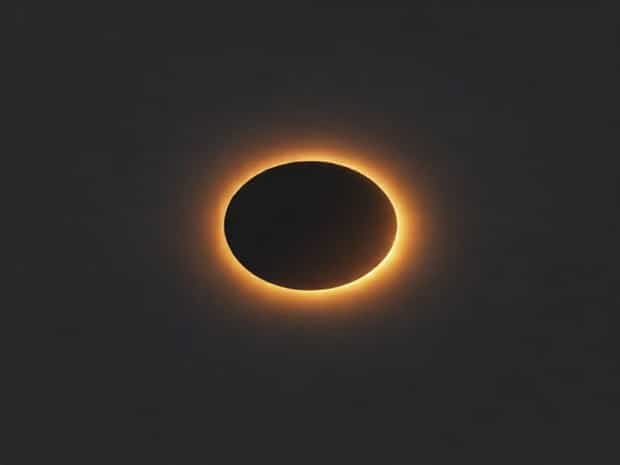
A solar eclipse occurs when the Moon passes between the Earth and the Sun, temporarily blocking part or all of the Sun’s light from reaching the Earth. There are three main types of solar eclipses total, partial, and annular. Total eclipses happen when the Moon completely covers the Sun, creating a brief period of darkness during the day. Partial eclipses occur when only a portion of the Sun is obscured, and annular eclipses happen when the Moon is slightly farther away, leaving a ring of the Sun visible. These events are predictable and follow precise orbital mechanics, which allow astronomers to calculate solar eclipses centuries in advance.
Frequency and Predictability
Solar eclipses happen regularly due to the alignment of the Sun, Moon, and Earth. On average, a total solar eclipse can be seen from any given location on Earth approximately once every 375 years, though partial eclipses occur more frequently. The predictability of eclipses is governed by the Saros cycle, an 18-year, 11-day period after which similar eclipses repeat. Because of this cycle and the regularity of celestial motions, scientists can assure that solar eclipses will continue to occur for many millennia. Thus, the idea of a final solar eclipse is more symbolic or speculative than a scientific certainty.
Long-Term Celestial Changes
While solar eclipses are predictable in the short term, long-term changes in the Earth-Moon-Sun system will eventually affect their occurrence. Tidal interactions between the Earth and the Moon gradually cause the Moon to move away from the Earth at a rate of about 3.8 centimeters per year. Over millions of years, this increased distance will make total solar eclipses less common because the Moon will appear smaller in the sky, potentially preventing it from completely covering the Sun. Eventually, far into the future, total eclipses could cease altogether, but partial and annular eclipses will continue for an extended period before all types of solar eclipses disappear entirely.
Impact on Visibility
The gradual recession of the Moon will change the experience of solar eclipses for future generations. Annular eclipses may become more common as the Moon appears slightly smaller, and the classic total solar eclipse may no longer be observable. This process is extremely slow, spanning millions of years, meaning that humanity has not yet approached the last solar eclipse in any practical sense. In the context of human timescales, solar eclipses will remain a fascinating and accessible phenomenon for countless generations to come.
Scientific and Cultural Significance
Solar eclipses have long held cultural, spiritual, and scientific significance. Ancient civilizations often viewed eclipses as omens or messages from the gods, while modern scientists use these events to study the Sun’s corona, test general relativity, and observe solar phenomena. Each eclipse offers an opportunity for scientific advancement, public education, and cultural celebration. The rarity and dramatic nature of total eclipses make them memorable events, encouraging global collaboration in observation and study. Even if the Moon slowly moves away over millions of years, eclipses will continue to captivate human imagination for a very long time.
Misconceptions About the Last Eclipse
Speculations about witnessing the final solar eclipse often arise in popular media, folklore, or social discussions, but scientifically, such events are far from imminent. The last eclipse idea usually stems from a misunderstanding of celestial mechanics or a dramatization of long-term astronomical predictions. While it is true that the Moon’s gradual recession will eventually alter eclipse visibility, the timeframe extends far beyond the span of human civilization. Therefore, any suggestion that a recent or upcoming eclipse is the last one is inaccurate and lacks scientific basis.
Practical Tips for Observing Solar Eclipses
Regardless of long-term projections, enjoying solar eclipses safely and effectively is important. Observers should always use proper eye protection, such as solar viewing glasses or specialized filters, to prevent permanent eye damage. Observing from a clear location with minimal light pollution enhances the experience, especially for partial and annular eclipses. Keeping track of eclipse calendars and using astronomy apps can help plan viewing sessions for the best opportunities. For total eclipses, positioning oneself within the path of totality maximizes the dramatic visual experience and allows for studying phenomena like Baily’s beads and the corona.
Enhancing the Experience
- Plan in advance to travel to locations within the path of totality for the most striking experience.
- Use binoculars or cameras with solar filters for detailed observations, but never look directly at the Sun without protection.
- Combine eclipse viewing with educational materials about the Sun, Moon, and Earth to gain a deeper understanding of celestial mechanics.
- Share the event with friends, family, and community groups to promote awareness and appreciation of astronomy.
The question of whether a solar eclipse is the last one is more speculative than factual. While long-term celestial changes, such as the Moon’s gradual recession, will eventually make total eclipses impossible, this process takes millions of years. In the context of human lifespans and current civilization, solar eclipses will continue to occur regularly, offering awe-inspiring and scientifically valuable experiences. Understanding solar eclipses, their predictability, and their cultural significance allows people to appreciate the beauty and rarity of these events without undue concern about them disappearing. For anyone observing the sky today or planning for future eclipses, the important takeaway is that there is no imminent last solar eclipse, and humanity will enjoy these celestial spectacles for countless generations.