Is Burj Khalifa A Skyscraper
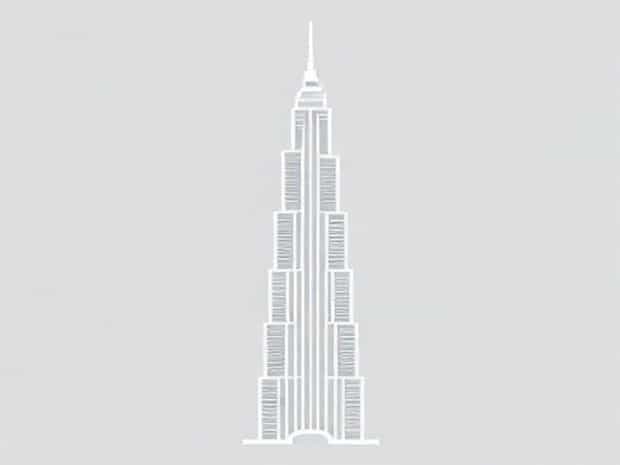
The Burj Khalifa in Dubai, United Arab Emirates, is widely recognized as one of the most iconic buildings in the world. Standing at an astonishing height of 828 meters (2,717 feet), it has captured the imagination of architects, engineers, and tourists alike. While the term skyscraper is commonly used to describe tall buildings, understanding whether Burj Khalifa qualifies as a skyscraper requires examining architectural definitions, historical context, engineering innovations, and the functional aspects of the building. Its design and structure push the limits of what is conventionally considered a skyscraper, making it a unique and compelling subject of study.
Definition of a Skyscraper
A skyscraper is typically defined as a tall, continuously habitable building that has multiple floors and is supported by a steel or reinforced concrete framework. The term originated in the late 19th century in the United States to describe buildings that scraped the sky compared to their surroundings. Skyscrapers are designed to maximize vertical space in urban areas, combining residential, commercial, and office functions within a single structure. Height, structural engineering, and occupancy are key criteria that determine whether a building can be classified as a skyscraper.
Historical Context
The concept of the skyscraper emerged in the late 1800s, with Chicago and New York as pioneering cities. Early examples such as the Home Insurance Building in Chicago and the Flatiron Building in New York demonstrated the potential of steel-frame construction to support multiple floors. Over the decades, skyscrapers grew taller, incorporating innovations in elevators, wind resistance, and fireproofing. By the 20th century, skyscrapers became symbolic of modernity, urban development, and technological achievement.
Burj Khalifa as a Skyscraper
The Burj Khalifa is undeniably a skyscraper in both functional and structural terms. It meets all the criteria of a skyscraper, including height, multiple floors, and continuous occupancy. With 163 floors above ground and 2 below, the building accommodates offices, residential units, hotels, restaurants, observation decks, and recreational spaces. Its verticality and mixed-use nature align perfectly with traditional definitions of a skyscraper, even as it pushes the limits of what was previously considered possible in high-rise construction.
Architectural Design
The Burj Khalifa was designed by the architectural firm Skidmore, Owings & Merrill, led by architect Adrian Smith. The building incorporates a buttressed core structural system that allows it to reach unprecedented heights while maintaining stability against wind forces and seismic activity. The tiered, spiraling design not only provides aesthetic appeal but also reduces wind loads, a critical factor for extremely tall skyscrapers. Its reflective glass and aluminum cladding contribute to its sleek, modern appearance, reinforcing its identity as a contemporary skyscraper.
Structural Engineering
Engineering innovations make Burj Khalifa a benchmark in skyscraper construction. The reinforced concrete core and steel spire allow it to maintain structural integrity despite its extreme height. High-performance elevators and mechanical systems support vertical movement efficiently, enabling accessibility to all floors. Advanced fire safety, water supply, and HVAC systems demonstrate that skyscrapers are not just tall structures but complex engineering achievements. In this context, Burj Khalifa exemplifies how skyscrapers evolve in response to technological progress.
Comparison with Other Skyscrapers
While many skyscrapers exceed 200 or 300 meters, the Burj Khalifa stands out due to its record-breaking height. Traditional skyscrapers, such as the Empire State Building or Willis Tower, were marvels of their time but remain shorter than Burj Khalifa. The building’s mixed-use functionality, extreme verticality, and iconic design set a new standard for defining what constitutes a modern skyscraper. In comparison, Burj Khalifa is not only a skyscraper but also a supertall skyscraper, a classification reserved for buildings exceeding 300 meters in height.
Supertall Skyscraper Classification
The Council on Tall Buildings and Urban Habitat (CTBUH) defines skyscrapers exceeding 300 meters as supertall and those above 600 meters as megatall. Burj Khalifa, at 828 meters, comfortably falls into the megatall category, making it the tallest human-made structure on Earth as of its completion in 2010. This classification highlights its exceptional status while still confirming its identity as a skyscraper.
Functional Aspects of Burj Khalifa
A skyscraper is defined not only by its height but also by its functionality. Burj Khalifa houses over 1,000 residential units, corporate offices, and the luxurious Armani Hotel, demonstrating its multipurpose utility. The observation decks on the 124th, 125th, and 148th floors attract millions of visitors annually, emphasizing the social and cultural roles of skyscrapers in urban life. Additionally, its restaurants, gyms, and entertainment facilities illustrate the integration of residential, commercial, and leisure functions that typify modern skyscrapers.
Urban Impact
Burj Khalifa has transformed the skyline of Dubai, serving as a symbol of economic ambition and architectural innovation. Its presence has encouraged urban densification and tourism, illustrating how skyscrapers function as both vertical cities and cultural landmarks. This urban impact is a defining characteristic of skyscrapers globally, reinforcing Burj Khalifa’s classification within this category.
Cultural and Symbolic Significance
Beyond its technical and functional attributes, Burj Khalifa is a cultural icon. It represents human achievement, ambition, and the desire to push architectural boundaries. Like historic skyscrapers such as the Chrysler Building or the Empire State Building, it combines aesthetic appeal with technical prowess, making it a symbol of modernity and progress. Its role as an architectural icon aligns with the broader understanding of skyscrapers as markers of urban identity and cultural aspiration.
Burj Khalifa is unquestionably a skyscraper by all conventional and modern standards. Its height, multiple floors, continuous occupancy, and structural complexity align with the criteria used to define skyscrapers. Beyond that, it represents the evolution of skyscraper architecture, incorporating cutting-edge engineering, multipurpose functionality, and aesthetic innovation. Classified as a megatall skyscraper, it surpasses all predecessors in both height and symbolic significance. By examining its design, functionality, and cultural impact, it becomes clear that Burj Khalifa is not just a skyscraper, but a milestone in human architectural achievement and a defining feature of 21st-century urban landscapes.