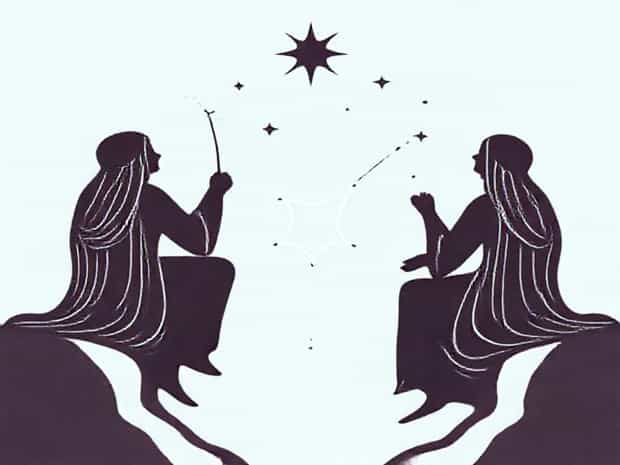
How Astrologers Account For The Constellation Ophiuchus
The constellation Ophiuchus, often called the Serpent Bearer, has long intrigued both astronomers and astrologers. It sits along the path of the Sun, known as the ecliptic, yet is not included in the traditional list of twelve zodiac signs. This omission sparks curiosity and debate if the Sun passes through Ophiuchus just as it does with other constellations, why do astrologers usually leave it out of the zodiac? Exploring how astrologers account for Ophiuchus offers a fascinating look into the intersection of science, tradition, and symbolic interpretation in astrology.
The Astronomical Background of Ophiuchus
Ophiuchus lies between Scorpio and Sagittarius in the night sky, and the Sun crosses it for about eighteen days every year, typically between late November and mid-December. Unlike the other constellations, it was never formally included in the astrological zodiac, which was established thousands of years ago based on a twelve-part division of the sky. This raises important questions about how astrology deals with its presence.
Key facts about Ophiuchus
- Located near the celestial equator, making it visible in many parts of the world.
- Represents a figure holding a serpent, symbolizing healing and wisdom.
- The Sun passes through Ophiuchus each year, but only for a short period.
- It does not fit neatly into the twelve-sign zodiacal framework.
The Origins of the Zodiac
To understand why Ophiuchus is not a zodiac sign, it helps to look at how the zodiac was created. Ancient Babylonian astrologers divided the ecliptic into twelve equal sections of thirty degrees each, aligning them with twelve constellations. This system was designed for simplicity and symmetry, not necessarily to reflect the exact boundaries of constellations. Ophiuchus, though part of the ecliptic path, was not included because the framework required twelve signs, not thirteen.
Symbolic number twelve
The number twelve holds symbolic importance across cultures, associated with completeness and cosmic order. From twelve months in a year to twelve hours on a clock face, the division felt natural. Astrologers chose to preserve this structure, even though it did not match every star grouping in the sky.
Astrological Interpretations of Ophiuchus
Despite being excluded from the standard zodiac, some modern astrologers have explored the potential meanings of Ophiuchus. They view it as carrying themes of healing, transformation, and deep wisdom, reflecting its mythological associations with Asclepius, the Greek god of medicine. In this sense, Ophiuchus represents qualities that extend beyond the traditional twelve signs, offering an additional layer of interpretation.
Common symbolic associations
- Healing powers and medical knowledge
- Conflict between mortality and immortality
- Breaking cycles and seeking higher truths
- A bridge between Scorpio’s intensity and Sagittarius’s expansion
The Debate Over a 13th Zodiac Sign
Every few years, headlines claim that Ophiuchus should be recognized as a thirteenth zodiac sign, sparking confusion among astrology enthusiasts. However, most professional astrologers argue that the zodiac is based on symbolic divisions, not exact constellational boundaries. The inclusion of Ophiuchus would disrupt the traditional structure, changing horoscope dates and interpretations that have been used for centuries.
Astrologers’ common responses
- The zodiac is symbolic, not literal astronomy.
- Adding Ophiuchus would break the balance of twelve houses and signs.
- Traditional astrology values continuity and coherence over constant revision.
Tropical vs. Sidereal Astrology
Astrologers use different systems to align the zodiac with the sky. In tropical astrology, common in Western traditions, the zodiac begins at the spring equinox and divides the sky evenly, ignoring shifting constellational boundaries. In sidereal astrology, often used in Vedic traditions, signs align more closely with actual constellations. Even in sidereal astrology, Ophiuchus is generally not considered a zodiac sign, since the framework also emphasizes twelvefold division.
Why Most Astrologers Exclude Ophiuchus
The decision to exclude Ophiuchus is not about denying its astronomical existence but about preserving the symbolic coherence of astrology. Astrology functions as a system of meaning rather than a star map. Twelve signs align with twelve houses, twelve archetypes, and cycles that form the foundation of astrological interpretation. Including Ophiuchus would require redefining this structure entirely, which most astrologers resist.
Structural reasons for exclusion
- The zodiac is divided equally into twelve 30-degree segments, not by constellation size.
- Ophiuchus would create imbalance and overlap in the system.
- Astrological practice depends on stability and shared symbolism.
Alternative Perspectives on Ophiuchus
Some contemporary astrologers do experiment with Ophiuchus, treating it as a hidden or forgotten sign that represents higher consciousness, healing, or transformation. For them, including Ophiuchus adds nuance to modern astrology and reflects the evolving relationship between humanity and the cosmos. While not mainstream, these interpretations keep the conversation about astrology’s adaptability alive.
Possible meanings assigned by alternative astrologers
- A sign of spiritual rebirth and enlightenment
- An archetype of the healer and teacher
- A symbol of integrating wisdom and power responsibly
The Mythological Roots of Ophiuchus
The mythology of Ophiuchus ties to Asclepius, the healer who learned how to bring the dead back to life. Zeus, fearing the collapse of the natural order, struck him down with a thunderbolt but later placed him in the sky as Ophiuchus. This myth reinforces themes of healing, mortality, and the pursuit of forbidden knowledge, all of which resonate with the symbolic interpretations given by astrologers.
Ophiuchus remains a constellation that sparks fascination because of its placement along the ecliptic and its absence from the traditional zodiac. While astronomy acknowledges its position among the stars, astrology accounts for Ophiuchus by recognizing its presence but maintaining the twelve-sign system for symbolic and structural reasons. For most astrologers, Ophiuchus is not an official zodiac sign but rather a constellation with mythological and spiritual meaning that can inspire deeper reflection. In this way, it stands as a reminder that astrology blends astronomy, symbolism, and tradition into a coherent framework that has endured for millennia.