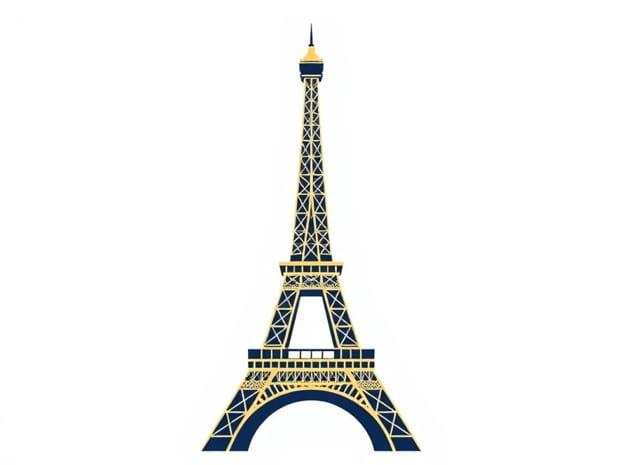
History Of Eiffel Tower
The Eiffel Tower stands as one of the most iconic landmarks in the world, symbolizing Paris, France, and the ingenuity of 19th-century engineering. Since its completion in 1889, it has captured the imagination of millions of visitors and continues to be a testament to architectural innovation, aesthetic design, and cultural significance. Understanding the history of the Eiffel Tower reveals not only its construction story but also the societal and technological context in which it was created, as well as its enduring impact on tourism, art, and global recognition.
Origins and Conception
The idea for the Eiffel Tower emerged in the 1880s as part of preparations for the 1889 Exposition Universelle, a world’s fair held in Paris to celebrate the 100th anniversary of the French Revolution. The French government sought to construct a monumental structure that would demonstrate France’s industrial and engineering capabilities. Gustave Eiffel, a renowned civil engineer, and his company were commissioned to design and build this ambitious project. The tower’s unique iron lattice structure was innovative for its time, combining aesthetic appeal with structural efficiency, which allowed it to rise to unprecedented heights.
Design and Engineering
The Eiffel Tower was designed with both function and form in mind. Some key design and engineering features include
- MaterialsApproximately 18,038 individual iron pieces and 2.5 million rivets were used in the construction.
- HeightUpon completion, it stood at 300 meters (984 feet), making it the tallest man-made structure in the world at the time.
- Structural InnovationThe lattice design reduced wind resistance and allowed the tower to remain stable despite its height.
- Construction TechniquesAdvanced engineering methods, such as prefabrication and precise riveting, ensured both speed and accuracy in assembly.
Construction Challenges
Building the Eiffel Tower was a monumental task that required careful planning and execution. Construction began in January 1887 and took just over two years to complete, finishing in March 1889. Despite the efficiency, the project faced several challenges, including public skepticism and engineering obstacles. Critics initially derided the design as an eyesore, fearing it would overshadow the city’s classical architecture. Laborers worked under difficult conditions, often at great heights, using safety precautions that were revolutionary for the era. Gustave Eiffel himself personally oversaw the work to ensure precision and safety.
Opening and Initial Reception
The Eiffel Tower officially opened to the public on March 31, 1889. During the Exposition Universelle, it quickly became a major attraction, drawing visitors from around the world. Initial public opinion was divided; while many appreciated its modern design and engineering brilliance, others criticized its departure from traditional Parisian aesthetics. Over time, however, the tower’s cultural and architectural significance became undeniable. It represented the triumph of industrial design and the forward-thinking spirit of the late 19th century.
Role in Communication and Technology
Beyond its status as a tourist attraction, the Eiffel Tower played a significant role in technological advancements. By the early 20th century, it was used for radio transmission experiments, which later contributed to the development of broadcast and communication technologies. During both World Wars, the tower had strategic value for radio transmissions. Its height and sturdy structure made it ideal for antennas, which reinforced its importance beyond mere architectural splendor.
Cultural Impact
The Eiffel Tower has influenced countless aspects of culture, including art, literature, and film. Artists like Marc Chagall and Robert Delaunay drew inspiration from its structure, while writers and filmmakers have used the tower as a symbol of romance, innovation, and Parisian identity. Additionally, it has been featured in countless postcards, paintings, and photographs, cementing its status as a global icon. Festivals, celebrations, and light shows continue to reinforce its role as a cultural centerpiece for both locals and tourists.
Maintenance and Preservation
Maintaining the Eiffel Tower is an ongoing process that ensures its structural integrity and aesthetic appeal. The tower is repainted approximately every seven years to protect the iron from corrosion. Modern restoration techniques and continuous inspections have preserved its safety and appearance for over a century. The Eiffel Tower also accommodates millions of visitors each year, requiring careful planning for crowd management, safety protocols, and visitor services to maintain a positive experience.
Tourism and Global Recognition
Today, the Eiffel Tower attracts over seven million visitors annually, making it one of the most visited monuments in the world. Its observation decks offer panoramic views of Paris, while its restaurants and exhibitions provide additional attractions. Beyond tourism, the tower has become a symbol of France itself, recognized worldwide and used in logos, advertisements, and cultural references. Its influence extends to architecture globally, inspiring similar structures and demonstrating the possibilities of iron and steel construction in urban design.
Modern Innovations
In recent years, the Eiffel Tower has incorporated modern technology to enhance visitor experiences and improve sustainability. Elevators have been upgraded, lighting systems now use energy-efficient LEDs, and digital tools provide interactive guides for tourists. Special events, such as anniversary celebrations and light shows, continue to draw attention and renew interest in the historic landmark. These innovations ensure that the Eiffel Tower remains relevant and accessible to contemporary audiences while respecting its historic legacy.
The history of the Eiffel Tower encompasses much more than its construction and initial controversy. It reflects advancements in engineering, the impact of industrialization, and the evolution of cultural appreciation for modern architecture. From a once-criticized structure to a beloved global icon, the Eiffel Tower embodies human creativity, resilience, and the ability to inspire across generations. As it continues to welcome millions of visitors and influence culture worldwide, its legacy as a symbol of Paris and French ingenuity remains firmly established.