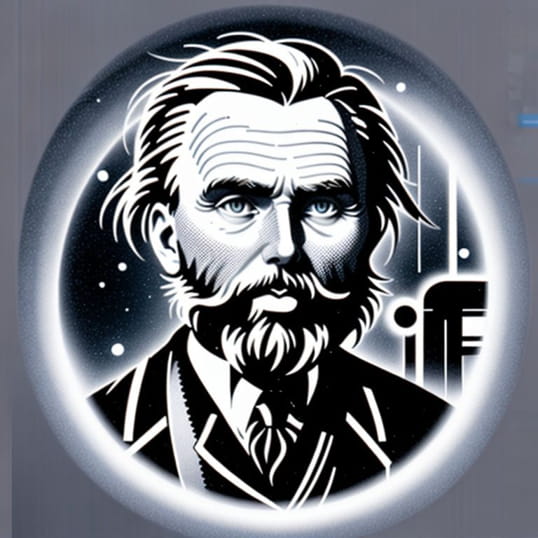
German Physicist Wilhelm Roentgen
Wilhelm Conrad Röntgen, a pioneering German physicist, is best known for his discovery of X-rays in 1895, a groundbreaking achievement that transformed the fields of medicine, physics, and material science. Born in 1845 in Lennep, Germany, Röntgen displayed an early aptitude for mathematics and physics, which guided his academic pursuits and ultimately led him to make one of the most significant discoveries in scientific history. His work bridged the gap between theoretical physics and practical applications, enabling physicians to see inside the human body without invasive procedures. The discovery of X-rays not only revolutionized diagnostic medicine but also contributed to advancements in physics, chemistry, and engineering, demonstrating the far-reaching impact of Röntgen’s meticulous research and innovative thinking.
Early Life and Education
Wilhelm Röntgen was born on March 27, 1845, in Lennep, a small town in Germany. His father, a cloth manufacturer, passed away when Röntgen was just three years old, and he was raised by his mother. Despite early personal challenges, Röntgen excelled academically, showing particular talent in mathematics and the natural sciences. At the age of 17, he enrolled at the Polytechnic in Zurich, Switzerland, where he studied mechanical engineering. His exceptional performance earned him a position at the University of Zurich, where he continued to deepen his understanding of physics and experimental techniques. These formative years laid the groundwork for his later groundbreaking discoveries in electromagnetism and radiation.
Academic and Research Career
After completing his studies, Röntgen began his academic career as a lecturer and researcher. He held positions at several European universities, including the University of Strasbourg and the University of Würzburg. Throughout his career, Röntgen was known for his rigorous experimental methods and his commitment to careful observation. His research spanned various areas of physics, including thermodynamics, electricity, and magnetism, and he often explored the behavior of cathode rays, which ultimately led to his discovery of X-rays. His reputation as a meticulous and innovative scientist grew steadily, attracting the attention of the scientific community across Europe.
Discovery of X-Rays
The most famous achievement of Wilhelm Röntgen’s career came in 1895 while he was experimenting with cathode rays. Röntgen noticed that a fluorescent screen in his laboratory began to glow even though it was shielded from direct cathode ray exposure. Through careful experimentation, he determined that a new type of ray, which he called X-rays” to signify their unknown nature, was responsible for this effect. He found that X-rays could pass through various materials, including human tissue, but were blocked by denser substances such as bone and metal. This discovery allowed the visualization of internal structures, marking a revolution in medical diagnostics and experimental physics.
Initial Experiments and Breakthroughs
Röntgen conducted a series of experiments to study the properties of X-rays. He used photographic plates to capture images of the rays passing through objects, producing some of the first X-ray photographs ever made. One of his most famous images was of his wife’s hand, showing her bones and wedding ring. This image provided dramatic evidence of X-rays’ ability to penetrate soft tissue while being absorbed by denser materials. His careful documentation and methodical approach to experimentation set new standards for scientific research, emphasizing accuracy, reproducibility, and the importance of empirical evidence.
Impact on Medicine and Science
The discovery of X-rays had an immediate and profound impact on medicine. Physicians were suddenly able to diagnose fractures, locate foreign objects, and examine internal organs without surgery. This non-invasive diagnostic tool revolutionized medical practice, leading to the rapid adoption of X-ray technology in hospitals around the world. Beyond medicine, Röntgen’s work influenced numerous fields of science, including physics, chemistry, and material science. Researchers began to explore the electromagnetic spectrum more thoroughly, leading to discoveries in radioactivity, electron behavior, and the development of new imaging technologies.
Nobel Prize and Recognition
In recognition of his extraordinary contribution to science, Wilhelm Röntgen was awarded the first Nobel Prize in Physics in 1901. This honor not only celebrated his discovery of X-rays but also highlighted the broader importance of basic research and experimental physics in advancing human knowledge. Röntgen received widespread acclaim across Europe and the world, cementing his place as one of the most influential scientists of his era. Despite the fame, he remained a modest and dedicated researcher, continuing to focus on scientific inquiry rather than personal recognition.
Later Life and Legacy
Following his groundbreaking discovery, Röntgen continued his academic work, teaching and mentoring students while pursuing further research in physics. He maintained a reputation for integrity, precision, and humility throughout his life. Wilhelm Röntgen passed away on February 10, 1923, in Munich, Germany, leaving behind a lasting legacy that continues to influence modern science and medicine. His work laid the foundation for radiology, nuclear medicine, and various imaging technologies that are essential in contemporary healthcare. The unit of measurement for X-ray exposure, the “roentgen,” was named in his honor, symbolizing his enduring contribution to science.
Influence on Modern Technology
Röntgen’s discovery has inspired countless technological innovations. Modern medical imaging techniques, including computed tomography (CT scans) and digital radiography, are direct descendants of his original X-ray experiments. In physics, X-rays are used to study atomic and molecular structures, analyze materials, and investigate crystallography. Röntgen’s work also influenced the development of radiation therapy for cancer treatment, demonstrating the broad applicability of his discovery beyond diagnostic imaging. His approach to experimentation and emphasis on meticulous documentation continue to serve as a model for scientific research worldwide.
Wilhelm Röntgen, the German physicist, transformed science and medicine with his discovery of X-rays, bridging theoretical physics and practical application. His early life, marked by intellectual curiosity and academic excellence, prepared him for a career characterized by meticulous research and innovative experimentation. The discovery of X-rays revolutionized medical diagnostics, enabled advancements in physics, and inspired future generations of scientists. Awarded the first Nobel Prize in Physics, Röntgen’s contributions remain foundational in fields ranging from healthcare to materials science. His legacy endures through the continued use of X-ray technology, the honor of the “roentgen” unit, and the inspiration his life and work provide to scientists, engineers, and medical professionals around the world.