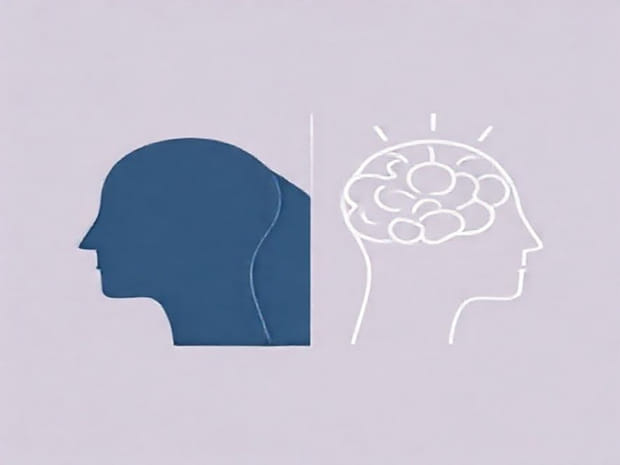
Divergent Vs Convergent Thinking
Thinking is a fundamental aspect of human cognition, allowing individuals to solve problems, generate ideas, and navigate complex situations. Among the many ways humans think, divergent and convergent thinking are two distinct cognitive processes that play crucial roles in creativity, problem-solving, and decision-making. Understanding divergent vs convergent thinking is essential for educators, professionals, and anyone looking to enhance cognitive performance. These thinking styles influence how we approach challenges, generate solutions, and make decisions, and they often complement each other in everyday life. Exploring their differences, applications, and benefits provides valuable insight into the dynamics of human intelligence and creativity.
Understanding Divergent Thinking
Divergent thinking is a cognitive process focused on generating multiple possible solutions to a problem. It emphasizes creativity, exploration, and the ability to think beyond conventional boundaries. Divergent thinkers approach challenges with an open mind, often producing a wide array of ideas, even if some seem impractical or unconventional. This type of thinking encourages imagination, originality, and flexibility, making it particularly useful in brainstorming sessions, artistic pursuits, and innovative problem-solving. Divergent thinking is not concerned with finding the right answer immediately; instead, it values the breadth and diversity of potential solutions.
Characteristics of Divergent Thinking
Divergent thinking exhibits several key characteristics that distinguish it from other cognitive processes
- FluencyThe ability to generate numerous ideas or solutions rapidly.
- FlexibilityWillingness to explore different perspectives and approaches.
- OriginalityProducing unique or unconventional solutions that break from standard patterns.
- ElaborationExpanding on ideas with detail and depth to explore their potential.
- OpennessAccepting ambiguity and uncertainty while exploring multiple possibilities.
Understanding Convergent Thinking
Convergent thinking, in contrast, is a problem-solving process aimed at finding the single best solution to a challenge. It involves analytical reasoning, logic, and evaluation to narrow down options and reach a specific answer. Convergent thinkers focus on accuracy, efficiency, and practicality, making this thinking style ideal for tasks such as mathematical problem-solving, technical analysis, or decision-making under constraints. Unlike divergent thinking, convergent thinking values precision and correctness over the generation of multiple possibilities.
Characteristics of Convergent Thinking
Convergent thinking has distinct features that make it effective in focused problem-solving
- AccuracyEmphasis on finding the correct or most effective solution.
- Logical ReasoningApplying rules, formulas, or structured approaches to solve problems.
- EfficiencyNarrowing down options to reach a definitive conclusion quickly.
- Critical EvaluationAssessing ideas for feasibility, relevance, and correctness.
- FocusConcentrating on a specific solution rather than exploring multiple alternatives.
Key Differences Between Divergent and Convergent Thinking
The distinction between divergent and convergent thinking lies in their objectives, processes, and outcomes. Divergent thinking seeks to expand possibilities, generate creativity, and explore unconventional approaches. Convergent thinking aims to narrow possibilities, analyze logically, and select the best solution. While divergent thinking thrives on open-ended exploration and imaginative risk-taking, convergent thinking emphasizes structure, evaluation, and problem resolution. Both thinking styles involve cognitive skills, but they serve complementary purposes depending on the context. Understanding these differences is crucial for applying the appropriate thinking style to specific tasks or challenges.
Comparison Table
- GoalDivergent thinking generates multiple ideas; convergent thinking identifies the best solution.
- ApproachDivergent thinking is open-ended and exploratory; convergent thinking is focused and analytical.
- CreativityHigh in divergent thinking; moderate in convergent thinking.
- Decision-makingDelayed in divergent thinking until ideas are explored; immediate in convergent thinking based on evaluation.
- ApplicationBrainstorming, innovation, art (divergent); problem-solving, testing, structured tasks (convergent).
Applications of Divergent Thinking
Divergent thinking is particularly valuable in contexts that require creativity, innovation, and flexibility. Common applications include
- Brainstorming SessionsGenerating a wide array of ideas for projects, campaigns, or problem-solving scenarios.
- Artistic and Creative FieldsEncouraging novel approaches in writing, painting, music, and design.
- Innovation and Product DevelopmentExploring multiple potential solutions or product features before selecting the most promising ones.
- Problem-Solving WorkshopsExpanding perspectives to approach challenges from unique angles.
- EducationFostering curiosity, imagination, and critical thinking in students.
Applications of Convergent Thinking
Convergent thinking is essential in situations where accuracy, logic, and efficiency are required. Key applications include
- Mathematical Problem-SolvingUsing formulas, rules, and calculations to reach correct answers.
- Scientific AnalysisConducting experiments and evaluating results to arrive at reliable conclusions.
- Decision-MakingSelecting the best option based on objective criteria and evidence.
- Technical and Engineering TasksApplying structured problem-solving methods to achieve specific outcomes.
- Exams and AssessmentsFocusing on precise answers and factual knowledge.
Integration of Divergent and Convergent Thinking
While divergent and convergent thinking have distinct purposes, they often work best in combination. For example, a creative project might begin with divergent thinking to generate ideas and explore possibilities, followed by convergent thinking to evaluate options and select the most viable solution. This integration allows individuals and teams to harness the strengths of both approaches, balancing creativity with practicality. Many innovative solutions, whether in business, science, or art, result from the dynamic interplay between divergent idea generation and convergent decision-making.
Developing Divergent and Convergent Thinking Skills
Enhancing both thinking styles can improve problem-solving, creativity, and decision-making capabilities. Strategies to develop divergent thinking include brainstorming regularly, exploring multiple perspectives, embracing curiosity, and practicing creative exercises such as mind mapping or free writing. Convergent thinking can be strengthened through logical reasoning exercises, analytical problem-solving, studying structured methodologies, and practicing decision-making in controlled scenarios. Cultivating both skills enables individuals to approach challenges flexibly and effectively, adapting to various contexts and demands.
Divergent vs convergent thinking represents two complementary cognitive processes essential for creativity, problem-solving, and decision-making. Divergent thinking emphasizes generating multiple ideas, exploring possibilities, and embracing originality, while convergent thinking focuses on narrowing options, evaluating solutions, and reaching accurate conclusions. Understanding the differences, applications, and integration of these thinking styles allows individuals to approach challenges more effectively, balance creativity with practicality, and enhance overall cognitive performance. By developing both divergent and convergent thinking skills, people can improve innovation, critical reasoning, and adaptability, ultimately fostering personal and professional growth across diverse domains.