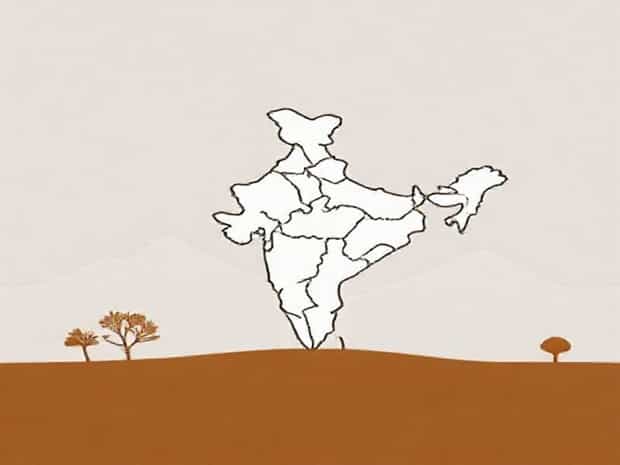
Mcq On Physiography Of India Ncert
India is a country known for its diverse geography, ranging from towering mountains to fertile plains and vast plateaus. The physiography of India is a core topic in the NCERT syllabus for geography, and multiple-choice questions (MCQs) on this subject help students test their knowledge in a structured way. Preparing MCQs on physiography of India based on NCERT textbooks allows learners to review key concepts, improve memory, and build confidence for exams. The following discussion explains important aspects of India’s physiography and provides practice questions to enhance understanding.
Introduction to the Physiography of India
The physiography of India refers to the physical features of the land. NCERT books classify India’s landforms into major divisions such as mountains, plains, deserts, plateaus, and islands. Each division has its own unique characteristics and significance. For example, the Himalayas form natural boundaries and influence the climate, while the Indo-Gangetic plains support one of the largest populations in the world due to fertile soil.
Major Physiographic Divisions of India
According to NCERT, India’s land is divided into six major physiographic divisions. These divisions are often the basis of MCQs in school and competitive exams.
- The Himalayan Mountains– A young fold mountain system with three parallel ranges the Himadri, Himachal, and Shiwalik.
- The Northern Plains– Fertile alluvial plains formed by rivers like the Ganga, Brahmaputra, and Indus.
- The Peninsular Plateau– A stable landmass made of ancient igneous and metamorphic rocks.
- The Indian Desert– Also known as the Thar Desert, characterized by arid climate and sandy terrain.
- The Coastal Plains– Divided into eastern and western coastal plains, stretching along the Arabian Sea and Bay of Bengal.
- The Islands– Andaman and Nicobar Islands in the Bay of Bengal and Lakshadweep Islands in the Arabian Sea.
MCQ on Physiography of India – Based on NCERT
Below are some multiple-choice questions with explanations to help students practice the topic effectively.
MCQ Set 1 The Himalayan Mountains
Q1.Which of the following is the northernmost range of the Himalayas?
- A. Himachal
- B. Himadri
- C. Shiwalik
- D. Karakoram
Answer B. Himadri– The Himadri, also called the Greater Himalayas, forms the northernmost range with the highest peaks like Mount Everest and Kanchenjunga.
Q2.The Shiwalik range is also known as
- A. Outer Himalayas
- B. Middle Himalayas
- C. Great Himalayas
- D. Lesser Himalayas
Answer A. Outer Himalayas– Shiwaliks form the outermost range and are composed of unconsolidated sediments.
MCQ Set 2 The Northern Plains
Q3.The Northern Plains of India are formed by the deposits of which rivers?
- A. Narmada, Tapi, Mahanadi
- B. Ganga, Brahmaputra, Indus
- C. Godavari, Krishna, Kaveri
- D. Yamuna, Chambal, Son
Answer B. Ganga, Brahmaputra, Indus– These rivers and their tributaries deposit alluvium, creating extensive fertile plains.
Q4.The Northern Plains are broadly divided into
- A. Bhabar, Terai, Bhangar, Khadar
- B. Plateau, Hills, Valleys, Ghats
- C. Western Ghats, Eastern Ghats
- D. Coastal, Island, Desert, Mountain
Answer A. Bhabar, Terai, Bhangar, Khadar– These divisions are based on the age and type of alluvial deposits.
MCQ Set 3 The Peninsular Plateau
Q5.Which of the following is the oldest landmass of India?
- A. The Himalayas
- B. The Northern Plains
- C. The Peninsular Plateau
- D. The Indian Desert
Answer C. The Peninsular Plateau– Formed from ancient rocks, it is geologically the oldest landform in India.
Q6.The Deccan Plateau is bounded by which two mountain ranges?
- A. Aravalli and Vindhya
- B. Satpura and Western Ghats
- C. Western Ghats and Eastern Ghats
- D. Karakoram and Zaskar
Answer C. Western Ghats and Eastern Ghats– These mountain ranges mark the boundaries of the Deccan Plateau.
MCQ Set 4 The Indian Desert
Q7.The Thar Desert is located in which state of India?
- A. Gujarat
- B. Rajasthan
- C. Punjab
- D. Haryana
Answer B. Rajasthan– The Thar Desert lies primarily in Rajasthan and is characterized by sandy soil and low rainfall.
Q8.Which river forms a natural boundary of the Thar Desert in the northeast?
- A. Yamuna
- B. Sutlej
- C. Luni
- D. Chambal
Answer C. Luni– The Luni is the only significant river of the desert, flowing intermittently during rains.
MCQ Set 5 The Coastal Plains and Islands
Q9.The Eastern Coastal Plain between Krishna and Kaveri rivers is known as
- A. Konkan Coast
- B. Malabar Coast
- C. Coromandel Coast
- D. Northern Circars
Answer C. Coromandel Coast– This region lies along the Bay of Bengal and is prone to cyclones.
Q10.The Andaman and Nicobar Islands are located in which water body?
- A. Arabian Sea
- B. Bay of Bengal
- C. Indian Ocean
- D. Laccadive Sea
Answer B. Bay of Bengal– These islands are situated in the Bay of Bengal and are known for biodiversity and strategic importance.
Importance of MCQs on Physiography of India
Practicing MCQs on the physiography of India helps students prepare effectively for school tests and competitive exams. These questions enhance analytical thinking and reinforce key geographical concepts from NCERT textbooks. They also encourage quick recall, which is essential during timed examinations.
Benefits of Practicing MCQs
- Improves memory retention of key facts and figures.
- Helps students identify weak areas that need more focus.
- Encourages deeper understanding of geographical features.
- Prepares students for objective-type exam patterns.
Tips for Preparing MCQs on Physiography of India
Students can follow certain strategies to score better when dealing with MCQs in exams
- Study NCERT maps carefully to locate mountains, plateaus, and rivers.
- Memorize key terms such as Bhabar, Terai, Bhangar, and Khadar.
- Revise physical features using diagrams and practice drawing maps.
- Attempt previous years’ MCQs and sample papers for better preparation.
MCQs on physiography of India based on NCERT textbooks provide a practical way for students to strengthen their understanding of geography. By focusing on the six major physiographic divisions, their characteristics, and related facts, learners can master important concepts. Regular practice of these multiple-choice questions builds confidence and ensures success in exams. The subject not only helps students academically but also develops their appreciation of India’s diverse landscape and natural beauty.