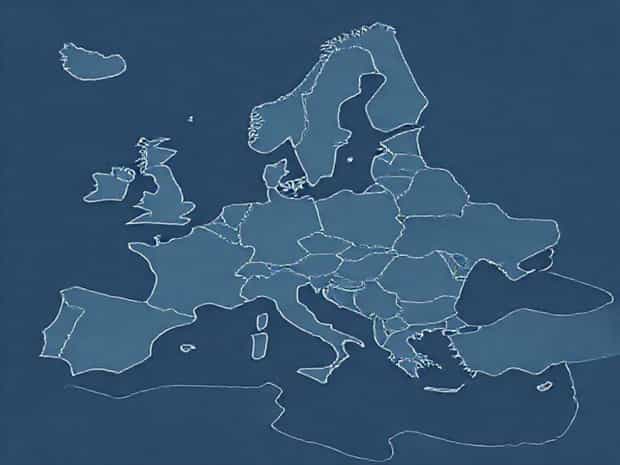
Mapa Europy Xvii Wiek
The 17th century was a period of dramatic change and development in Europe, with shifting political boundaries, emerging powers, and the influence of exploration and trade reshaping the continent. A mapa Europy XVII wiek, or map of Europe in the 17th century, provides a fascinating window into this transformative era, illustrating not only territorial divisions but also the intricate network of kingdoms, duchies, and principalities that characterized the European landscape at the time. Studying these maps allows historians, educators, and enthusiasts to better understand the geopolitical, cultural, and economic context of early modern Europe, offering insight into the origins of modern nation-states and international relations.
Overview of 17th Century Europe
Europe in the 17th century was a complex mosaic of political entities. Large empires and kingdoms such as the Habsburg Monarchy, the Ottoman Empire’s European territories, France under Louis XIV, and the Polish-Lithuanian Commonwealth dominated significant portions of the continent. Meanwhile, smaller principalities, duchies, and city-states maintained local autonomy and influence, particularly within regions like the Holy Roman Empire and the Italian Peninsula. Religious divisions also played a crucial role in shaping territorial boundaries, especially after the Thirty Years’ War (1618-1648), which significantly altered central Europe’s map.
Key Features of 17th Century Maps
Maps from the 17th century were both practical and artistic, combining geographic information with decorative elements such as ornate cartouches, elaborate borders, and illustrations of coats of arms. A mapa Europy XVII wiek typically displays the following features
- Political BoundariesThese maps highlight kingdoms, duchies, and other political entities, often with distinctive colors or shading to differentiate territories.
- Rivers and MountainsNatural features like major rivers, mountain ranges, and coastlines were carefully represented to aid navigation and illustrate territorial limits.
- Cities and Trade RoutesImportant cities, ports, and trade routes were marked, reflecting economic hubs and centers of political power.
- Decorative ElementsArtistic embellishments were common, including illustrations of ships, sea monsters, and compass roses, reflecting the cartographer’s skill and the map’s intended prestige.
Political Landscape of 17th Century Europe
The political structure of Europe during the 17th century was marked by both stability in certain regions and constant change in others. Major powers such as France, Spain, and the Habsburg Monarchy often engaged in wars over territorial expansion, influence, and succession disputes. Smaller states frequently formed alliances or fell under the influence of larger neighbors, creating a dynamic and sometimes volatile geopolitical environment. Religious divisions, particularly between Protestant and Catholic regions, further complicated the map, influencing both local governance and international diplomacy.
The Holy Roman Empire
The Holy Roman Empire was a unique political entity, encompassing hundreds of semi-autonomous states, principalities, and free cities across central Europe. The empire’s decentralized structure meant that maps often depicted a patchwork of territories, each with its own ruler, legal system, and local identity. The Peace of Westphalia in 1648, which ended the Thirty Years’ War, granted significant sovereignty to these constituent states, effectively reshaping central Europe’s map.
Western Europe
In western Europe, France emerged as a dominant power under Louis XIV, expanding its influence through diplomacy and military campaigns. Spain, while still significant, experienced a gradual decline in its European influence, although its overseas empire remained extensive. The Dutch Republic thrived as a commercial and naval power, with its cities and ports prominently marked on maps as key trading centers.
Eastern Europe
Eastern Europe was characterized by large, multi-ethnic empires and complex political arrangements. The Polish-Lithuanian Commonwealth spanned vast territories, including parts of modern-day Poland, Lithuania, Belarus, and Ukraine. The Ottoman Empire controlled southeastern European lands, extending its influence into the Balkans. Maps of the region reflect both the diversity and the tension inherent in these areas, showing borders that were often fluid and contested.
Religious Influence on the Map
Religion played a crucial role in shaping the political and territorial landscape of 17th century Europe. The aftermath of the Reformation and the Counter-Reformation left Europe divided between Protestant and Catholic regions, affecting alliances, conflicts, and governance. A mapa Europy XVII wiek often includes symbols or notations indicating the dominant religion of a region, highlighting areas affected by religious conflict or tolerance. This information provides insight into the cultural and societal divisions that influenced European history for centuries.
The Thirty Years’ War
One of the most significant conflicts of the 17th century, the Thirty Years’ War, had a profound impact on Europe’s map. Centered in the Holy Roman Empire, the war involved most of Europe’s major powers and resulted in widespread devastation. The Peace of Westphalia, which concluded the war, led to a reorganization of territories, granting independence to several states and formalizing political boundaries that would persist into the modern era. Maps from this period often reflect these changes, providing a visual record of the war’s outcomes.
Cartography Techniques in the 17th Century
17th century cartography combined scientific observation with artistic expression. Cartographers used a variety of methods to create maps, including triangulation, astronomical observations, and knowledge from explorers and traders. Printing techniques allowed for wider distribution, making maps both educational tools and objects of prestige. Mapa Europy XVII wiek often includes elaborate titles, scales, and legends to help users interpret geographic and political information accurately.
Notable Cartographers
Several cartographers were influential in shaping 17th century maps of Europe. Figures like Blaeu, Mercator, and Hondius produced maps that were both accurate for the time and visually impressive. Their work helped standardize mapping conventions and provided a reference for scholars, navigators, and government officials. Many of their maps are now valuable historical documents that offer insight into how people of the time perceived their world.
Educational and Historical Importance
Studying a mapa Europy XVII wiek offers valuable lessons in history, geography, and politics. Such maps allow modern audiences to visualize the complexity of early modern Europe, understand the evolution of nation-states, and appreciate the impact of war, religion, and diplomacy on territorial boundaries. They are also important for cultural studies, as they reflect the artistic styles, technological advancements, and intellectual priorities of the 17th century.
Applications Today
- Historical ResearchHistorians use these maps to analyze political, military, and social developments of the period.
- EducationTeachers and educators incorporate maps into lessons on European history and geography.
- GenealogyResearchers trace ancestral regions using historical maps to understand family origins and migrations.
- Art and DesignCollectors and designers appreciate 17th century maps for their aesthetic and decorative value.
A mapa Europy XVII wiek provides a rich, multifaceted view of Europe during a period of significant transformation. By combining detailed political boundaries, geographic features, and decorative artistry, these maps offer insight into the complex landscape of early modern Europe. They reflect the impact of war, religion, exploration, and diplomacy, serving as valuable resources for historians, educators, and enthusiasts alike. Studying these maps allows us to appreciate not only the challenges and conflicts of the 17th century but also the foundations they laid for the Europe we know today. Exploring the intricate details of these maps provides a deeper understanding of the continent’s past, making them essential tools for both learning and enjoyment.