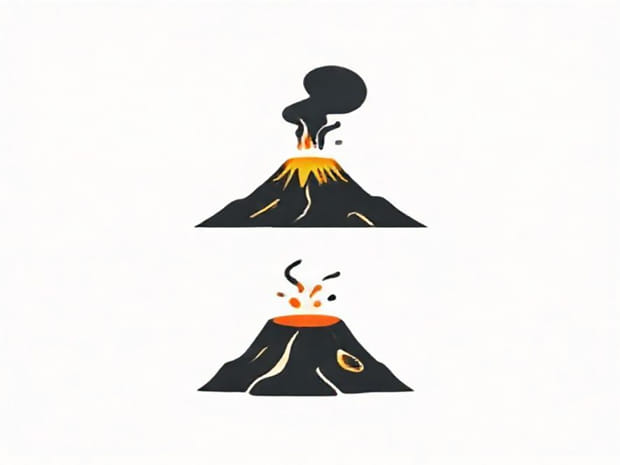
Different Types Of Volcanic Eruption
Volcanic eruptions are among the most powerful and awe-inspiring natural phenomena on Earth, shaping landscapes, affecting climate, and influencing human civilization for millennia. While many people picture lava spewing violently from a mountain, volcanic activity manifests in a variety of forms, each with unique characteristics and hazards. Understanding the different types of volcanic eruptions is crucial for scientists, emergency planners, and communities living near active volcanoes. Each eruption type varies in intensity, lava composition, gas release, and the environmental impact it can produce.
Explosive Eruptions
Explosive eruptions are characterized by violent outbursts of magma, gas, and volcanic ash. These eruptions occur when magma is highly viscous, trapping gases that build pressure until it erupts catastrophically. Explosive eruptions can produce pyroclastic flows, ash clouds, and lahars, posing serious risks to surrounding populations and infrastructure.
Plinian Eruptions
Named after the Roman historian Pliny the Younger, who documented the eruption of Mount Vesuvius in 79 AD, Plinian eruptions are among the most intense. They eject massive columns of volcanic ash and gas high into the atmosphere, sometimes reaching tens of kilometers. The ash can travel thousands of kilometers, affecting air travel and causing respiratory hazards. These eruptions often result in caldera formation due to the collapse of the volcano’s summit.
Vulcanian Eruptions
Vulcanian eruptions are shorter and more violent than Plinian eruptions but involve thick, viscous magma that traps gases. The explosions produce dense clouds of ash, volcanic bombs, and pyroclastic material. Named after Vulcano Island in Italy, these eruptions often occur in cycles and can significantly alter the shape of a volcano’s cone.
Effusive Eruptions
In contrast to explosive eruptions, effusive eruptions involve the gentle outpouring of low-viscosity lava that flows over the land. These eruptions produce extensive lava fields and are generally less deadly than explosive eruptions, though they can still destroy property and alter landscapes over time.
Hawaiian Eruptions
Hawaiian eruptions are characterized by highly fluid basaltic lava that creates broad, shield-shaped volcanoes. Lava fountains, lava lakes, and long lava flows are common features. These eruptions are typically non-explosive, allowing lava to flow gradually and cover vast areas, as seen in the ongoing eruptions of Kīlauea Volcano in Hawaii. While less dangerous to life, the slow-moving lava can devastate homes, roads, and agriculture.
Pahoehoe and ʻAʻā Lava Flows
- PahoehoeSmooth, rope-like lava that flows slowly and can create intricate patterns on the landscape.
- ʻAʻāRough, jagged lava that moves more quickly and breaks into sharp fragments, creating challenging terrain.
Intermediate Eruptions
Some eruptions combine characteristics of both explosive and effusive activity. These intermediate eruptions produce both lava flows and violent blasts, depending on the magma’s viscosity, gas content, and eruption dynamics. Stratovolcanoes, such as Mount St. Helens and Mount Fuji, often experience intermediate eruptions, posing diverse hazards.
Strombolian Eruptions
Strombolian eruptions are moderate in intensity, producing short bursts of lava, volcanic bombs, and gas emissions. These eruptions occur at regular intervals and are named after Stromboli Volcano in Italy. They create spectacular firework-like displays but usually pose limited long-term threats compared to larger explosive eruptions.
Subplinian Eruptions
Subplinian eruptions are more intense than Strombolian eruptions but less violent than Plinian eruptions. They produce high eruption columns and significant ashfall, affecting areas several tens of kilometers from the vent. These eruptions can disrupt air traffic, agriculture, and water systems but generally occur less frequently than other types.
Underwater and Ice-Covered Eruptions
Volcanic eruptions are not limited to land; they also occur underwater and beneath glaciers. These environments create unique eruption types with specific characteristics due to water or ice interacting with magma.
Submarine Eruptions
Submarine eruptions occur beneath the ocean surface, often along mid-ocean ridges or volcanic islands. Water rapidly cools the lava, creating pillow-shaped lava formations. While less visible, submarine eruptions can produce significant chemical changes in seawater, affect marine ecosystems, and even trigger localized tsunamis if the eruption is large enough.
Subglacial Eruptions
Subglacial eruptions happen beneath ice caps or glaciers, creating meltwater floods known as jökulhlaups. These eruptions produce distinctive volcanic landforms like tuyas or moberg ridges and can be highly explosive due to rapid vaporization of ice. Iceland’s volcanic history provides numerous examples of subglacial eruptions that have shaped the landscape dramatically.
Phreatic and Phreatomagmatic Eruptions
Water interacting with magma can trigger explosive eruptions even when the magma itself is not highly viscous. These eruptions are categorized as phreatic or phreatomagmatic, depending on the involvement of magma in the explosive activity.
Phreatic Eruptions
Phreatic eruptions are steam-driven explosions that occur when groundwater is superheated by hot rock or magma. They eject ash, rock fragments, and steam but typically do not involve fresh magma. Despite their relatively small scale, phreatic eruptions can be unpredictable and dangerous, as seen in some eruptions in New Zealand’s White Island.
Phreatomagmatic Eruptions
Phreatomagmatic eruptions occur when magma comes into direct contact with water, producing violent explosions due to rapid vaporization. These eruptions can generate ash plumes, base surges, and pyroclastic flows, posing serious hazards near lakes, rivers, or coastal volcanoes.
Volcanic eruptions vary widely in form and intensity, from gentle effusive flows to catastrophic explosive events. Understanding the different types of volcanic eruptions, including Plinian, Vulcanian, Hawaiian, Strombolian, submarine, and subglacial eruptions, is essential for assessing risks, planning evacuation strategies, and studying Earth’s dynamic processes. Each eruption type provides valuable insights into magma composition, tectonic activity, and environmental impact. By studying these eruptions, scientists can improve hazard predictions, safeguard communities, and appreciate the extraordinary forces that shape our planet’s surface.