How Far Is Andromeda From Earth
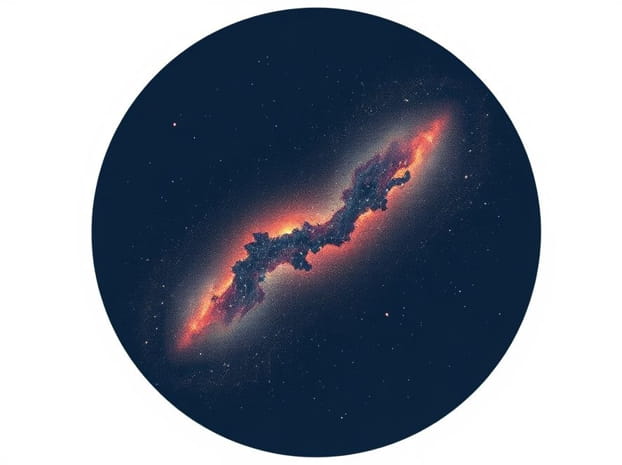
The Andromeda Galaxy, also known as M31, is one of the most fascinating celestial objects in the night sky, captivating astronomers and space enthusiasts alike. Located beyond our Milky Way, Andromeda is the closest spiral galaxy to Earth and a major point of study for understanding galactic structures and evolution. Determining how far Andromeda is from Earth has been a central focus of astronomical research, combining observations, mathematical calculations, and advanced technology. Knowing its distance helps scientists gauge the scale of the universe, predict future cosmic events, and gain insights into the nature of galaxies beyond our own. The distance to Andromeda is not just a number it is a window into the vastness of space and the dynamics of our cosmic neighborhood.
Measuring Cosmic Distances
Measuring distances in space is a challenging task due to the sheer scale and the limitations of observational tools. Astronomers use several methods to estimate distances to celestial objects, each suitable for different ranges. For nearby stars and galaxies like Andromeda, techniques include parallax measurements, Cepheid variable stars, and redshift analysis. Parallax involves observing an object from different points in Earth’s orbit to calculate its distance based on apparent shifts. Cepheid variable stars, which pulsate at predictable intervals, act as standard candles that allow scientists to determine distances by comparing observed brightness with intrinsic luminosity. Redshift, while more relevant for distant galaxies, helps confirm motion and relative distances in the expanding universe.
Historical Estimates of Andromeda’s Distance
Historically, the distance to Andromeda was a matter of debate. In the early 20th century, astronomers like Edwin Hubble revolutionized our understanding of the cosmos by proving that Andromeda is a separate galaxy outside the Milky Way. Using Cepheid variables, Hubble estimated Andromeda’s distance to be around 900,000 light-years. Although modern measurements have refined this number, Hubble’s work laid the foundation for recognizing the immense scale of the universe and the existence of galaxies beyond our own. His pioneering observations opened the door to modern cosmology and deepened our understanding of galactic distances.
Current Distance Measurements
Today, astronomers estimate that the Andromeda Galaxy is approximately 2.537 million light-years from Earth. This distance means that the light we see from Andromeda today left the galaxy over two and a half million years ago, long before humans walked the Earth as we know them. Modern measurements utilize advanced telescopes, high-resolution imaging, and refined calculations using multiple standard candles. Observations from the Hubble Space Telescope have significantly improved the accuracy of distance estimates, confirming Andromeda’s position within the Local Group of galaxies along with the Milky Way and numerous smaller satellite galaxies.
Understanding Light Travel Time
The concept of light-years is essential for grasping the distance to Andromeda. A light-year represents the distance that light travels in one year, approximately 5.88 trillion miles or 9.46 trillion kilometers. Therefore, the 2.537 million light-years to Andromeda means that the galaxy is incredibly distant, yet close enough that it appears as a distinct object in the night sky under ideal conditions. Observing Andromeda allows astronomers to look back in time, as the light reaching us today provides a glimpse of the galaxy as it existed millions of years ago. This phenomenon makes Andromeda a living laboratory for studying galactic formation and evolution over cosmic timescales.
Andromeda and the Milky Way
The Andromeda Galaxy’s proximity to the Milky Way has significant implications for our understanding of galactic dynamics. Andromeda and the Milky Way are on a collision course, moving toward each other at approximately 110 kilometers per second. While the distance of 2.537 million light-years may seem immense, gravitational attraction between the galaxies ensures that they will eventually merge, likely in about 4.5 billion years. This future collision will reshape both galaxies into a massive elliptical galaxy, demonstrating the dynamic and ever-changing nature of the cosmos. Studying Andromeda helps astronomers predict the future of our own galaxy and the evolution of galactic structures over billions of years.
Observing Andromeda from Earth
Despite its vast distance, the Andromeda Galaxy is visible to the naked eye under dark skies, appearing as a faint, elongated smudge of light. Its large size and brightness make it one of the few galaxies that can be seen without telescopic aid. Binoculars or small telescopes reveal more details, including the galaxy’s spiral structure and satellite clusters. Astronomers often study its stars, nebulae, and globular clusters to compare them with the Milky Way, enhancing our understanding of stellar populations, galactic formation, and evolution. The ability to observe a galaxy millions of light-years away demonstrates the remarkable reach of human curiosity and technology in exploring the universe.
Factors Affecting Distance Measurements
Although current estimates place Andromeda at approximately 2.537 million light-years, several factors can influence precise measurements. Interstellar dust can obscure light and affect brightness readings, leading to slight variations in distance calculations. Additionally, the motion of both the Earth and Andromeda must be accounted for to achieve accurate measurements. Advanced techniques such as infrared observations help mitigate dust interference, while long-term monitoring of stellar motion improves reliability. Continuous refinement of these methods ensures that astronomers maintain the most accurate understanding of Andromeda’s position relative to Earth.
The Importance of Accurate Measurements
Determining the exact distance to Andromeda is not just an academic exercise it has practical implications for cosmology and astrophysics. Accurate distance measurements help calibrate the cosmic distance ladder, which is used to estimate distances to more distant galaxies. Understanding Andromeda’s distance also informs models of galaxy interaction, dark matter distribution, and the expansion of the universe. By accurately mapping nearby galaxies, scientists can test theories about cosmic evolution, gravitational dynamics, and the ultimate fate of galaxy clusters within the Local Group. Andromeda serves as a crucial benchmark for these studies due to its proximity and size.
Summary of Key Points
- The Andromeda Galaxy (M31) is approximately 2.537 million light-years from Earth.
- Early estimates by Edwin Hubble using Cepheid variables set the foundation for modern distance measurements.
- The light from Andromeda takes over two million years to reach Earth, allowing us to observe the galaxy’s ancient state.
- The Moon’s path and celestial observations are used to refine distance calculations and account for interstellar factors.
- Andromeda is on a collision course with the Milky Way, expected to merge in about 4.5 billion years.
- Accurate distance measurement aids in understanding cosmic evolution, galaxy formation, and astrophysical models.
- Observing Andromeda with the naked eye or telescopes provides insights into the structure and dynamics of spiral galaxies.
The Andromeda Galaxy stands as one of the most studied and admired objects in the night sky, offering a window into the vast universe beyond our Milky Way. Its distance of approximately 2.537 million light-years illustrates both the scale of the cosmos and the remarkable capabilities of modern astronomy. Measuring this distance involves sophisticated techniques such as Cepheid variables, parallax, and long-term observation, all of which contribute to our understanding of galactic dynamics and cosmic evolution. Andromeda’s proximity, visibility, and eventual merger with the Milky Way make it a cornerstone for studying galaxy interactions, stellar populations, and the broader universe.
Exploring Andromeda’s distance helps us appreciate the immense scales involved in astronomy and the delicate interplay of gravitational forces shaping galaxies. By studying its stars, spiral arms, and motion relative to the Milky Way, scientists gain insights that extend far beyond our cosmic neighborhood. The Andromeda Galaxy not only captures the imagination of sky watchers but also serves as a critical reference point for understanding the universe, emphasizing the importance of precise measurement, observation, and curiosity in the ongoing quest to unravel the mysteries of space.