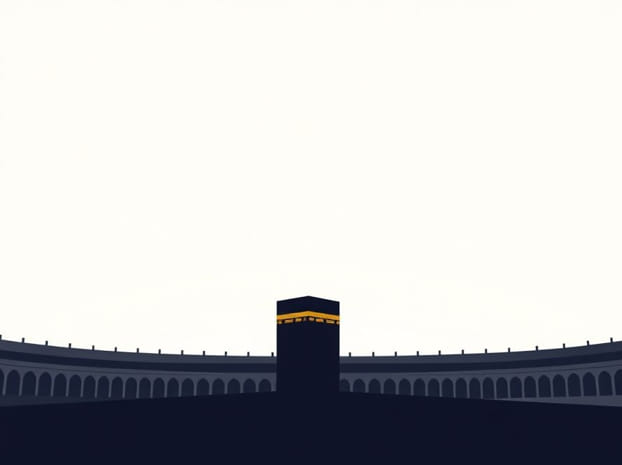
How Big Is The Kaaba
The Kaaba is one of the most iconic and sacred structures in the Islamic world, attracting millions of pilgrims every year during Hajj and Umrah. Situated in the heart of the Masjid al-Haram in Mecca, Saudi Arabia, the Kaaba serves as the qibla, the direction toward which Muslims around the world pray. Understanding how big the Kaaba is provides not only a sense of its physical dimensions but also an appreciation of its spiritual significance. This cubic structure has undergone various renovations and reconstructions over centuries, yet it retains its central importance in Islamic worship and culture. Pilgrims circumambulate the Kaaba in acts of devotion, making its size a practical as well as symbolic aspect of worship.
Physical Dimensions of the Kaaba
The Kaaba is roughly cubic in shape, though not perfectly square, and its dimensions are measured in meters. According to official records and historical accounts, the Kaaba stands approximately 13.1 meters high. Its base measures about 11.03 meters by 12.86 meters, making it a relatively modest yet imposing structure considering its religious importance. The walls are constructed of granite from the surrounding hills and are covered with the kiswa, a black silk cloth adorned with gold-embroidered Quranic verses. The modest size of the Kaaba emphasizes its spiritual rather than material grandeur, allowing large numbers of worshippers to gather around it during rituals.
Interior of the Kaaba
The interior of the Kaaba is also relatively small, with limited space that measures about 10.5 meters by 10.5 meters. The walls are made of stone and marble, and the floor is lined with marble as well. There are no windows inside, only a small door for entrance, located on the northeast wall. Despite its modest interior, the Kaaba’s significance lies in its sacredness and historical heritage. The space inside is occasionally opened for maintenance and special religious ceremonies, but for most pilgrims, the exterior circumambulation is the primary interaction with the structure.
Height and Roof
The height of the Kaaba, approximately 13.1 meters, contributes to its visibility within the Masjid al-Haram. The flat roof, accessible via a staircase from inside, is made of teak wood and serves structural and ceremonial purposes. The roof is relatively simple compared to the elaborate covering of the kiswa on the exterior. The elevated structure ensures that the Kaaba remains the focal point within the mosque, visible from multiple points and accommodating the movement of millions of pilgrims around it.
The Black Stone
One of the most significant features of the Kaaba is the Black Stone, or al-Hajar al-Aswad, set into the eastern corner. The stone itself is about 30 centimeters in diameter and is revered as an object of historical and spiritual importance. Pilgrims attempt to touch or kiss the stone during Tawaf, the ritual of circumambulating the Kaaba. While small compared to the entire structure, the Black Stone holds a symbolic weight that contributes to the Kaaba’s overall spiritual magnitude, making its precise location and visibility within the Kaaba’s dimensions highly significant.
Comparisons with Other Religious Structures
In terms of physical size, the Kaaba is modest compared to many religious monuments around the world. Cathedrals, temples, and modern mosques often dwarf the Kaaba in height and area. However, the importance of the Kaaba is not measured in physical dimensions but in spiritual significance. Millions of worshippers orient themselves toward the Kaaba in daily prayers, demonstrating that its influence far exceeds its modest height and footprint. The compact size allows pilgrims to perform Tawaf efficiently, even when the mosque accommodates hundreds of thousands at once.
Renovations and Expansions
Throughout history, the Kaaba has undergone several renovations to maintain its structure and accommodate the growing number of pilgrims. The exterior walls have been rebuilt multiple times, and the covering of the kiswa is replaced annually. Despite these renovations, the dimensions have remained relatively consistent, preserving the historical proportions that have been passed down through generations. The surrounding Masjid al-Haram has expanded significantly over time, allowing the Kaaba to remain central and accessible to all worshippers.
Symbolic Importance of Size
While the Kaaba is not large in terms of physical dimensions, its symbolic significance is immense. The relatively compact size allows for intimate interaction between pilgrims and the structure, enhancing the personal experience of worship. Every aspect of the Kaaba, from its height to its corners and the Black Stone, carries spiritual meaning. The focus on modesty and simplicity in its design reflects the Islamic principles of humility and devotion. The Kaaba’s size complements its role as a unifying center for Muslims worldwide, emphasizing spiritual magnitude over material scale.
Capacity During Hajj
During Hajj, the surrounding Masjid al-Haram accommodates millions of pilgrims performing Tawaf around the Kaaba. While the structure itself is small, the design of the mosque and the open courtyard allows for massive gatherings. The Kaaba’s central location and visibility from all angles are critical in guiding the flow of pilgrims, ensuring that rituals can be performed efficiently. Its size and shape facilitate smooth movement during circumambulation while preserving the spiritual focus on devotion and prayer.
Construction Materials and Exterior Features
The Kaaba is primarily constructed from granite quarried from nearby mountains. The walls are thick and sturdy, capable of withstanding centuries of wear and environmental factors. The exterior is draped in the kiswa, a black cloth embroidered with Quranic verses in gold thread, replaced annually during the Hajj season. The corners of the Kaaba are oriented toward the cardinal directions, and the door is elevated above ground level, adding to its structural distinction. These features, combined with its modest size, create a striking yet unpretentious monument that commands reverence.
Orientation and Religious Significance
The Kaaba’s orientation plays a crucial role in Islamic worship. All Muslims, regardless of location, face the Kaaba during prayer, establishing it as the spiritual center of Islam. Its size allows worshippers to perform prayers collectively in a large area around it while maintaining a focus on the structure itself. The compact dimensions help concentrate spiritual energy and devotion, making the Kaaba the heart of Islamic ritual life.
The Kaaba, though modest in physical size, holds immense religious and spiritual significance for Muslims around the world. Standing approximately 13.1 meters tall with a base measuring 11.03 by 12.86 meters, it is a cube-shaped structure constructed from granite and covered with the kiswa. Its interior is small but sacred, emphasizing spiritual over material grandeur. Features like the Black Stone, the elevated door, and the orientation of the corners contribute to its symbolic and practical importance. Despite being physically smaller than many religious monuments, the Kaaba’s influence and central role in Islamic worship make it a monumental symbol of faith, unity, and devotion. Understanding how big the Kaaba is provides both a physical and spiritual perspective, highlighting the profound connection between structure, ritual, and belief in Islam.