Miles Circumference Of Earth
The Earth, our home planet, is a massive and fascinating sphere that has captured human curiosity for centuries. From ancient civilizations trying to map the stars to modern scientists measuring with extreme precision, understanding the size and shape of the Earth has been a fundamental quest in human knowledge. One key aspect of this understanding is the circumference of the Earth in miles, a measurement that helps us grasp the scale of our planet. Measuring the Earth’s circumference may seem simple, yet it involves a combination of geometry, astronomy, and geodesy. Knowing this figure not only satisfies curiosity but also has practical applications in navigation, aviation, and global communication networks.
What is the Circumference of the Earth?
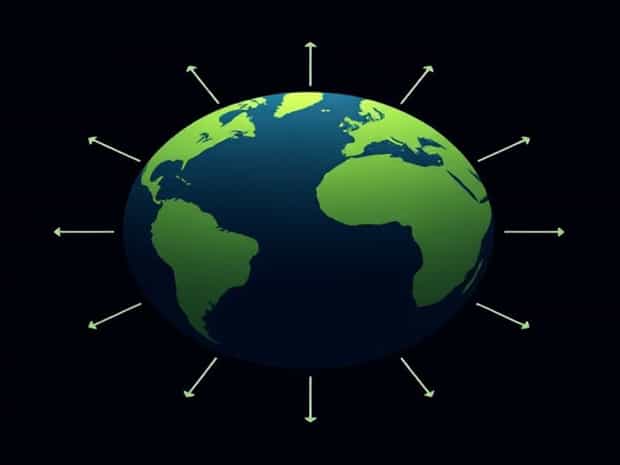
The circumference of the Earth refers to the distance around the planet along its surface. Because the Earth is not a perfect sphere but rather an oblate spheroid slightly flattened at the poles and bulging at the equator the circumference varies depending on the path taken. The equatorial circumference, which is the distance around the widest part of the Earth, measures approximately 24,901 miles. Meanwhile, the meridional circumference, which passes through the poles, is slightly shorter, measuring around 24,860 miles. These measurements provide a sense of the massive scale of our planet, highlighting just how vast it is in comparison to everyday human experiences.
Historical Methods of Measuring Earth’s Circumference
Long before satellites and modern technology, early scientists and explorers attempted to measure the Earth’s size. One of the most famous efforts was undertaken by the Greek mathematician Eratosthenes around 240 BCE. He observed that at noon during the summer solstice in Syene (modern-day Aswan, Egypt), the sun cast no shadow, while in Alexandria, a shadow was cast at a measurable angle. Using the angle of the shadow and the distance between the two cities, Eratosthenes was able to estimate the Earth’s circumference with remarkable accuracy off by only a few percent compared to modern measurements.
Modern Measurements
Today, the Earth’s circumference is measured with much greater precision thanks to satellite technology and global positioning systems (GPS). Satellites can measure the distance between multiple points on the Earth’s surface with extreme accuracy. Using these methods, scientists have confirmed that the equatorial circumference is approximately 24,901 miles and the meridional circumference is roughly 24,860 miles. These measurements account for the Earth’s slight flattening at the poles, providing a more accurate understanding of its true shape.
Understanding the Differences Between Equatorial and Polar Circumference
The difference between the equatorial and polar circumferences arises from the Earth’s rotation. As the Earth spins on its axis, centrifugal force causes a bulging effect at the equator and a flattening effect at the poles. This phenomenon, known as the oblateness of the Earth, is why the equatorial circumference is about 41 miles longer than the meridional circumference. Understanding this difference is important for fields like astronomy, satellite navigation, and even climate science, where precise models of the Earth’s shape influence data accuracy.
Applications of Earth’s Circumference
Knowing the Earth’s circumference in miles has practical applications that impact daily life and global systems. Some of these applications include
- NavigationSailors and pilots rely on accurate measurements of the Earth to plot long-distance routes, whether across oceans or continents.
- Geography and MappingAccurate circumference data allows cartographers to create reliable maps and GPS systems.
- Satellite CommunicationSatellites orbiting the Earth need precise calculations of the planet’s dimensions to maintain proper alignment and communication with ground stations.
- Scientific ResearchMeasurements of Earth’s size help scientists model gravitational fields, tectonic activity, and even predict climate patterns.
Interesting Facts About Earth’s Circumference
Exploring the Earth’s circumference can reveal surprising insights about our planet. For example, if one were to walk around the equator at a steady pace of 3 miles per hour for 24 hours a day, it would take over two and a half years to complete the journey. Additionally, the Earth’s circumference affects time zones; traveling around the planet east or west changes the local time depending on how far one has traveled relative to the 360-degree rotation of the Earth.
Comparison with Other Planets
The Earth’s circumference is often compared with other planets in the solar system to help us understand our relative size. For instance, Mars has a circumference of approximately 13,240 miles, almost half the size of Earth, while Jupiter, the largest planet, has a staggering circumference of about 273,000 miles. These comparisons not only highlight the uniqueness of Earth but also provide context for studying planetary formation and dynamics in our solar system.
Understanding the circumference of the Earth in miles provides more than just a number; it opens a window into our planet’s history, structure, and relationship with space. From the ingenious calculations of Eratosthenes to the precision of modern satellites, humans have long sought to measure and understand the vast scale of the Earth. Today, knowing that the equatorial circumference is approximately 24,901 miles and the polar circumference is roughly 24,860 miles helps us navigate, explore, and appreciate our place in the cosmos. These figures remind us of the planet’s enormity and the sophisticated methods humans have developed to measure and comprehend it, reinforcing the connection between scientific discovery and our daily lives.
In essence, the Earth’s circumference is not just a statistic but a key element in the story of human curiosity and exploration. Whether used for mapping, scientific research, or space missions, understanding the miles that span our planet continues to shape our knowledge and appreciation of the world around us.